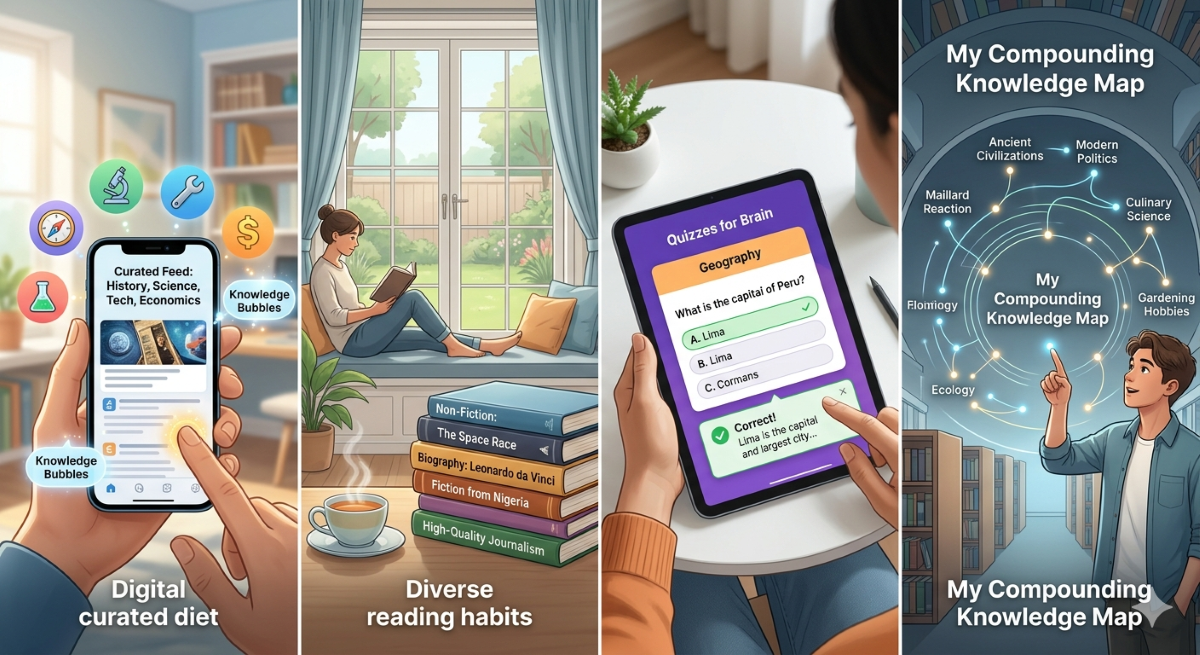
In an era of rapid information exchange, general knowledge is more than just a tool for winning trivia nights; it is the bedrock of critical thinking, social confidence, and professional adaptability. Expanding your "mental map" allows you to connect disparate dots, understand global contexts, and engage in meaningful conversations with anyone you meet. The beauty of building general knowledge is that it doesn’t require a return to formal schooling. Instead, it’s about fine-tuning your daily habits and remaining curious about the world around you. Here are ten easy, effective ways to broaden your horizons and become a more well-rounded thinker.
Curate Your Digital Diet
We spend hours scrolling through our phones every day. If your feed is limited to repetitive content, your brain is essentially "snacking" on empty calories. To improve your general knowledge, you must intentionally curate your digital environment. Follow educational creators, use aggregator apps to follow specific topics like space exploration or renewable energy, and subscribe to high-quality daily briefings that distill complex world events into digestible summaries. By turning your phone into a portable library rather than just a distraction device, you ensure that even five minutes of "downtime" contributes to your intellectual growth.
Utilize Interactive Learning Platforms
One of the most effective ways to make information "stick" is through active retrieval. Passive reading is helpful, but testing yourself forces your brain to work harder and retain more. For a structured and engaging experience, you can visit comprehensive platforms like Quizzes for Brain. This site offers a vast library of free quizzes across critical categories such as Geography, History, Science, Technology, and Economics. Whether you are interested in the "Seven Summits" of the world or the intricacies of the global spice trade, using interactive tools allows you to gauge your progress through varying difficulty levels—from easy to expert—while providing instant feedback and educational context for every answer.
Diversify Your Reading Habits
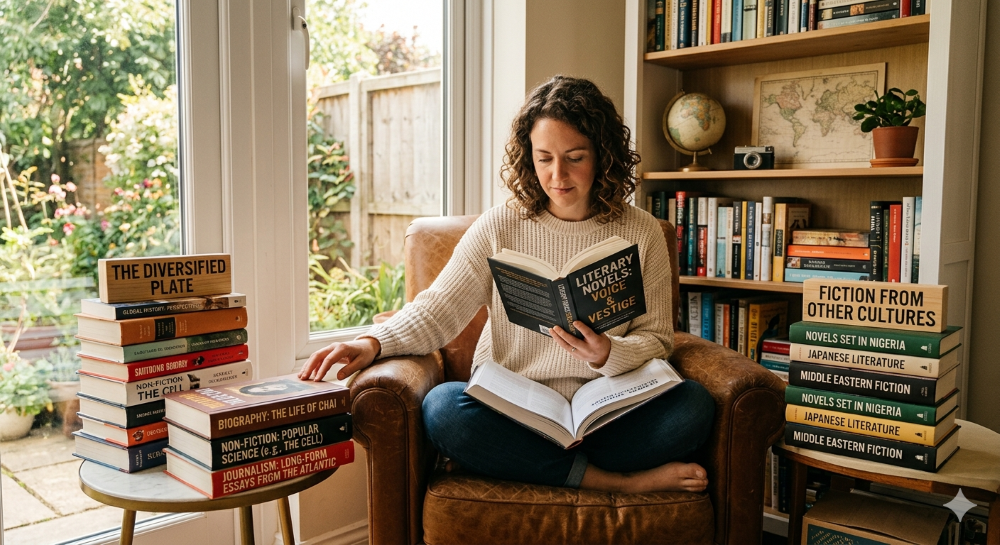
Reading is the classic gateway to knowledge, but the key is diversity. If you only read thrillers, you’re missing out on the vast complexities of the real world. Aim for a "balanced plate" of reading material, including non-fiction biographies of historical figures, long-form journalism in reputable publications, and even fiction set in cultures different from your own. This provides a "lived" understanding of geography, religion, and social norms that a textbook never could.
 Diversify Your Reading Habits
Embrace the "Wikipedia Rabbit Hole"
We’ve all been there: you look up a quick fact about a landmark and, an hour later, you’re reading about structural engineering or ancient history. Instead of fighting this impulse, embrace it. When a term or event pops up in conversation that you don’t recognize, look it up immediately. Following those blue hyperlinks allows your brain to build a web of connected information. General knowledge is stickier when it’s learned through curiosity rather than forced memorization.
Listen to Informative Podcasts
Podcasts are perhaps the most efficient way to learn because they turn "dead time"—commuting, doing dishes, or exercising—into active learning sessions. There is a podcast for every niche imaginable, from those that explain how champagne is made to programs where academics discuss philosophy and science in depth. Listening to experts discuss their passions helps you absorb not just facts, but the vocabulary and nuance of different fields.
Watch Documentaries and Educational Video Content
If you’re a visual learner, documentaries are your best friend. Streaming services are currently in a "golden age" of documentary filmmaking. Whether it’s the sweeping natural history of the planet or deep-dives into social psychology, film can make complex subjects feel visceral and memorable. Additionally, many educational video channels use high-quality animation and expert scripting to explain everything from quantum physics to the human immune system in under ten minutes.
 Play Knowledge Based Games
Play Knowledge-Based Games
Learning doesn’t have to feel like work. Gamifying the process of gaining knowledge makes the information more likely to stick. Crossword puzzles are excellent for improving vocabulary and learning obscure facts about history and pop culture. Strategy board games often bake historical or geographical logic into their mechanics, providing a foundational understanding of resource management and civilization building while you play.
Engage in Meaningful Conversation
One of the most overlooked ways to gain knowledge is simply to listen more than you speak. Everyone you meet is an expert in something you are not. Instead of sticking to small talk about the weather, ask people about their work, their hobbies, or their heritage. Engaging with people from different professional backgrounds—be it a mechanic, a surgeon, or a musician—gives you a "boots-on-the-ground" perspective that books often lack.
Travel (Even Locally) and Visit Museums
Traveling exposes you to different languages, architectures, and social structures. However, you don't need an international flight to gain this benefit. Being a "tourist in your own city" can be just as effective. Visit local historical societies, art galleries, and science museums. These institutions are curated specifically to educate the public; spending an afternoon at a museum is equivalent to reading several books on a topic, but with the added benefit of visual and tactile memory.
The Power of "Why?" and "How?"
The most knowledgeable people in the world share one trait: insatiable curiosity. They never stop asking "Why?" Why is the sky blue? How does a central bank affect inflation? Why do we have a seven-day week? Instead of accepting the world as it is, start questioning the mechanisms behind it. If you find yourself saying "I don't know," let that be the start of a five-minute research project rather than a dead end.
Conclusion: The Compounding Effect of Knowledge
Improving your general knowledge is not an overnight transformation; it is a cumulative process. Think of it like compound interest. The more you know, the easier it is to learn new things because you have more existing "hooks" to hang new information on. When you understand a bit of history, the news makes more sense. When you understand a bit of science, technology becomes less intimidating. By incorporating these ten easy habits into your lifestyle, you’ll find that the world becomes a much more interesting, interconnected, and vibrant place to inhabit. Stay curious, keep reading, and never stop asking questions.
Want more practice?
Take today's free daily challenge — a new set of questions every 24 hours.
Start Today's Challenge Browse All Quizzes