
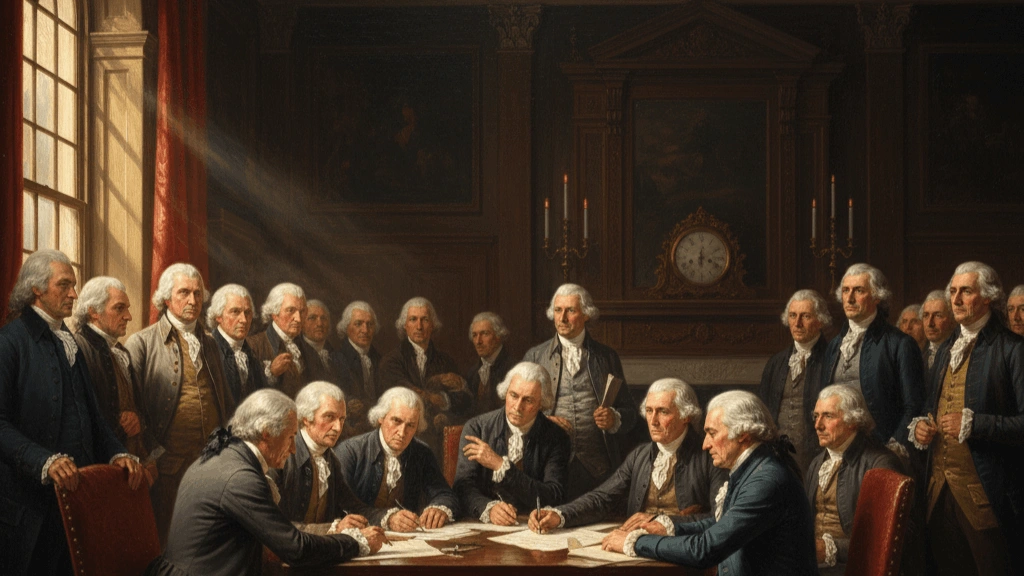
Introduction
History is the study of people, societies, events, and changes in the past. Historians do more than memorize dates. They examine evidence, compare sources, identify causes and consequences, and explain how societies changed over time.
History covers an enormous range of subjects, from early human migration and ancient civilizations to empires, religions, trade networks, revolutions, industrialization, world wars, decolonization, and the modern global system.
Learning general history gives students a framework for understanding more specialized topics. It also helps explain why modern countries, cultures, political systems, technologies, and international relationships developed as they did.
Learning Objectives
After studying this guide, you should be able to:
Distinguish between prehistory and recorded history.
Identify major periods and civilizations in world history.
Place important historical developments in chronological order.
Explain major themes such as agriculture, empire, trade, religion, revolution, and industrialization.
Understand cause and effect, continuity and change, and historical evidence.
Recognize common historical misconceptions and avoid timeline errors.
What Is History?
History is the disciplined study of the human past using evidence. Encyclopaedia Britannica defines history as a field concerned with the chronological record of events and the critical examination of source materials.
Historians work with many types of evidence, including:
Written documents
Government records
Letters and diaries
Archaeological remains
Coins
Buildings
Art
Photographs
Maps
Oral traditions
Recorded interviews
Historical conclusions may change when researchers discover new evidence or reinterpret existing evidence.
Prehistory and Recorded History
Prehistory
Prehistory refers to periods before written records were available in a particular society.
It does not mean that nothing important happened. Early humans developed tools, controlled fire, created art, migrated across continents, formed communities, and eventually domesticated plants and animals.
Modern Homo sapiens evolved in Africa roughly 300,000 years ago. The transition toward agriculture occurred much later, largely within the last 12,000 years.
Recorded History
Recorded history begins when societies leave written evidence that historians can study.
Writing emerged independently in several regions. Early writing systems were used for purposes such as administration, taxation, trade, religion, and recording political events.
The distinction between prehistory and history therefore occurs at different dates in different parts of the world.
From Hunting and Gathering to Agriculture
For most of human existence, people survived by hunting animals, fishing, gathering plants, and using other naturally available resources.
Beginning thousands of years ago, communities in several regions independently began domesticating plants and animals.
This transition is often called the Neolithic Revolution or Agricultural Revolution.
Agriculture encouraged:
Permanent settlements
Larger populations
Food surpluses
Specialized occupations
Trade
Social hierarchies
Organized government
Villages could grow into towns and eventually cities. The Smithsonian notes that farming and herding transformed human settlement and Earth's landscapes during roughly the last 12,000 years.
Early Civilizations
A civilization is generally understood as a complex society with features such as cities, organized government, specialized labor, social classes, and developed cultural institutions.
Mesopotamia
Mesopotamia developed between the Tigris and Euphrates rivers in Southwest Asia.
Important Mesopotamian civilizations included:
Sumerians
Akkadians
Babylonians
Assyrians
The region became important for early cities, writing, law, agriculture, and state organization.
Ancient Egypt
Ancient Egyptian civilization developed along the Nile River in northeastern Africa.
The Nile supported agriculture by providing water and fertile soil. Egyptian civilization became known for its pharaohs, pyramids, hieroglyphic writing, temples, mathematics, and long-lasting political institutions.
Indus Valley Civilization
The Indus Valley Civilization, also called the Harappan civilization, flourished in parts of present-day Pakistan and northwestern India.
Cities such as Harappa and Mohenjo-daro demonstrate sophisticated urban planning, including organized streets and drainage systems.
Ancient China
Early Chinese civilizations developed around major river systems, especially the Yellow River, or Huang He.
Several dynasties shaped early Chinese history. Important developments included writing, bronze technology, centralized administration, philosophy, and agricultural innovation.
Civilizations of the Americas
Complex societies also developed independently in the Americas.
Important examples included:
Olmec
Maya
Aztec
Inca
These societies created cities, political systems, religious traditions, agricultural techniques, trade networks, and impressive architecture.
Classical Civilizations
The term classical civilization often refers to influential societies whose political, philosophical, artistic, and cultural traditions affected later civilizations.
Ancient Greece
Greek civilization consisted largely of independent city-states, such as Athens and Sparta.
Ancient Greek thinkers contributed to fields including:
Philosophy
Mathematics
Political thought
Drama
History
Science
Athens is especially associated with an early form of direct democracy, although participation was limited and excluded much of the population.
Ancient Rome
Rome developed from a city-state into a republic and later a vast empire.
Roman influence included:
Law
Engineering
Roads
Architecture
Military organization
Administration
Latin language
The Western Roman Empire traditionally ended in 476 CE, although the Eastern Roman, or Byzantine, Empire continued for nearly another thousand years.
Ancient India
Major developments in ancient South Asia included the Maurya and Gupta empires.
South Asia was also the birthplace of major religious and philosophical traditions, including Hinduism, Buddhism, and Jainism.
Imperial China
Chinese history included a succession of dynasties that ruled through different periods.
Major dynasties included:
Qin
Han
Tang
Song
Yuan
Ming
Qing
Chinese governments developed sophisticated bureaucratic systems, while Chinese inventors and scholars contributed technologies such as paper, printing, gunpowder, and the magnetic compass.
The Medieval World
The term Middle Ages is most directly associated with European history between the ancient and early modern periods, roughly from the 5th to the late 15th century.
However, world history during these centuries was much broader than medieval Europe.
Medieval Europe
European society featured kingdoms, local lords, agricultural communities, Christian institutions, and systems often described under the broad term feudalism.
Towns and trade expanded significantly during the later medieval period.
The Islamic World
Islam emerged in Arabia during the 7th century CE.
Muslim-ruled societies expanded across parts of Asia, Africa, and Europe. Major intellectual centers supported scholarship in mathematics, astronomy, medicine, philosophy, geography, and other fields.
Trade connected Islamic societies with Africa, Europe, India, Central Asia, and East Asia.
African Kingdoms and Empires
Major African states included:
Ghana Empire
Mali Empire
Songhai Empire
Kingdom of Aksum
Great Zimbabwe
West African empires benefited particularly from trans-Saharan trade involving commodities such as gold and salt.
Asian Empires and Trade Networks
China experienced periods of major economic and cultural development under dynasties such as the Tang and Song.
The Silk Roads linked parts of East Asia, Central Asia, Southwest Asia, and Europe. These networks carried not only goods but also religions, technologies, diseases, and ideas.
The Mongol Empire
During the 13th century, Genghis Khan and his successors created the Mongol Empire.
At its height, the Mongol Empire became the largest contiguous land empire in history.
Mongol-controlled routes helped increase connections across Eurasia. Goods, technologies, travelers, and ideas moved over long distances, although Mongol conquests also caused extensive destruction and loss of life.
Renaissance and Reformation
Renaissance
The Renaissance was a major cultural and intellectual movement associated especially with European developments from approximately the 14th through 16th centuries.
It involved renewed interest in classical Greek and Roman knowledge and significant developments in:
Art
Literature
Architecture
Science
Humanist scholarship
Printing
Johannes Gutenberg's development of movable-type printing in Europe during the 15th century helped make books easier to reproduce.
Printing accelerated the circulation of knowledge and contributed to religious, scientific, and educational change.
Protestant Reformation
Beginning in the early 16th century, reformers including Martin Luther challenged practices and authority within the Western Christian Church.
The Protestant Reformation contributed to the creation of new Christian denominations and major political and religious conflicts in Europe.
Exploration and Global Exchange
From the late 15th century onward, European maritime voyages created increasingly direct links among Europe, Africa, Asia, and the Americas.
These voyages contributed to colonization and the development of global trading systems.
Columbian Exchange
The Columbian Exchange involved the movement of plants, animals, people, technologies, and diseases between the Eastern and Western Hemispheres after sustained contact began.
Examples included:
From the Americas: potatoes, maize, tomatoes, cacao
To the Americas: horses, wheat, cattle, sugarcane
Disease had especially devastating effects on many Indigenous populations in the Americas.
Atlantic Slave Trade
Millions of Africans were forcibly transported across the Atlantic through the transatlantic slave trade.
Enslaved people were subjected to forced labor, violence, family separation, and legal systems that treated them as property.
The slave trade deeply affected societies in Africa, Europe, the Caribbean, and the Americas.
The Age of Revolutions
The 17th through 19th centuries saw important political transformations.
American Revolution
The thirteen British colonies that became the United States declared independence in 1776.
The conflict contributed to debates about representative government and political rights.
French Revolution
The French Revolution began in 1789 amid social inequality, political conflict, financial problems, and disputes over political representation. It ended France's ancien régime and produced major political transformations that influenced Europe and beyond.
Haitian Revolution
Beginning in 1791, enslaved and free people in the French colony of Saint-Domingue fought a revolutionary struggle.
Haiti declared independence in 1804, becoming an independent state created through a successful revolt against slavery and colonial rule.
The Industrial Revolution
The Industrial Revolution transformed production from systems based largely on human and animal labor and handicrafts toward mechanized manufacturing and factory production.
It began in Britain during the 18th century before spreading to other regions.
Major developments included:
Steam power
Mechanized textile production
Factories
Railways
Improved iron and steel production
Mass manufacturing
Industrialization increased production but also created difficult working conditions, pollution, overcrowded cities, and new economic inequalities.
It helped produce modern industrial economies and accelerated urbanization.
Nationalism and Imperialism
Nationalism
Nationalism is the idea that people who share a national identity should have political unity or self-government.
Nationalism influenced the unification of countries such as Germany and Italy and contributed to independence movements elsewhere.
Imperialism
During the 19th and early 20th centuries, European empires expanded their political and economic control over large parts of Africa and Asia.
Imperial rule reshaped:
Borders
Economies
Governments
Education
Trade
Languages
Colonized peoples responded in many ways, including negotiation, adaptation, resistance, rebellion, and organized independence movements.
The World Wars
World War I
World War I lasted from 1914 to 1918.
Its causes involved several overlapping factors, including:
Rival alliances
Militarism
Imperial competition
Nationalism
Political tensions
The assassination of Archduke Franz Ferdinand in 1914 triggered the immediate crisis that led to war.
The conflict contributed to the collapse of several major empires.
World War II
World War II lasted from 1939 to 1945.
It involved fighting across Europe, Africa, Asia, and the Pacific.
The war included the Holocaust, in which Nazi Germany and its collaborators systematically murdered six million Jews as well as persecuting and killing millions of other victims.
World War II ended in 1945 and greatly reshaped international politics.
The Cold War
After World War II, the United States and Soviet Union emerged as rival superpowers.
The Cold War, generally dated from the late 1940s until 1991, involved political, military, technological, and ideological competition.
The two superpowers avoided direct full-scale war with each other but competed through:
Military alliances
Nuclear weapons
Espionage
Propaganda
Economic influence
The space race
Proxy wars
The Soviet Union dissolved in 1991, marking the end of the Cold War era.
Decolonization
After World War II, many colonies in Asia, Africa, the Caribbean, and the Pacific gained independence.
This process is known as decolonization.
Some independence movements achieved their objectives largely through political negotiation. Others involved armed struggles.
Newly independent states then faced challenges involving political institutions, economic development, borders, national identity, and Cold War rivalries.
Major Eras at a Glance
Period | Approximate Time | Key Developments |
Prehistory | Before written records | Human evolution, migration, tools |
Agricultural Revolution | From about 10,000 BCE onward | Farming, settlements, domestication |
Ancient civilizations | From about 3500 BCE | Cities, states, writing, empires |
Classical era | Roughly 800 BCE–500 CE | Greece, Rome, major Asian empires |
Medieval period | About 500–1500 CE | Kingdoms, trade networks, Islamic states, regional empires |
Early modern era | About 1500–1800 | Renaissance, Reformation, global exploration |
Age of Revolutions | Late 1700s–1800s | Political revolutions, nationalism |
Industrial era | From the 18th century | Factories, steam power, urbanization |
World War era | 1914–1945 | Two world wars and major global changes |
Cold War era | Late 1940s–1991 | U.S.–Soviet rivalry, decolonization |
Contemporary era | Late 20th century onward | Globalization, digital technology, increased interconnection |
Dates used to divide historical eras are approximate. Historians may use different periodizations depending on the region being studied.
How Historians Study the Past
Primary Sources
A primary source comes directly from the period being studied.
Examples include:
Letters
Laws
Diaries
Photographs
Speeches
Coins
Newspapers from the period
Archaeological objects
Secondary Sources
A secondary source analyzes or interprets the past after the events occurred.
Examples include:
History textbooks
Academic articles
Biographies
Documentaries
A secondary source can use many primary sources to construct an argument.
Cause and Effect in History
Major historical events rarely have only one cause.
Historians often distinguish between:
Long-term causes: Conditions developing over many years.
Short-term causes: Developments occurring closer to an event.
Triggers: Specific events that help set a larger process in motion.
For example, the assassination of Archduke Franz Ferdinand was an immediate trigger for World War I, but alliances, nationalism, military competition, and international tensions had developed before the assassination.
Continuity and Change
History is not simply a series of sudden revolutions.
Some aspects of society change rapidly while others continue for centuries.
Historians therefore ask:
What changed?
What remained similar?
How quickly did change happen?
Who experienced the change?
Did different regions experience it differently?
This method prevents oversimplified explanations.
Common History Mistakes
Treating History as a List of Dates
Dates help establish chronology, but understanding causes and consequences is more valuable.
Assuming All Regions Followed the Same Timeline
Terms such as "ancient," "medieval," and "modern" can describe different periods depending on the region.
Confusing BCE and CE
BCE means Before Common Era.
CE means Common Era.
In the traditional system, 1 BCE is followed by 1 CE. There is no year zero.
Thinking One Event Has One Cause
Wars, revolutions, migrations, and the collapse of empires usually result from several interacting causes.
Judging the Past Without Context
Historical analysis requires understanding the institutions, ideas, technologies, and social conditions available to people at the time.
Memory Tips for History Quizzes
Remember broad sequences before memorizing individual dates:
Hunters and gatherers → agriculture → cities → states → empires
Ancient → medieval → early modern → industrial → contemporary
For major modern events:
American Revolution → French Revolution → Industrial expansion → Imperialism → World War I → World War II → Cold War → Decolonization
Useful anchor dates include:
476 CE — traditional date for the fall of the Western Roman Empire
1492 — Columbus's first voyage to the Caribbean
1776 — U.S. Declaration of Independence
1789 — French Revolution begins
1914–1918 — World War I
1939–1945 — World War II
1991 — Soviet Union dissolves
Summary
General history examines how human societies developed and changed over time. Early humans migrated across the world, developed increasingly complex cultures, and eventually adopted agriculture in several regions. Farming contributed to permanent settlements, cities, governments, and civilizations.
Ancient and classical societies created influential political systems, religions, philosophies, technologies, and trade networks. Medieval societies across Africa, Asia, Europe, and the Americas developed their own powerful states and cultural traditions.
From the early modern period onward, expanding global contact, colonization, scientific development, political revolutions, and industrialization transformed societies. The world wars, decolonization, and Cold War then reshaped the international system during the 20th century.
The most effective way to learn history is not simply to memorize names and dates. Instead, connect events through chronology, cause and effect, continuity and change, and evidence.
FAQ
What is the difference between history and prehistory?
Prehistory generally refers to periods before written records existed in a particular society. History uses written records alongside archaeological and other evidence to study past societies.
Where did modern humans originate?
Scientific evidence indicates that Homo sapiens evolved in Africa before spreading to other parts of the world.
Why was agriculture historically important?
Agriculture allowed many communities to produce food in settled locations, supporting larger populations, permanent settlements, specialized jobs, and eventually cities and states.
What were the earliest civilizations?
Some of the earliest complex civilizations developed in Mesopotamia, Egypt, the Indus Valley, and China. Complex societies also developed independently in the Americas.
Why was the Renaissance important?
The Renaissance encouraged major developments in European art, scholarship, literature, and intellectual life while renewing interest in classical Greek and Roman knowledge.
What caused the Industrial Revolution?
Industrialization developed through a combination of technological innovation, capital, labor, resources, transportation, expanding markets, and changing production methods rather than from one invention alone.
What is imperialism?
Imperialism involves a state extending political, military, or economic control over other territories or peoples.
What were the two world wars?
World War I occurred from 1914 to 1918, while World War II occurred from 1939 to 1945.
What was the Cold War?
The Cold War was a prolonged period of rivalry mainly between the United States and the Soviet Union after World War II. It involved military competition, political alliances, proxy wars, nuclear deterrence, and ideological conflict.
Why do historians disagree?
Historians may interpret evidence differently, emphasize different causes, use newly discovered sources, or ask different questions about the same event.
Key Takeaways
History studies the human past by critically examining evidence rather than simply memorizing dates.
Agriculture, cities, states, empires, trade, religion, technology, and migration are recurring themes throughout world history.
Major historical events usually have several long-term and short-term causes.
Industrialization, imperialism, the world wars, decolonization, and the Cold War were central forces shaping the modern world.
Understanding chronology, cause and effect, continuity and change, and primary sources makes history easier to learn and remember.
References
Encyclopaedia Britannica — History Overview of history as an academic discipline and the study of historical evidence.
https://www.britannica.com/topic/historySmithsonian Institution, Human Origins Program — Introduction to Human Evolution Scientific overview of human evolution, early human migration, and human development.
https://humanorigins.si.edu/education/introduction-human-evolutionSmithsonian Institution, Human Origins Program — Homo sapiens Evidence concerning the origin and development of modern humans.
https://humanorigins.si.edu/evidence/human-fossils/species/homo-sapiensSmithsonian Institution, Human Origins Program — Humans Change the World Educational material covering agriculture, domestication, permanent settlements, and the growth of human societies.
https://humanorigins.si.edu/human-characteristics/humans-change-worldEncyclopaedia Britannica — French Revolution Reference material covering the causes, events, and consequences of the French Revolution.
https://www.britannica.com/event/French-RevolutionEncyclopaedia Britannica — Industrial Revolution Reference material on industrialization, mechanized production, technological change, and the development of the factory system.
https://www.britannica.com/event/Industrial-Revolution