⚖️ Politics

Political Events & Scandals

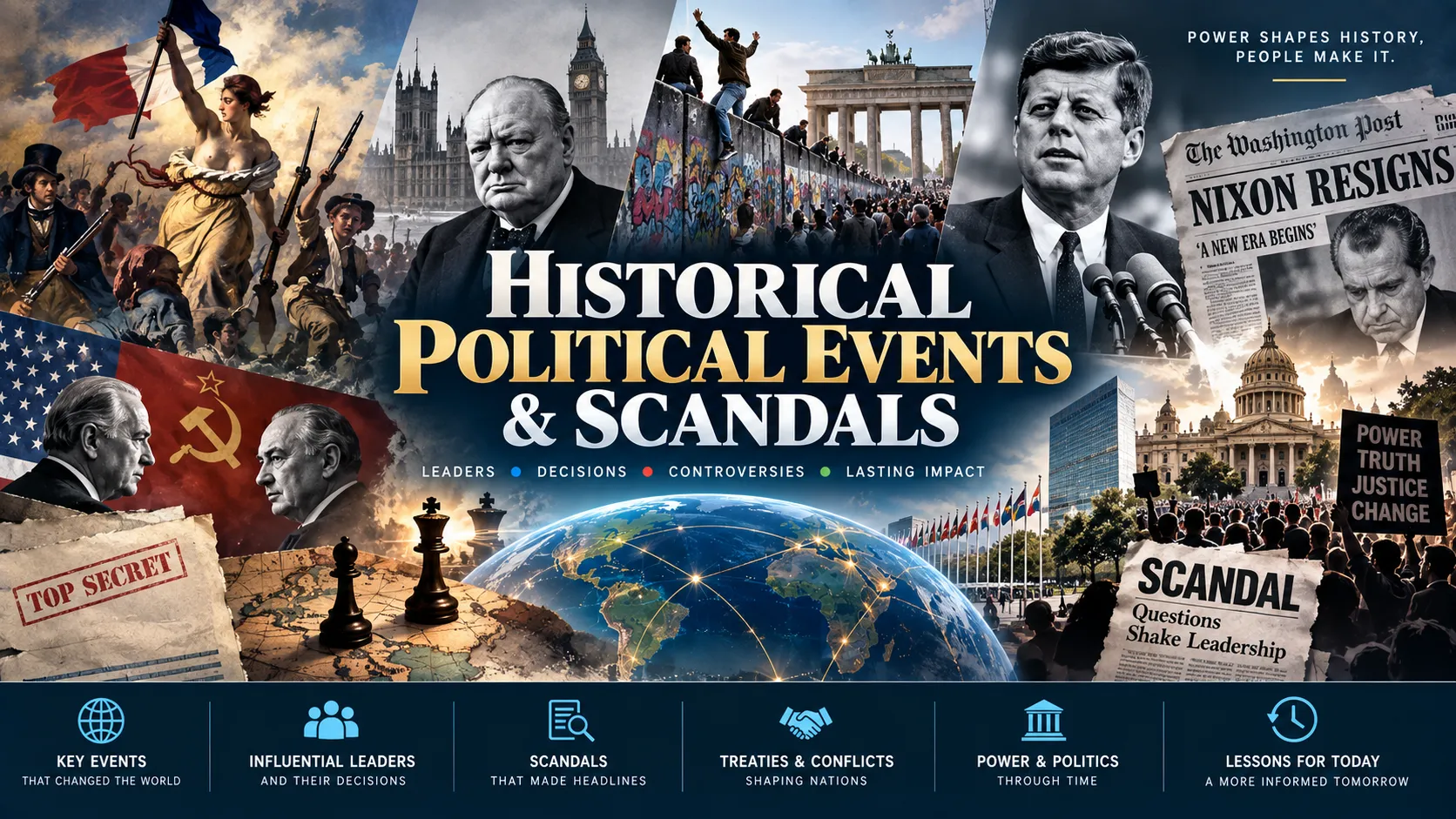
Politics is often shaped by defining moments that change governments, influence public opinion, and alter the course of history. Studying historical political events and scandals helps us understand how leadership, public accountability, and democratic institutions have evolved through both success and controversy.

115 Questions
30 Flashcards
12 min Reading
Beginner Level

Browse Branches

Search and scan key facts for this topic.

Showing of rows

Named quizzes

Jump into a focused set for Political Events & Scandals.

About Political Events & Scandals

Politics is often shaped by defining moments that change governments, influence public opinion, and alter the course of history. Studying historical political events and scandals helps us understand how leadership, public accountability, and democratic institutions have evolved through both success and controversy.

Read full about Political Events & Scandals →

This topic is part of Politics. Explore the guide, then practice with flashcards and quizzes to lock in what you learn.

⚖️ Did you know?

Political Events & Scandals includes 115 curated questions across Politics.

Quick Facts

Questions
114
Difficulty
Mixed
Category
Politics

4. Study Guide

1 guide for Political Events & Scandals
Available
Browse all guides →

Flashcards

What was Watergate?

1 / 30

Study Flashcards

Practice Quiz

Test your knowledge with multiple choice questions.

115 Questions 15 min Time Unlimited Attempts

Practice Tests

Take a practice test and improve your score.

View all practice modes →

Frequently asked questions

Historical political events are significant developments that changed governments, political systems, or international relations. Examples include revolutions, constitutional reforms, major elections, peace agreements, and important diplomatic decisions.
A political scandal involves alleged or confirmed misconduct, abuse of power, corruption, or unethical behavior by political leaders or public officials. Such scandals often result in investigations, legal proceedings, resignations, or reforms designed to strengthen accountability.
Political scandals reveal how governments respond to public scrutiny and whether institutions can hold leaders accountable. They often lead to changes in laws, stronger oversight, greater transparency, and increased public awareness about ethical standards in government.
Historians use official government records, parliamentary debates, court documents, archival materials, diplomatic correspondence, reliable news reports, and academic research to examine political events. Comparing multiple credible sources helps provide a balanced and well-supported understanding of history.
Learning about historical political events and scandals helps you understand how governments evolve, why democratic institutions matter, and how major political decisions influence society. It also develops critical thinking by encouraging you to examine historical evidence, understand different perspectives, and appreciate the importance of accountability in public life.