
Revolutions & Movements
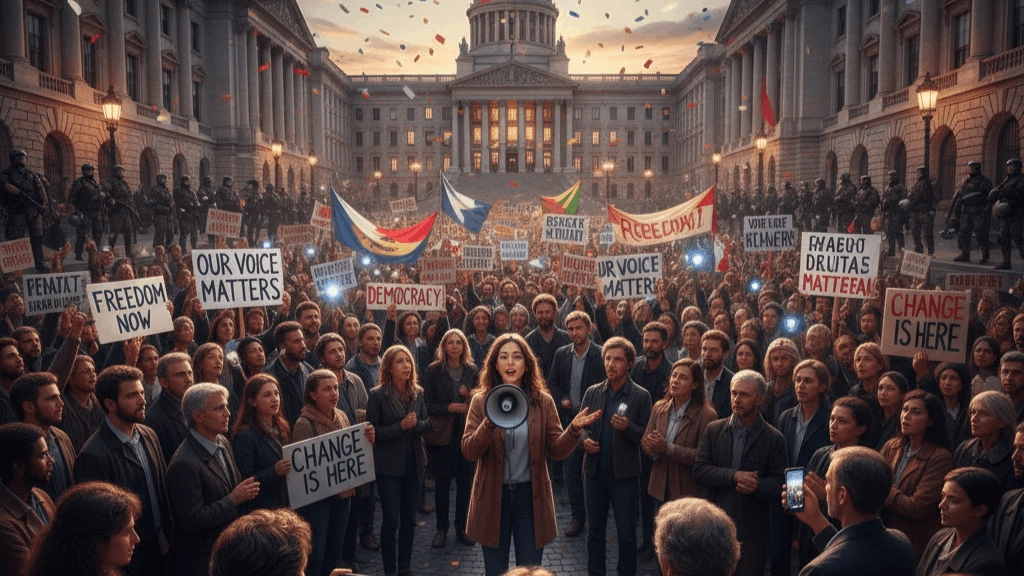
Political revolutions and movements are organized efforts to change governments, public policies, political systems, or the distribution of power within society. They have shaped the development of nations, expanded political rights, influenced constitutions, and transformed the relationship between governments and citizens.
Start learning Revolutions & Movements
Pick a path - everything here is ready for this topic.
Browse Branches
Search and scan key facts for this topic.
Showing of
Named quizzes
Jump into a focused set for Revolutions & Movements.
About Revolutions & Movements
Political revolutions and movements are organized efforts to change governments, public policies, political systems, or the distribution of power within society. They have shaped the development of nations, expanded political rights, influenced constitutions, and transformed the relationship between governments and citizens.
Read full about Revolutions & Movements →This topic is part of Politics. Explore the guide, then practice with flashcards and quizzes to lock in what you learn.
⚖️ Did you know?
Revolutions & Movements includes 83 curated questions across Politics.
⚖️ Politics
Government Systems
How power is organized around the world.
Quick Facts
- Questions
- 83
- Difficulty
- Mixed
- Category
- Politics
4. Study Guide
1 guide for Revolutions & Movements

Flashcards
Who led India's independence movement through non-violent resistance?
1 / 30
Practice Quiz
Test your knowledge with multiple choice questions.
Practice Tests
Take a practice test and improve your score.
View all practice modes →