🔬 Science

Inventions & Discoveries

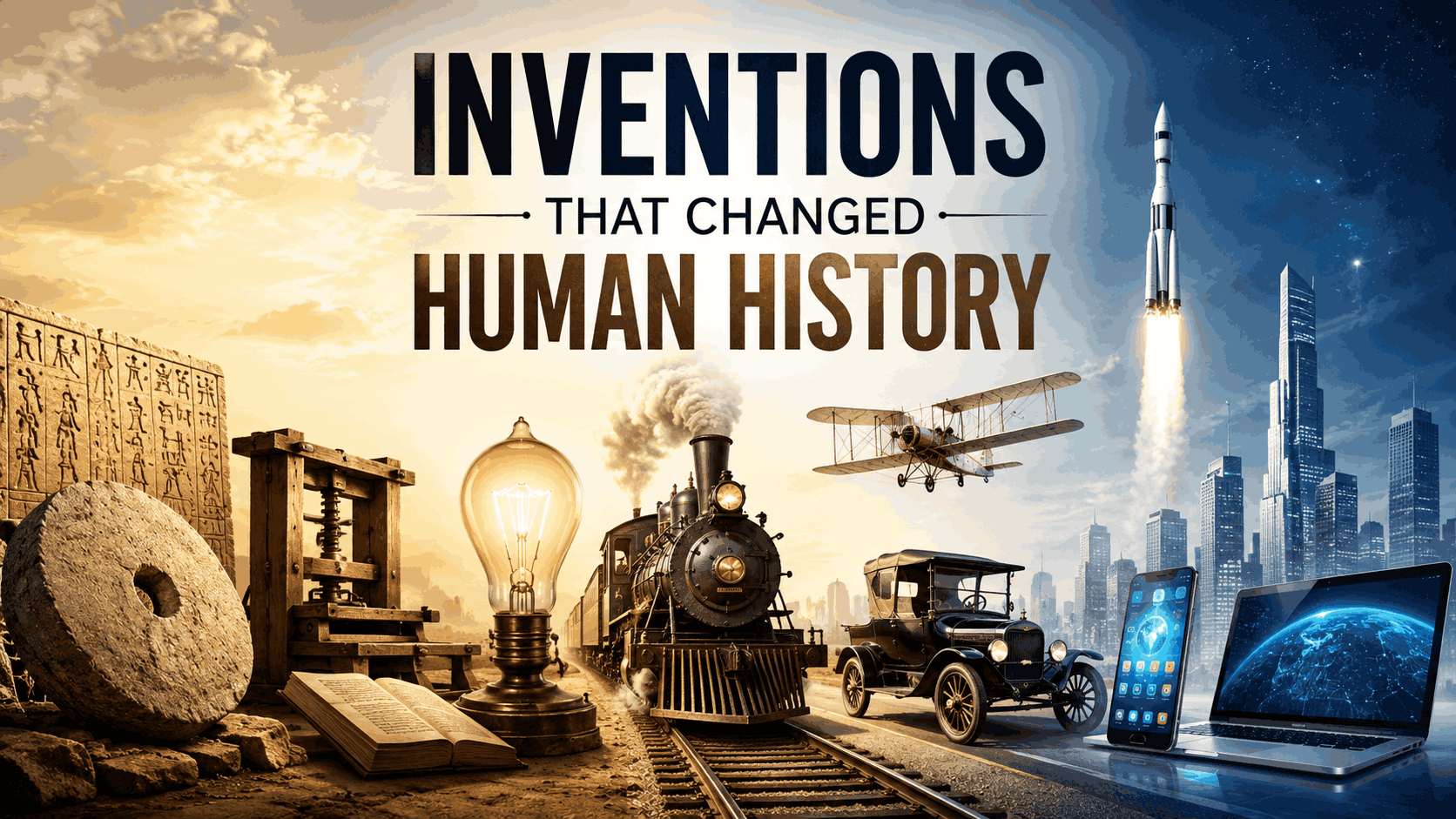
Science advances through curiosity, observation, and experimentation. Every major invention and discovery, from electricity and vaccines to space telescopes and DNA—has expanded our understanding of the universe and improved the way we live, work, and communicate.

96 Questions
30 Flashcards
12 min Reading
Beginner Level

Science Fields

Search and scan key facts for this topic.

Showing of

Named quizzes

Jump into a focused set for Inventions & Discoveries.

About Inventions & Discoveries

Science advances through curiosity, observation, and experimentation. Every major invention and discovery, from electricity and vaccines to space telescopes and DNA—has expanded our understanding of the universe and improved the way we live, work, and communicate.

Read full about Inventions & Discoveries →

This topic is part of Science. Explore the guide, then practice with flashcards and quizzes to lock in what you learn.

🔬 Did you know?

Inventions & Discoveries includes 96 curated questions across Science.

🔬 Science

Concept Lab

Visual diagrams and core science concepts to explore.

Open Lab →

matching questions

Quick Facts

Questions
98
Difficulty
Mixed
Category
Science

4. Study Guide

1 guide for Inventions & Discoveries
Available
Browse all guides →

Flashcards

Who invented telephone?

1 / 30

Study Flashcards

Practice Quiz

Test your knowledge with multiple choice questions.

96 Questions 15 min Time Unlimited Attempts

Practice Tests

Take a practice test and improve your score.

View all practice modes →

Frequently asked questions

A scientific invention is something created by humans, such as a microscope, computer, or vaccine technology. A scientific discovery is the understanding or identification of something that already exists in nature, such as gravity, DNA, or new planets.
Some of the most influential scientific discoveries include gravity, DNA, penicillin, radioactivity, the structure of the atom, and the expanding universe. These discoveries have transformed physics, biology, chemistry, and medicine.
The microscope, telescope, steam engine, computer, internet, X-ray machine, MRI scanner, and vaccines are among the inventions that have had the greatest impact on healthcare, communication, transportation, education, and scientific research.
Scientists make discoveries by observing natural phenomena, asking questions, conducting experiments, analyzing evidence, and testing hypotheses. Their findings are reviewed by other experts before becoming widely accepted, ensuring scientific knowledge is accurate and reliable.
Learning about scientific inventions and discoveries helps you understand how curiosity and research have improved human life and expanded our knowledge of the universe. It also provides a strong foundation for studying science, technology, engineering, medicine, and future innovations that will continue to shape the world.