
Treaties & Documents
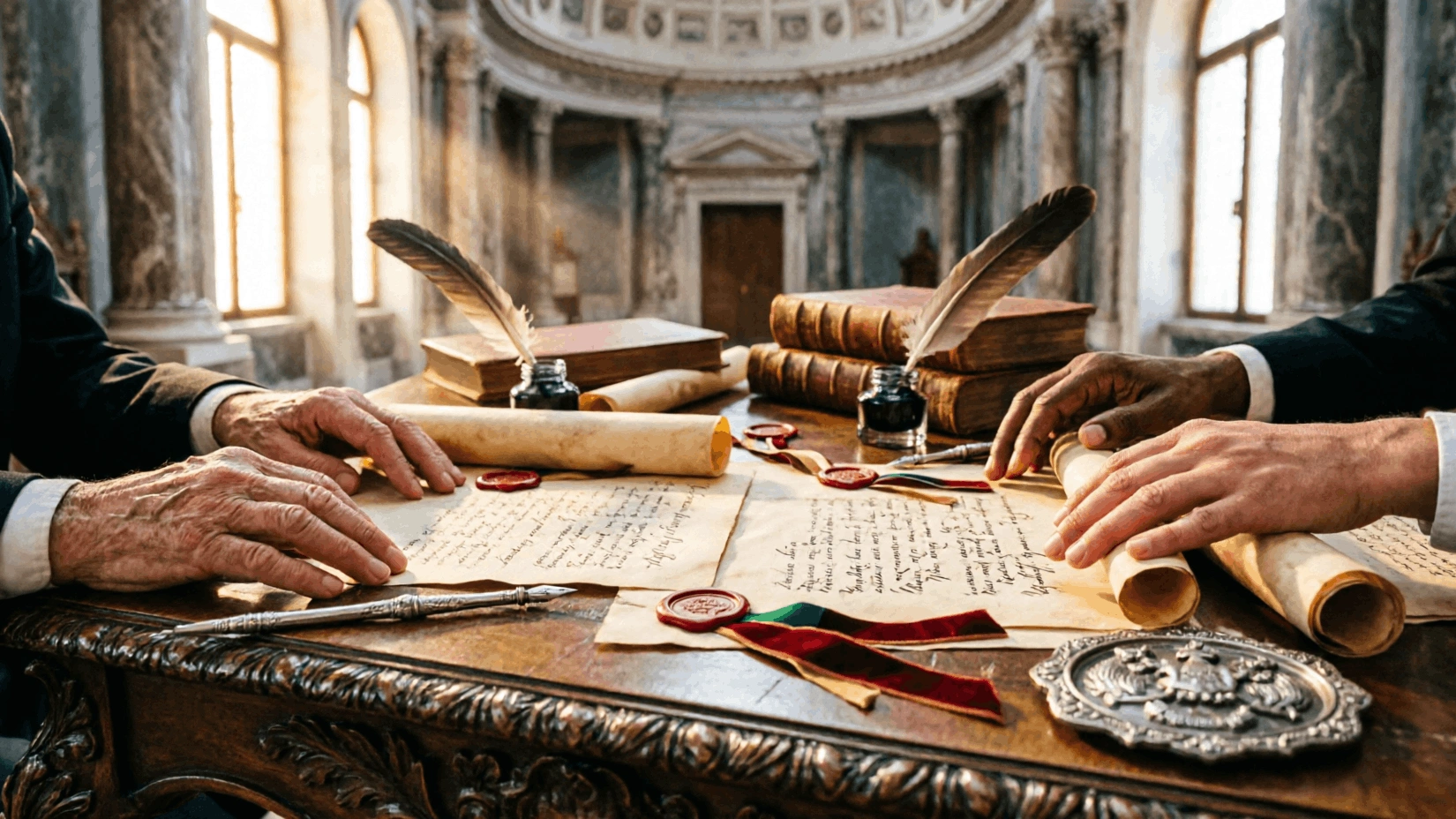
Treaties and historical documents have shaped nations, ended wars, established governments, protected rights, and influenced international relations for centuries. From peace agreements and constitutions to declarations and charters, these documents provide a written record of humanity's political, legal, and diplomatic development.
Start learning Treaties & Documents
Pick a path - everything here is ready for this topic.
Key events
Search and scan key facts for this topic.
Showing of
Named quizzes
Jump into a focused set for Treaties & Documents.
About Treaties & Documents
Treaties and historical documents have shaped nations, ended wars, established governments, protected rights, and influenced international relations for centuries. From peace agreements and constitutions to declarations and charters, these documents provide a written record of humanity's political, legal, and diplomatic development.
Read full about Treaties & Documents →This topic is part of History. Explore the guide, then practice with flashcards and quizzes to lock in what you learn.
🏛️ Did you know?
Treaties & Documents includes 69 curated questions across History.
🏛️ History
Interactive Timeline
Follow key events from ancient times to the modern era.
Quick Facts
- Questions
- 69
- Difficulty
- Mixed
- Category
- History
Flashcards
Which act ended East India Company rule?
1 / 30
Practice Quiz
Test your knowledge with multiple choice questions.
Practice Tests
Take a practice test and improve your score.
View all practice modes →