๐Ÿ›๏ธ History

Religion & Culture

106 questions 30 flashcards 12 min read

Key events

Search and scan key facts for this topic.

Showing of rows

Named quizzes

Jump into a focused set for Religion & Culture.

About Religion & Culture

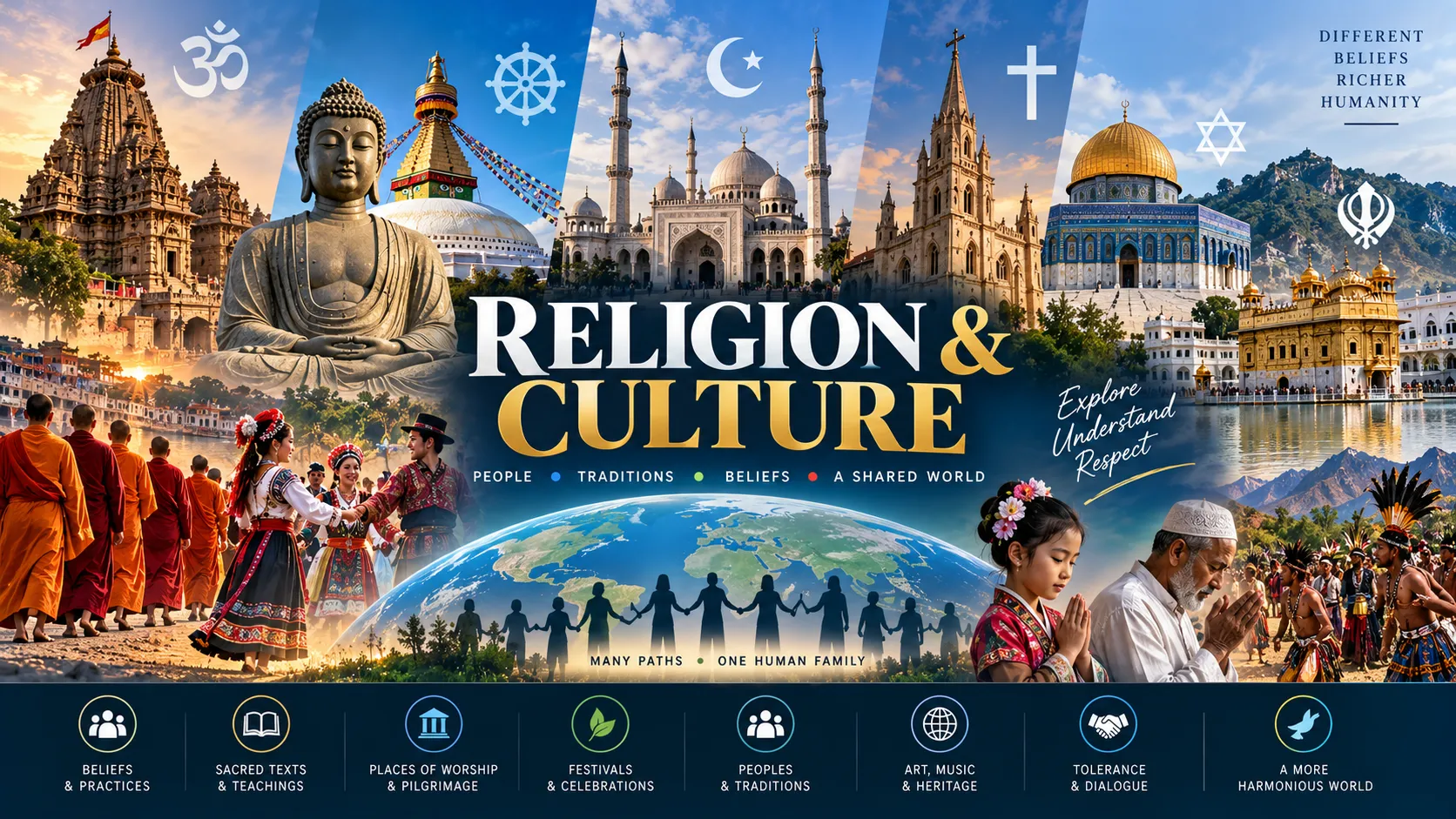
Religion and culture have profoundly influenced the course of human history, shaping civilizations, laws, art, architecture, education, traditions, and social values. Throughout history, religious beliefs and cultural practices have inspired great achievements, guided communities, sparked philosophical thought, and contributed to the development of societies across the world.

This topic is part of History. Explore the guide, then practice with flashcards and quizzes to lock in what you learn.

Read more about Religion & Culture

Quick Facts

Questions
106
Difficulty
Mixed
Category
History

Study Guide

1 guide for Religion & Culture
Available
Browse all guides โ†’

Flashcards

Who was the founder of Sikhism?

1 / 30

Study Flashcards

Practice Quiz

Test your knowledge with multiple choice questions.

106 Questions 15 min Time Unlimited Attempts

Practice Tests

Take a practice test and improve your score.

View all practice modes โ†’

Frequently asked questions

Religion and culture have developed together throughout history. Religious beliefs have influenced customs, laws, art, architecture, education, and traditions, while culture reflects the shared practices and values of societies.
Major world religions with significant historical influence include Hinduism, Buddhism, Judaism, Christianity, and Islam. Each has shaped civilizations, philosophy, education, architecture, and cultural traditions in different parts of the world.
Religion influenced governance, legal systems, education, architecture, literature, art, and daily life in many civilizations. It also inspired the construction of temples, churches, mosques, monasteries, and other important cultural landmarks.
Culture includes language, literature, music, dance, food, clothing, festivals, customs, traditions, social practices, art, and shared values that define the identity of a community or civilization.
Studying religion and culture helps you understand how civilizations developed, how ideas spread across the world, and how beliefs and traditions have shaped societies throughout history. It also promotes a deeper appreciation of global cultural diversity and humanity's shared historical heritage.