✈️ Transport & Travel

Aviation & Aircraft

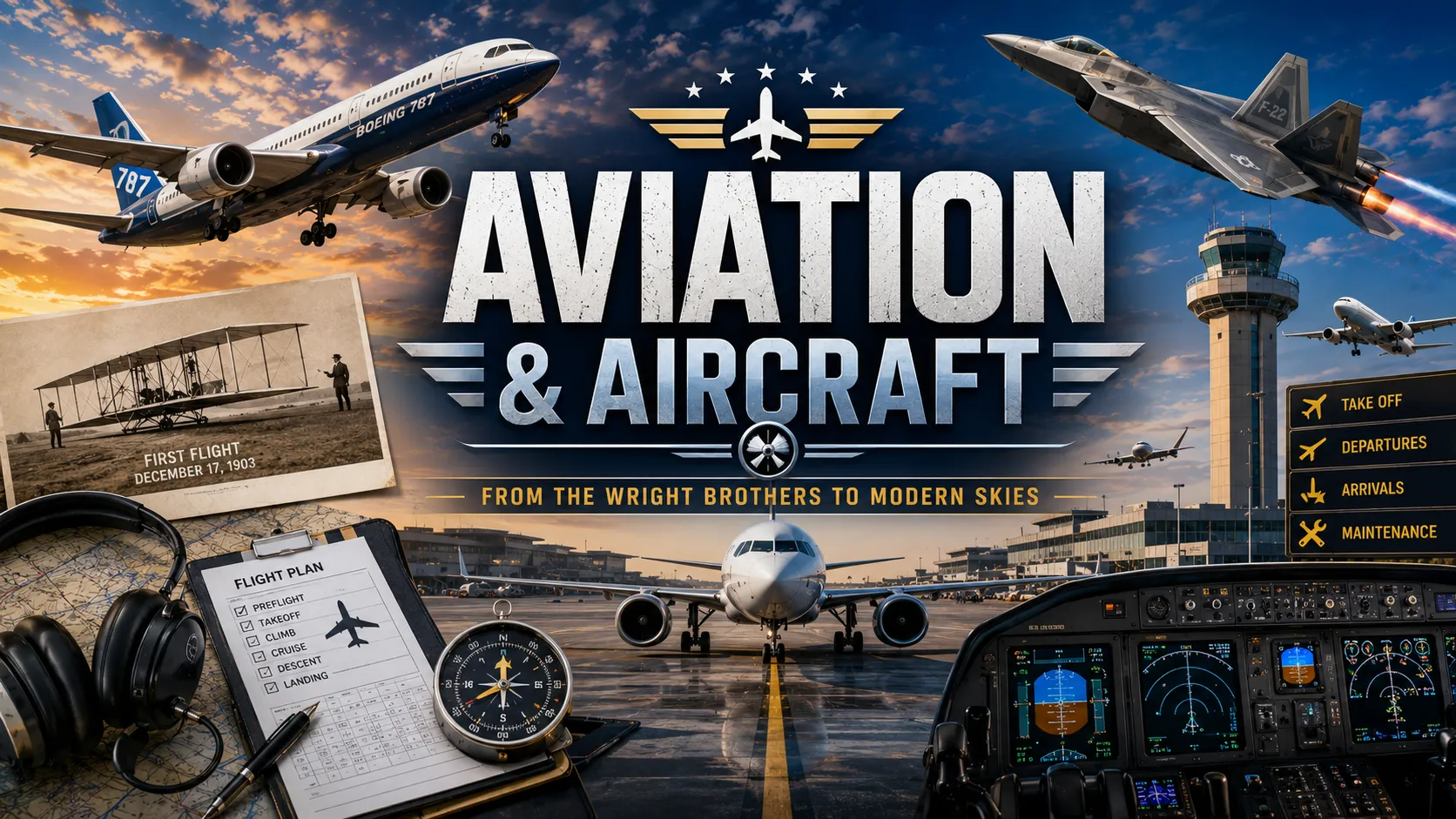
Aviation has transformed the way people travel, connect, and explore the world. From the first powered flight to today's advanced passenger jets and military aircraft, aviation continues to push the boundaries of engineering, innovation, and human achievement.
50 Questions
🃏
25 Flashcards
⏱️
12 min Reading
📶
Mixed Difficulty

About Aviation & Aircraft

Aviation has transformed the way people travel, connect, and explore the world. From the first powered flight to today's advanced passenger jets and military aircraft, aviation continues to push the boundaries of engineering, innovation, and human achievement.

Read full about Aviation & Aircraft →

This topic is part of Transport & Travel - use the routes and modes tools below, then practice with flashcards and quizzes.

✈️ Did you know?

Aviation & Aircraft includes 50 curated questions across Transport & Travel.

✈️ Transport & Travel

Travel Routes

Air, road, rail, and sea - the systems that connect us.

Open full view →
✈️
On the Move

Air, road, rail & sea for Aviation & Aircraft

Aviation
Autos
Travel

Browse Travel Modes

Choose how you explore the world of transport.

View all →
✈️
Aviation
Aircraft & airports
🚗
Cars
Autos & brands
🚆
Rail
Trains & metro
🚢
Ships
Sea travel
🚌
Transit
City systems
🧳
Travel
Destinations

4. Study Guide

1 guide for Aviation & Aircraft

Available
Browse all guides →

Flashcards

What is the name of the phenomenon where rapidly changing wind speed or direction at low altitude poses a severe hazard to aircraft on approach or departure?

1 / 25

Study Flashcards

Practice Quiz

Test your knowledge with multiple choice questions.

❓ 50 Questions ⏱️ 15 min Time 🔁 Unlimited Attempts

Practice Tests

Take a practice test and improve your score.

View all practice modes →

Frequently asked questions

Aviation is the science, technology, and operation of aircraft. It includes everything related to flight, from designing and building airplanes to operating airports, training pilots, managing air traffic, and ensuring passengers and cargo travel safely around the world.
Airplanes fly because their wings create lift as air moves over and under them. Combined with thrust from the engines, lift overcomes the aircraft's weight, allowing it to take off and remain in flight. Pilots continually adjust speed, altitude, and direction to maintain safe and controlled flight.
Aircraft come in many forms, including commercial airliners, private planes, helicopters, cargo aircraft, military jets, gliders, seaplanes, drones, and hot air balloons. Each type is designed for specific tasks such as transportation, rescue operations, agriculture, research, or defense.
Aviation connects countries, supports international trade, enables tourism, delivers emergency medical services, transports essential goods, and allows rapid travel across long distances. It also contributes to scientific research, disaster relief, and global economic development.
The aviation industry is investing in cleaner and more efficient technologies, including sustainable aviation fuels, electric aircraft, hydrogen-powered engines, advanced navigation systems, and quieter aircraft designs. These innovations aim to make flying safer, more environmentally friendly, and more efficient for future generations.

Discussion

Ask questions, share knowledge and help others.

View all →
Log in to join the discussion about Aviation & Aircraft.

Be the first to start a discussion about Aviation & Aircraft.