
Ancient Civilizations & Monuments
Ancient civilizations laid the foundations of the modern world through their achievements in architecture, science, art, governance, and culture. Their monuments continue to tell remarkable stories about the people, beliefs, and innovations that shaped human history.
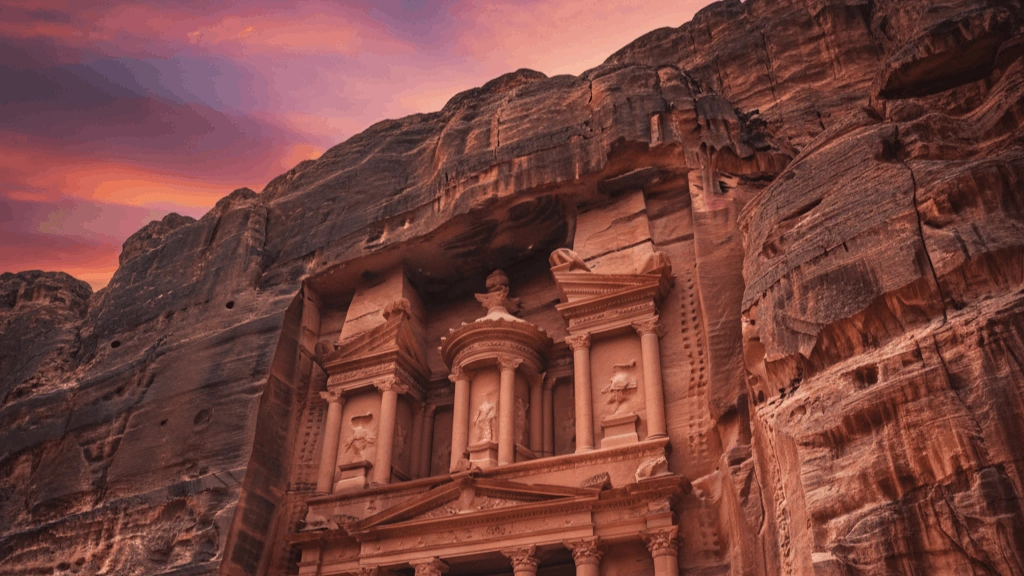
Start learning Ancient Civilizations & Monuments
Pick a path - everything here is ready for this topic.
Key events
Search and scan key facts for this topic.
Showing of
Named quizzes
Jump into a focused set for Ancient Civilizations & Monuments.
About Ancient Civilizations & Monuments
Ancient civilizations laid the foundations of the modern world through their achievements in architecture, science, art, governance, and culture. Their monuments continue to tell remarkable stories about the people, beliefs, and innovations that shaped human history.
Read full about Ancient Civilizations & Monuments →This topic is part of History. Explore the guide, then practice with flashcards and quizzes to lock in what you learn.
🏛️ Did you know?
Ancient Civilizations & Monuments includes 103 curated questions across History.
Quick Facts
- Questions
- 103
- Difficulty
- Mixed
- Category
- History
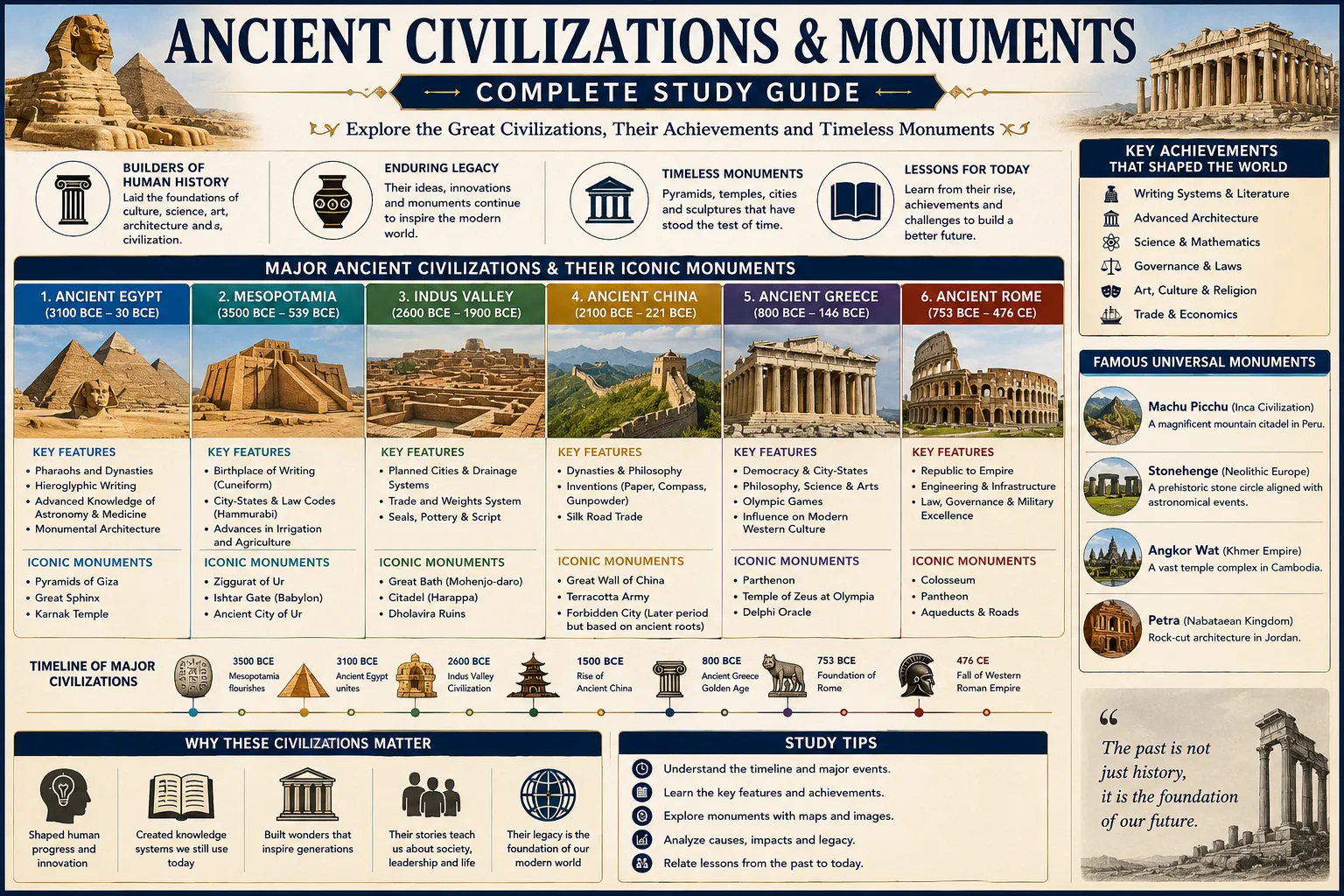
4. Study Guide
1 guide for Ancient Civilizations & Monuments
Flashcards
Which civilization built Machu Picchu?
1 / 30
Practice Quiz
Test your knowledge with multiple choice questions.
Practice Tests
Take a practice test and improve your score.
View all practice modes →