Ancient Civilizations & Monuments Study Guide
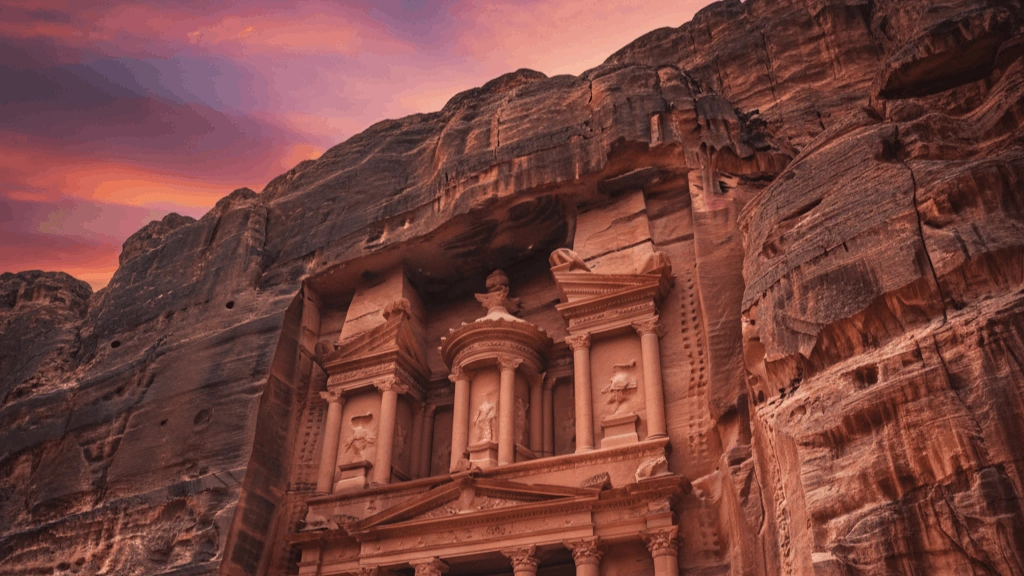
Ancient Civilizations & Monuments: A Complete Study

Ancient Civilizations & Monuments: A Complete Study

The ancient world gave birth to civilisations that laid the intellectual, cultural, and architectural foundations of modern society. Egypt, Mesopotamia, Greece, Rome, China, India, and the Maya developed writing systems, legal codes, monumental architecture, philosophy, and trade networks. Monuments such as the Pyramids of Giza, the Colosseum, the Great Wall of China, Machu Picchu, and Stonehenge stand as enduring testaments to ancient ingenuity and ambition. These civilisati

13 min read · 2,459 words · Pramesh Koirala

Introduction

Ancient civilizations were complex societies that developed organized governments, economies, religions, writing systems, technologies, and distinctive cultures. Many of these societies built remarkable monuments that still help us understand the people who created them.

From the pyramids of ancient Egypt and the ziggurat cities of Mesopotamia to the Parthenon of Greece, Roman Colosseum, Mohenjo-daro, and Great Wall of China, ancient monuments provide evidence about engineering, religion, political power, social organization, and everyday life.

Studying ancient civilizations is not simply about memorizing dates and names. It helps explain how cities developed, how governments were organized, how writing emerged, how trade connected distant regions, and how human societies developed technologies that influenced later history.

Learning Objectives

By the end of this guide, you should be able to:

  • Define an ancient civilization and identify its major characteristics.

  • Locate major ancient civilizations on a world map.

  • Explain how geography influenced the development of early societies.

  • Identify important monuments and their purposes.

  • Compare the achievements of different ancient civilizations.

  • Understand why ancient monuments remain historically important.

What Is an Ancient Civilization?

A civilization is a complex human society characterized by organized institutions, settlements, economic systems, cultural traditions, and technologies.

Civilizations commonly developed:

  • Permanent settlements

  • Agriculture

  • Government

  • Social classes

  • Specialized occupations

  • Trade networks

  • Writing or record-keeping systems

  • Religious institutions

  • Engineering and architecture

The development of civilization was not a single event. Different societies developed complex institutions at different times and in different parts of the world.

Why Did Early Civilizations Develop?

Geography played a major role.

Fertile Land

Early agriculture depended on fertile soil and reliable water.

Major early civilizations developed near rivers such as:

  • Nile

  • Tigris

  • Euphrates

  • Indus

  • Yellow River

These rivers provided water for crops, transportation, fishing, and sometimes fertile soil deposited by flooding.

Agricultural Surplus

When farmers produced more food than their families immediately needed, some people could specialize in other activities.

They could become:

  • Builders

  • Soldiers

  • Priests

  • Traders

  • Metalworkers

  • Administrators

  • Craftspeople

This specialization helped societies become more complex.

Major Ancient Civilizations

Some of the most important ancient civilizations include:

Civilization

Approximate Region

Major Contributions

Mesopotamia

Modern Iraq and surrounding areas

Writing, cities, law

Ancient Egypt

Nile Valley

Pyramids, hieroglyphs, engineering

Indus Valley Civilization

Modern Pakistan and northwest India

Urban planning, drainage

Ancient China

Yellow River region

Writing, bronze technology, administration

Ancient Greece

Mediterranean

Philosophy, democracy, architecture

Ancient Rome

Mediterranean and Europe

Law, engineering, roads

Maya

Mesoamerica

Astronomy, writing, architecture

Aztec

Central Mexico

Tenochtitlan, engineering, administration

Inca

Andes of South America

Roads, terraces, stone engineering

These civilizations were not identical. They developed different political systems, religions, languages, technologies, and artistic traditions.

Mesopotamia: The Land Between Rivers

Mesopotamia means "land between rivers" and refers primarily to the region between the Tigris and Euphrates Rivers.

It is often called one of the world's earliest centers of urban civilization.

Important Mesopotamian societies included:

  • Sumerians

  • Akkadians

  • Babylonians

  • Assyrians

Sumer

The Sumerians developed some of the earliest known cities, including:

  • Uruk

  • Ur

  • Eridu

  • Lagash

They also developed cuneiform, one of the world's earliest known writing systems.

Ziggurats

A ziggurat was a large stepped temple structure.

Ziggurats were religious and architectural centers rather than pyramidal tombs.

The Ziggurat of Ur is one of the best-known surviving examples.

The Code of Hammurabi

King Hammurabi of Babylon is famous for a collection of laws created during his reign.

The Code of Hammurabi illustrates how governments could establish written rules governing areas such as property, trade, family relationships, and punishment.

The surviving stone monument is an important historical source for understanding Babylonian society.

Ancient Egypt

Ancient Egyptian civilization developed along the Nile River in northeastern Africa.

The Nile provided:

  • Water

  • Agricultural land

  • Transportation

  • Fishing

  • A communication route

Egyptian civilization lasted for thousands of years and developed a distinctive system of government, religion, writing, art, and architecture.

The Pharaoh

The pharaoh was the ruler of ancient Egypt.

Egyptian kings were closely connected with religion and were regarded as possessing divine or sacred status.

The Pyramids of Giza

The Pyramids of Giza are among the world's most famous ancient monuments.

The complex includes:

  • Great Pyramid of Giza

  • Pyramid of Khafre

  • Pyramid of Menkaure

  • Great Sphinx

The Great Pyramid, built for Pharaoh Khufu, is the largest of the three main pyramids.

It was constructed during Egypt's Old Kingdom, more than 4,500 years ago.

The pyramids were monumental tombs associated with royal burial and ancient Egyptian beliefs about death and the afterlife.

Egyptian Writing and Culture

Ancient Egyptians used hieroglyphs, a writing system that combined symbols representing sounds, words, and concepts.

Important achievements included:

  • Hieroglyphic writing

  • Mathematics

  • Medicine

  • Calendar systems

  • Monumental architecture

  • Papyrus-based writing

The Rosetta Stone played a crucial role in deciphering Egyptian hieroglyphs because it contained the same decree in multiple scripts.

Indus Valley Civilization

The Indus Valley Civilization, also called the Harappan Civilization, developed in parts of present-day Pakistan and northwestern India.

Important sites include:

  • Harappa

  • Mohenjo-daro

  • Dholavira

The civilization is especially famous for sophisticated urban planning.

Mohenjo-daro

Mohenjo-daro featured:

  • Planned streets

  • Brick buildings

  • Drainage systems

  • Wells

  • Public structures

Its drainage and sanitation systems demonstrate advanced urban engineering for its period.

One of the major mysteries is that the civilization's writing system has not been conclusively deciphered.

Ancient China

Early Chinese civilization developed around major river systems, particularly the Yellow River.

Important ancient dynasties included:

  • Shang

  • Zhou

  • Qin

  • Han

Shang Dynasty

The Shang are known for:

  • Bronze technology

  • Writing

  • Royal tombs

  • Organized political authority

Oracle bones provide important evidence about Shang writing and religious practices.

The Great Wall of China

The Great Wall is one of the world's most recognizable monuments.

It was not built as one continuous structure by a single ruler.

Different walls and defensive systems were constructed and expanded during different periods.

The Qin dynasty, under Emperor Qin Shi Huang, is associated with major early efforts to connect defensive walls.

Later dynasties, especially the Ming dynasty, constructed or rebuilt many sections that survive today.

The wall served defensive and administrative purposes, including controlling movement and protecting frontier regions.

Ancient Greece

Ancient Greek civilization developed around the Aegean and Mediterranean worlds.

Greek societies included independent city-states such as:

  • Athens

  • Sparta

  • Corinth

  • Thebes

Ancient Greece had a major influence on:

  • Philosophy

  • Politics

  • Mathematics

  • Science

  • Literature

  • Theater

  • Architecture

The Parthenon

The Parthenon stands on the Acropolis of Athens.

Built during the 5th century BCE, it was dedicated to Athena, the patron goddess of Athens.

The monument is famous for:

  • Doric architecture

  • Sculptural decoration

  • Classical proportions

  • Engineering precision

The Parthenon demonstrates the importance of religion, civic identity, artistic achievement, and political power in ancient Athens.

Ancient Rome

Rome began as a city in Italy and eventually developed into one of the largest empires in ancient history.

Roman civilization was influenced by earlier cultures, especially the Greeks and Etruscans, but developed its own institutions and technologies.

Roman achievements included:

  • Roads

  • Aqueducts

  • Bridges

  • Concrete construction

  • Law

  • Military organization

  • Urban planning

The Colosseum

The Colosseum in Rome was completed in the 1st century CE.

It was a massive amphitheater used for public spectacles, including gladiatorial contests and other performances.

Its design included:

  • Multiple seating levels

  • Entrances and exits

  • Underground spaces

  • Complex crowd-management systems

The Colosseum demonstrates Roman engineering and the importance of public entertainment in Roman society.

Roman Aqueducts

Roman engineers constructed aqueducts to transport water over long distances.

Aqueducts supplied:

  • Cities

  • Public baths

  • Fountains

  • Private buildings

  • Industrial facilities

Their success depended on careful surveying and the controlled use of gravity.

Roman aqueducts are an excellent example of how infrastructure can transform urban life.

Maya Civilization

The Maya developed in Mesoamerica, particularly in regions that are now part of Mexico, Guatemala, Belize, Honduras, and El Salvador.

Maya civilization was not a single unified empire. It consisted of numerous cities and political states.

Major achievements included:

  • Hieroglyphic writing

  • Mathematics

  • Astronomy

  • Calendar systems

  • Architecture

  • Monumental sculpture

Maya Monuments

Important Maya sites include:

  • Tikal

  • Palenque

  • Chichén Itzá

  • Copán

Many sites contain pyramidal temples, plazas, palaces, and carved monuments.

Aztec Civilization

The Aztec Empire developed in central Mexico before the arrival of Spanish forces in the early 16th century.

Its capital was Tenochtitlan, located on an island in Lake Texcoco.

Tenochtitlan had:

  • Causeways

  • Canals

  • Temples

  • Markets

  • Residential districts

  • Agricultural systems

The city was one of the largest urban centers in the Americas at the time of Spanish contact.

Inca Civilization

The Inca Empire developed in the Andes of South America.

Its territory covered large parts of modern:

  • Peru

  • Bolivia

  • Ecuador

  • Chile

  • Argentina

  • Colombia

The Inca developed impressive systems of:

  • Roads

  • Bridges

  • Terraced agriculture

  • Administration

  • Stone construction


Machu Picchu

Machu Picchu is one of the best-known Inca archaeological sites.

Located high in the Andes of present-day Peru, the site contains:

  • Stone buildings

  • Agricultural terraces

  • Plazas

  • Religious structures

  • Carefully engineered stonework

Its exact purpose remains debated, although evidence indicates that it had important royal, religious, and ceremonial functions.

Types of Ancient Monuments

Ancient monuments were built for many different purposes.

Religious Monuments

Examples:

  • Egyptian temples

  • Greek temples

  • Mesopotamian ziggurats

  • Maya temples

These structures reflected religious beliefs and the authority of religious institutions.

Tombs

Examples:

  • Egyptian pyramids

  • Royal tombs

  • Mausoleums

Tombs often reveal how societies understood death and the afterlife.

Defensive Structures

Examples:

  • City walls

  • Fortresses

  • Defensive barriers

  • The Great Wall

These protected settlements and controlled movement.

Public Buildings

Examples:

  • Roman amphitheaters

  • Greek civic structures

  • Palaces

  • Public baths

These buildings supported political, social, and cultural life.

Roads and Infrastructure

Road systems, bridges, aqueducts, canals, and drainage systems were also major achievements.

They show that ancient societies were concerned with practical engineering as well as monumental architecture.

Comparing Ancient Civilizations

Civilization

Famous Monument

Major Achievement

Mesopotamia

Ziggurat of Ur

Writing and early cities

Egypt

Great Pyramid

Monumental architecture

Indus Valley

Mohenjo-daro

Urban planning

China

Great Wall

Defensive engineering

Greece

Parthenon

Classical architecture

Rome

Colosseum

Engineering and public architecture

Maya

Tikal

Astronomy and architecture

Aztec

Templo Mayor

Urban and religious architecture

Inca

Machu Picchu

Stone engineering and terraces

How Were Ancient Monuments Built?

Ancient builders did not have modern cranes, trucks, computers, or power tools.

Yet they developed sophisticated methods.

Human Labor

Large construction projects required organized labor.

Governments could mobilize:

  • Skilled craftsmen

  • Engineers

  • Farmers

  • Laborers

  • Soldiers

  • Architects

Simple Machines

Ancient builders used tools and machines based on principles such as:

  • Levers

  • Ramps

  • Rollers

  • Pulleys

  • Wedges

Mathematics and Measurement

Accurate construction required geometry, surveying, and measurement.

The precision of many ancient structures demonstrates advanced practical knowledge.

What Ancient Monuments Tell Us

Monuments are valuable historical evidence.

They can reveal:

Religion

Temples and tombs provide clues about beliefs concerning gods, death, and the afterlife.

Political Power

Huge monuments required resources and organization. Their construction could demonstrate the authority of rulers.

Technology

Buildings reveal knowledge of:

  • Mathematics

  • Materials

  • Engineering

  • Architecture

Social Organization

Large construction projects show that societies could organize thousands of people for shared objectives.

Economy

The availability of stone, metals, timber, food, and labor tells historians about economic systems and trade.

Preservation and Archaeology

Ancient monuments face many threats.

These include:

  • Weathering

  • Earthquakes

  • Flooding

  • Pollution

  • War

  • Tourism

  • Urban development

  • Looting

  • Climate change

Archaeologists use methods such as:

  • Excavation

  • Surveying

  • Dating techniques

  • Remote sensing

  • Photogrammetry

  • 3D scanning

  • Material analysis

Modern conservation aims to protect ancient sites while allowing researchers and the public to study them.

Common Mistakes

Mistake 1: Calling Every Ancient Monument a "Wonder"

The term Seven Wonders of the Ancient World refers to a specific historical list. Not every famous ancient structure was included.

Mistake 2: Assuming the Pyramids Were Built by Slaves

The traditional image of pyramids being built entirely by enslaved workers is misleading.

Archaeological evidence indicates that large numbers of organized workers, including skilled laborers, participated in pyramid construction.

Mistake 3: Thinking the Great Wall Was Built at One Time

The Great Wall is a collection of defensive walls and structures built, rebuilt, and connected during different periods.

Mistake 4: Assuming Rome Invented Everything

Roman civilization borrowed extensively from earlier cultures, particularly Greek and Etruscan traditions, while making important innovations of its own.

Mistake 5: Treating the Maya as a Single Empire

Maya civilization consisted of numerous city-states and political entities rather than one continuously unified empire.

Mistake 6: Assuming Ancient People Lacked Scientific Knowledge

Ancient societies developed sophisticated knowledge of astronomy, mathematics, medicine, engineering, agriculture, and architecture.

Interesting Facts

  • The Great Pyramid of Giza is the only surviving monument of the traditional Seven Wonders of the Ancient World.

  • Mohenjo-daro had sophisticated drainage and urban-planning systems.

  • The Parthenon was dedicated to Athena.

  • Roman aqueducts used carefully calculated gradients to move water using gravity.

  • The Maya developed sophisticated mathematical and astronomical traditions.

  • Machu Picchu contains remarkable stonework and agricultural terraces.

  • The Great Wall was built and modified over many centuries rather than in a single construction project.

  • Ancient monuments were often brightly decorated or painted, although much of the original color has disappeared.

  • Many ancient monuments had practical purposes in addition to symbolic or religious functions.

  • Archaeology continues to change our understanding of ancient civilizations as new evidence is discovered.

Memory Tips

Remember the Major River Civilizations

Use N-E-I-Y:

  • Nile → Egypt

  • Euphrates/Tigris → Mesopotamia

  • Indus → Indus Valley

  • Yellow River → China

Remember Famous Monuments

P-G-P-C-M

  • Pyramids → Egypt

  • Great Wall → China

  • Parthenon → Greece

  • Colosseum → Rome

  • Machu Picchu → Inca

Summary

Ancient civilizations developed complex societies with agriculture, government, trade, religion, technology, specialized labor, and cultural institutions. Many emerged around fertile river valleys, although important civilizations also developed in deserts, mountains, forests, and other environments.

Their monuments provide some of the clearest physical evidence of their achievements. The pyramids demonstrate Egyptian engineering and religious beliefs; Mesopotamian ziggurats reveal the importance of temples; Mohenjo-daro demonstrates sophisticated urban planning; the Great Wall illustrates Chinese defensive engineering; the Parthenon represents Greek architectural traditions; the Colosseum reflects Roman engineering and public culture; and Machu Picchu demonstrates Inca stonework and adaptation to mountainous terrain.

Ancient monuments should not be viewed only as spectacular buildings. They are historical sources that help researchers understand technology, religion, politics, economics, social organization, and human creativity.

Frequently Asked Questions

1. What is an ancient civilization?

An ancient civilization is a complex society from the distant past with organized communities, government, economic systems, cultural traditions, and specialized institutions.

2. Which was the first ancient civilization?

There is no single universally accepted answer because civilization developed gradually in different regions. Mesopotamian cities, particularly those associated with Sumer, are among the earliest known examples of urban civilization.

3. What is the oldest surviving wonder of the ancient world?

The Great Pyramid of Giza is the only surviving monument from the traditional Seven Wonders of the Ancient World.

4. Why were pyramids built in ancient Egypt?

Egyptian pyramids were monumental tombs associated with royal burial and beliefs about the afterlife.

5. Why was the Great Wall of China built?

Different sections served defensive and administrative purposes, including protecting territories and controlling movement along frontier regions.

6. What was special about Mohenjo-daro?

Mohenjo-daro had carefully planned streets, brick buildings, wells, drainage systems, and other features indicating sophisticated urban organization.

7. Why is the Parthenon important?

The Parthenon is a major example of Classical Greek architecture and was dedicated to Athena, the patron goddess of Athens.

8. What did Roman aqueducts do?

Roman aqueducts transported water from sources to cities and settlements, supporting drinking water supplies, baths, fountains, and other activities.

9. Why is Machu Picchu important?

Machu Picchu is an exceptionally preserved Inca site known for its stone architecture, terraces, and mountain setting.

10. Why are ancient monuments important today?

They provide physical evidence about ancient societies and help researchers understand their technology, religion, politics, economy, architecture, and daily life.

Key Takeaways

  • Ancient civilizations developed organized systems of government, agriculture, trade, religion, and specialized work.

  • Rivers played a major role in the development of several early civilizations.

  • Ancient monuments served religious, political, defensive, funerary, and practical purposes.

  • The pyramids, Great Wall, Parthenon, Colosseum, Mohenjo-daro, Maya cities, and Machu Picchu represent different architectural traditions.

  • Ancient builders used sophisticated mathematics, surveying, organization, and engineering despite lacking modern machinery.

  • Monuments are valuable historical evidence, not simply tourist attractions.

  • Archaeological discoveries continue to change our understanding of ancient societies.

References