🔬 Science

Biology & Life Sciences

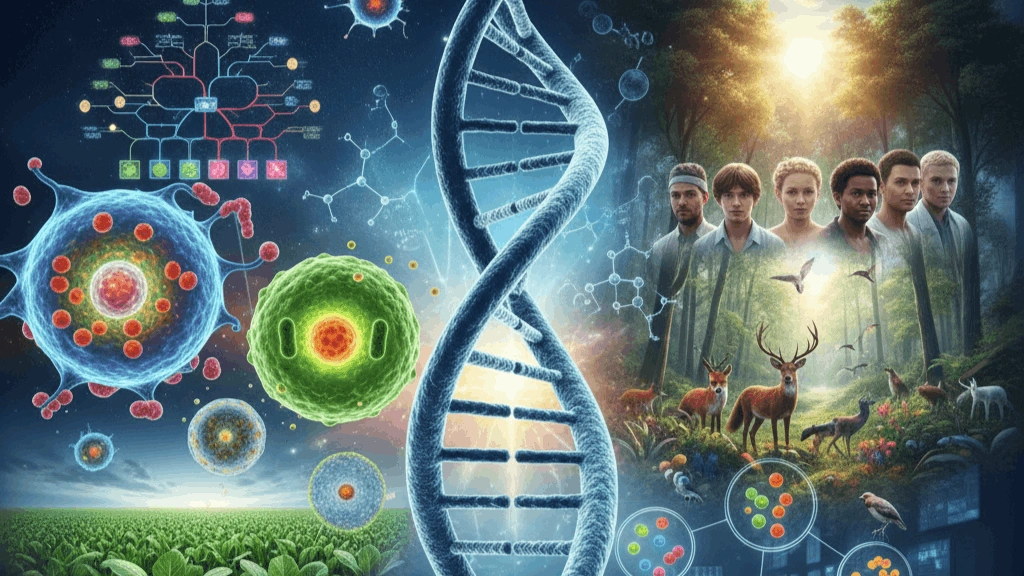
Life on Earth exists in an extraordinary variety of forms, from microscopic cells to towering trees and complex animal species. Biology helps us understand how living organisms grow, survive, evolve, and interact with one another and their environment.
114 Questions
30 Flashcards
12 min Reading
Beginner Level

Science Fields

Search and scan key facts for this topic.

Showing of

Named quizzes

Jump into a focused set for Biology & Life Sciences.

About Biology & Life Sciences

Life on Earth exists in an extraordinary variety of forms, from microscopic cells to towering trees and complex animal species. Biology helps us understand how living organisms grow, survive, evolve, and interact with one another and their environment.

Read full about Biology & Life Sciences →

This topic is part of Science. Explore the guide, then practice with flashcards and quizzes to lock in what you learn.

🔬 Did you know?

Biology & Life Sciences includes 114 curated questions across Science.

🔬 Science

Concept Lab

Visual diagrams and core science concepts to explore.

Open Lab →

matching questions

Quick Facts

Questions
119
Difficulty
Mixed
Category
Science

4. Study Guide

1 guide for Biology & Life Sciences

Available
Browse all guides →

Flashcards

Which animal is king of jungle?

1 / 30

Study Flashcards

Practice Quiz

Test your knowledge with multiple choice questions.

114 Questions 15 min Time Unlimited Attempts

Practice Tests

Take a practice test and improve your score.

View all practice modes →

Frequently asked questions

Biology is the branch of science that studies living organisms and the processes that keep them alive. It covers everything from microscopic bacteria and plants to animals, humans, and entire ecosystems, helping us understand how life functions and changes over time.
Every living organism is made up of one or more cells. Cells carry out essential tasks such as producing energy, growing, repairing tissues, and reproducing. In multicellular organisms, different types of cells work together to form tissues, organs, and organ systems.
Genetics explains how characteristics are inherited through genes and DNA from one generation to the next. Evolution looks at how populations of organisms gradually change over many generations, helping species adapt to their environment and giving rise to new forms of life.
Biology influences many aspects of daily life, including healthcare, nutrition, agriculture, environmental conservation, and medicine. Understanding biological principles helps us make informed decisions about health, food, and the environment while supporting scientific discoveries that improve quality of life.
Studying biology helps us understand how living organisms function, interact, and adapt to their surroundings. It builds a strong foundation for careers in medicine, environmental science, biotechnology, agriculture, and research, while also encouraging a deeper appreciation for the diversity and complexity of life on Earth.