๐Ÿ’ป Technology

Computing History & Innovations

75 questions 30 flashcards 16 min read

Named quizzes

Jump into a focused set for Computing History & Innovations.

About Computing History & Innovations

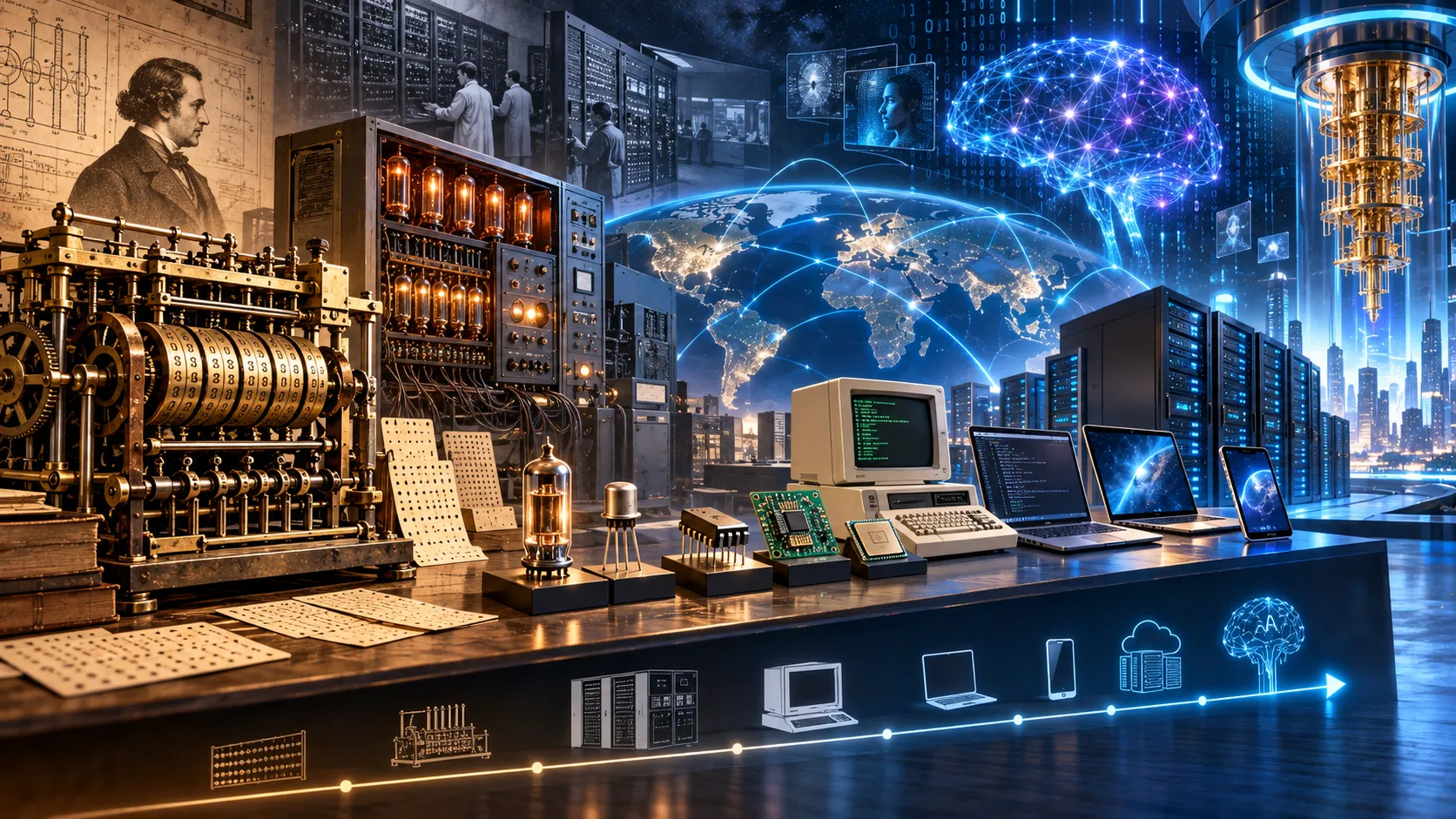
Explore the evolution of computing, from mechanical calculators and early programmable machines to personal computers, the internet, smartphones, cloud computing, and artificial intelligence. Discover the inventors, breakthroughs, technologies, and milestones that transformed how humans calculate, communicate, work, and create.

This topic is part of Technology. Explore the guide, then practice with flashcards and quizzes to lock in what you learn.

Read more about Computing History & Innovations

Tech Domains

Pick a domain and dive in.

View all โ†’
๐Ÿ–ฅ๏ธ
Hardware
Devices & chips ยท 5 questions
Start ยท 5 Q โ†’
๐Ÿงฉ
Software
Apps & OS ยท 8 questions
Start ยท 8 Q โ†’
๐ŸŒ
Internet
Web & networks ยท 3 questions
Start ยท 3 Q โ†’
๐Ÿค–
AI & Data
ML & analytics ยท 6 questions
Start ยท 6 Q โ†’
๐Ÿ”
Cybersecurity
Safety & privacy
Start โ†’
๐Ÿ“ฑ
Gadgets
Consumer tech
Start โ†’

Quick Facts

Questions
75
Difficulty
Mixed
Category
Technology

Study Guide

1 guide for Computing History & Innovations
Available
Browse all guides โ†’

Flashcards

Which 1946 computer used about 18,000 vacuum tubes and weighed roughly 30 tons?

1 / 30

Study Flashcards

Practice Quiz

Test your knowledge with multiple choice questions.

75 Questions 15 min Time Unlimited Attempts

Practice Tests

Take a practice test and improve your score.

View all practice modes โ†’

Frequently asked questions

Charles Babbage is widely regarded as an important pioneer of computing because of his nineteenth-century designs for the Difference Engine and Analytical Engine. The Analytical Engine included conceptual elements similar to those found in modern programmable computers.
Ada Lovelace was a nineteenth-century mathematician who studied Charles Babbage's Analytical Engine. Her published notes included a method for calculating Bernoulli numbers using the proposed machine, leading her to be widely associated with the early history of computer programming.
The transistor and later the integrated circuit were crucial to computer miniaturization. They replaced bulky vacuum-tube technology and allowed increasing numbers of electronic components to fit into progressively smaller devices.
The internet is the global system of interconnected computer networks. The World Wide Web is a service that operates over the internet and allows users to access interconnected web pages and other resources using technologies such as HTTP and URLs.
The microprocessor placed major processing functions onto a small integrated chip. This dramatically reduced the size and cost of computing systems and helped make personal computers and many modern electronic devices practical.