


Introduction
Aviation is the science, technology, and activity of flying aircraft through Earth's atmosphere. It includes passenger airlines, military aircraft, cargo planes, helicopters, gliders, business jets, and many other types of flying machines.
Aircraft have transformed transportation by allowing people and goods to travel across continents and oceans in hours rather than days or weeks. Aviation has also influenced exploration, trade, emergency services, science, agriculture, communication, and national defense.
Understanding aviation requires more than knowing famous aircraft names. It involves learning how aircraft generate lift, how engines provide thrust, how pilots control flight, and why different aircraft have different designs.
This guide presents interesting facts, real examples, and common mistakes that help learners understand aviation more accurately.
Learning Objectives
By the end of this guide, you should be able to:
Explain basic aviation concepts and aircraft terminology.
Identify major types of aircraft and their purposes.
Understand how airplanes generate lift and thrust.
Recognize important aircraft and aviation milestones.
Distinguish common aviation myths from scientific facts.
Understand why aircraft have different designs and configurations.
What Is an Aircraft?
An aircraft is a machine capable of flight through the atmosphere.
Aircraft can be classified into several broad groups:
Airplanes
Helicopters
Gliders
Balloons
Airships
Uncrewed aircraft
Tiltrotor aircraft
Airplanes and helicopters are fundamentally different.
An airplane generates most of its lift through wings moving forward through the air, while a helicopter generates lift primarily through rotating rotor blades.
How Does an Airplane Fly?
Four basic forces are commonly used to explain airplane flight:
Lift
Weight
Thrust
Drag
Lift
Lift is the aerodynamic force that acts generally upward and supports an aircraft against gravity.
Wings are shaped and positioned to produce useful aerodynamic forces as air flows around them.
Weight
Weight is the force caused by gravity acting on the aircraft's mass.
The aircraft must generate sufficient lift to support its weight during steady level flight.
Thrust
Thrust is the force that propels an aircraft forward.
It can be produced by:
Propellers
Turbofan engines
Turbojet engines
Turboprop engines
Rockets
Drag
Drag is the aerodynamic resistance opposing an aircraft's motion through the air.
Aviation engineering is partly a process of balancing these forces efficiently.
Interesting Fact: Wings Do Not Simply "Push Air Down"
A common simplified explanation says that wings fly because they push air downward.
There is some truth in the idea: aircraft wings create a downward change in the airflow, and the resulting aerodynamic forces contribute to lift.
However, that is not the whole explanation.
Lift depends on factors including:
Airflow
Wing shape
Angle of attack
Air density
Airspeed
Wing area
Different wing designs produce lift in different ways.
The Main Parts of an Airplane
A conventional airplane usually has several major components.
Fuselage
The fuselage is the main body of the aircraft.
It may contain:
Passengers
Cargo
Flight crew
Avionics
Fuel systems
Equipment
Wings
Wings generate lift and often contain important systems such as fuel tanks, control surfaces, and engines.
Empennage
The empennage is the tail assembly.
It generally includes:
Vertical stabilizer
Rudder
Horizontal stabilizer
Elevator
These surfaces help control and stabilize the aircraft.
Landing Gear
Landing gear supports the aircraft during:
Taxiing
Takeoff
Landing
Parking
Many modern airliners use retractable landing gear to reduce aerodynamic drag during flight.
How Do Pilots Control an Airplane?
Aircraft rotate around three primary axes.
Axis | Rotation | Main Control |
Longitudinal | Roll | Ailerons |
Lateral | Pitch | Elevator |
Vertical | Yaw | Rudder |
Roll
Roll is rotation around the aircraft's nose-to-tail axis.
Ailerons are used primarily to control roll.
Pitch
Pitch is rotation around the aircraft's side-to-side axis.
The elevator primarily controls pitch.
Yaw
Yaw is rotation around the vertical axis.
The rudder primarily controls yaw.
These controls work together rather than operating as completely independent systems.
Types of Aircraft
Commercial Airliners
Airliners transport passengers on scheduled flights.
Examples include:
Airbus A320 family
Boeing 737 family
Boeing 787
Airbus A350
They are designed around efficiency, safety, passenger capacity, and range.
Cargo Aircraft
Cargo aircraft transport freight rather than primarily passengers.
Some are specially designed freighters, while others are converted from passenger aircraft.
Examples include:
Boeing 747 freighter
Boeing 777 freighter
Airbus A330 freighter
Business Jets
Business jets are designed for private, corporate, government, or charter travel.
They range from small light jets to large long-range aircraft.
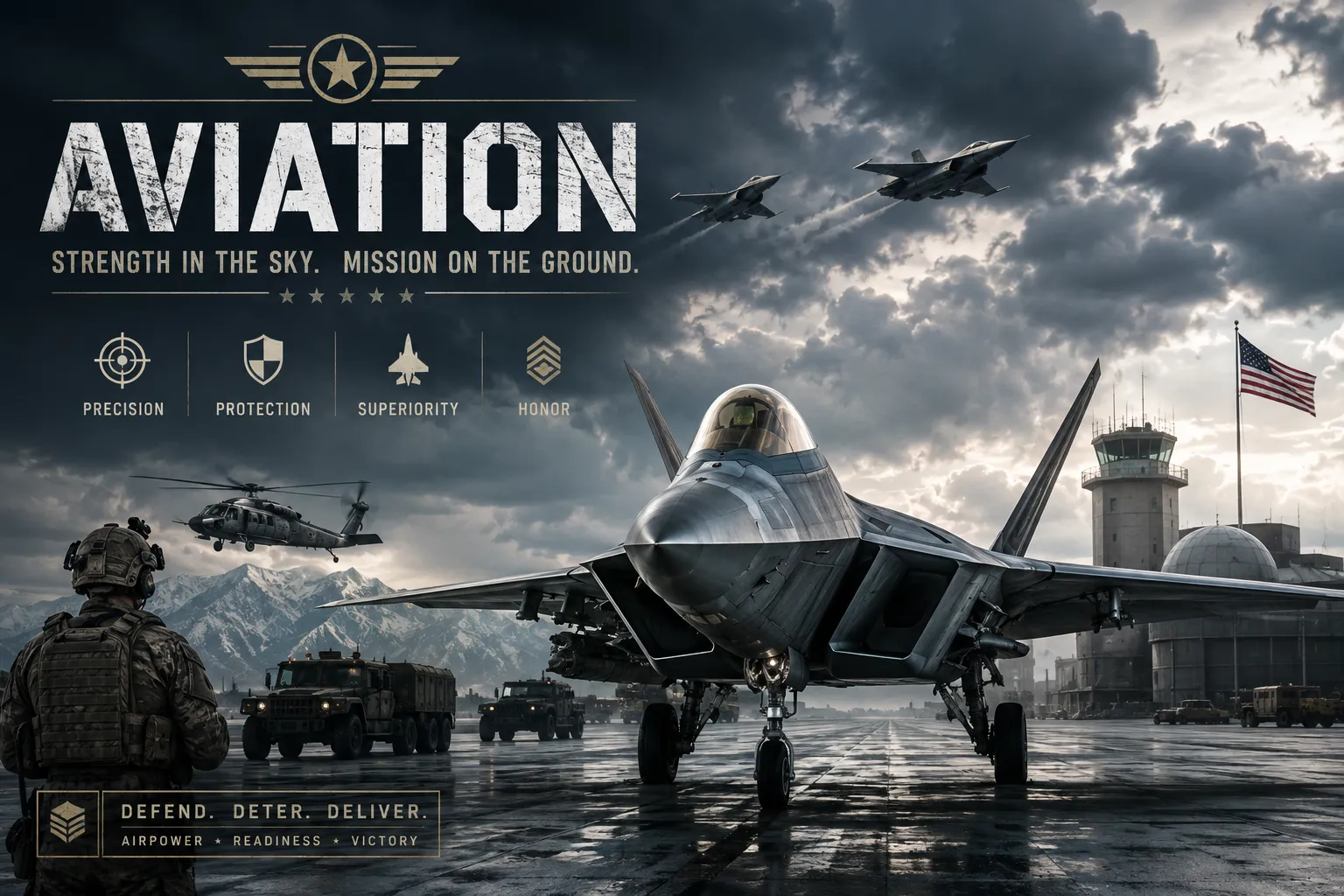
Military Aircraft
Military aviation includes:
Fighters
Bombers
Transport aircraft
Tankers
Surveillance aircraft
Maritime patrol aircraft
Training aircraft
Each type is designed for specific missions.
Helicopters
Helicopters use rotating rotor systems to generate lift.
Unlike conventional airplanes, they can:
Take off vertically
Hover
Land in confined areas
Move sideways and backward
These capabilities make helicopters useful for rescue operations, medical evacuation, construction, policing, and military missions.
Interesting Fact: Helicopters Can Fly Backward
A helicopter can generate thrust in directions that allow it to move backward or sideways.
This is one of the major differences between helicopters and conventional fixed-wing airplanes.
However, helicopter pilots must carefully manage aerodynamic conditions because some maneuvers can become dangerous at particular airspeeds, wind conditions, and power settings.
Jet Engines and Propellers
Aircraft can use several types of propulsion.
Turbofan Engines
Modern commercial jetliners commonly use high-bypass turbofan engines.
They work by accelerating a large mass of air, with much of that air passing around the engine core.
They are efficient for high-speed commercial flight.
Turbojets
Turbojets produce thrust primarily by accelerating exhaust gases.
They were important in the early development of jet aviation but are less common in modern commercial airliners.
Turboprops
A turboprop uses a gas turbine engine to drive a propeller.
They are particularly useful for regional aircraft because propellers can be efficient at moderate speeds.
Piston Engines
Small aircraft often use piston engines similar in basic principle to automobile engines, although aviation piston engines have specialized designs.
Why Do Airplanes Fly So High?
Commercial airliners commonly cruise at altitudes around 30,000–42,000 feet.
Flying at high altitude provides several advantages.
Lower Air Density
Thinner air reduces aerodynamic drag at cruising speed.
Improved Fuel Efficiency
Reduced drag can allow an aircraft to travel efficiently over long distances.
Weather Avoidance
Aircraft can often fly above much of the weather occurring in the lower atmosphere, although significant weather systems can still extend to high altitudes.
Traffic Management
Controlled cruising altitudes help organize aircraft operating along busy routes.
Interesting Fact: Airliners Do Not Need Oxygen Masks During Normal Cruise
At high altitude, the air contains much less pressure than at sea level.
Aircraft cabins are therefore pressurized.
If cabin pressure decreases significantly because of a pressurization problem, oxygen masks can deploy so passengers and crew can receive supplemental oxygen while the aircraft descends to a safer altitude.
What Is the Speed of an Airliner?
Most conventional commercial jetliners cruise at roughly Mach 0.78–0.85.
Mach 1 is the local speed of sound.
Because the speed of sound changes with temperature and altitude, Mach 1 is not one fixed speed in kilometers per hour.
Supersonic aircraft fly faster than the speed of sound.
The Concorde
The Concorde was one of the most famous supersonic passenger aircraft.
It entered commercial service in 1976 and could cruise at approximately Mach 2, roughly twice the speed of sound.
A transatlantic journey could take substantially less time than a conventional subsonic flight.
Concorde was retired in 2003.
Its history demonstrates both the technological possibilities and economic and operational challenges of supersonic passenger aviation.
The Boeing 747
The Boeing 747 became one of the most recognizable aircraft in aviation history.
Its distinctive upper-deck design and large capacity made it an important long-haul aircraft.
The 747 played a major role in expanding mass international air travel.
It has also been used as a:
Passenger aircraft
Cargo aircraft
Government transport
Special-purpose aircraft
The Airbus A380
The Airbus A380 is the world's largest passenger airliner by maximum passenger capacity among production aircraft.
It has two full-length passenger decks and four engines.
The aircraft was designed for high-capacity routes between major airports.
Despite its impressive size, changes in airline economics have favored smaller, highly efficient twin-engine aircraft on many routes.
The Boeing 787 and Airbus A350
Modern long-range aircraft such as the Boeing 787 Dreamliner and Airbus A350 illustrate the industry's emphasis on efficiency.
They use advanced materials, aerodynamic designs, and efficient engines.
Both aircraft are twin-engine wide-body jets designed for long-distance operations.
Their efficiency has helped airlines operate more direct long-haul routes that previously might have required larger aircraft.
What Is Turbulence?
Turbulence is irregular movement of air that can cause an aircraft to experience changes in altitude, attitude, or acceleration.
It can be caused by:
Thunderstorms
Jet streams
Mountains
Atmospheric instability
Weather fronts
Clear-air turbulence
Turbulence can feel dramatic to passengers, but modern aircraft are designed to withstand substantial aerodynamic loads.
The safest response for passengers is to keep seat belts fastened whenever seated.
Interesting Fact: Turbulence Does Not Mean the Aircraft Is "Falling"
During turbulence, an aircraft may experience rapid changes in vertical acceleration.
Passengers can feel a sensation similar to dropping.
However, turbulence does not usually mean the aircraft is entering an uncontrolled fall.
Pilots use weather information, air traffic information, onboard radar, and reports from other aircraft to help avoid or manage significant turbulence.
Why Are Airplane Windows Rounded?
Aircraft windows are generally rounded or curved rather than square.
A sharp-cornered opening creates areas where mechanical stress can become concentrated.
Rounded windows distribute stress more effectively around the opening.
This design principle became especially important with pressurized aircraft.
Why Are Airplane Doors Difficult to Open During Flight?
Cabin pressure makes opening many passenger aircraft doors extremely difficult or impossible while the aircraft is at cruising altitude.
Most modern airliner doors are designed as plug-type or pressure-assisted structures, meaning cabin pressure helps keep them sealed.
The exact mechanism varies by aircraft design.
Why Do Airplane Wings Bend?
Flexible wings are normal.
Aircraft wings are engineered to withstand aerodynamic loads while flexing.
A wing that bends under load is not necessarily damaged.
In fact, controlled flexibility can help distribute aerodynamic forces and reduce structural stress.
Large modern airliners can have visibly flexible wings during flight.
Why Do Aircraft Leave Contrails?
A contrail, short for condensation trail, forms when water vapor from aircraft exhaust mixes with very cold air at high altitude.
The water can condense and freeze into tiny ice crystals.
Depending on atmospheric conditions, contrails may disappear quickly or persist and spread.
Their formation does not require the aircraft to be malfunctioning.
The Black Box Is Not Actually Black
The term black box commonly refers to aircraft flight recorders.
These include:
Flight data recorders
Cockpit voice recorders
Modern flight recorders are generally painted bright orange to make them easier to locate after an accident.
They are designed to survive severe conditions and help investigators reconstruct what happened.
Interesting Fact: Aircraft Recorders Can Survive Extreme Conditions
Flight recorders are built to withstand severe:
Impact forces
Heat
Water pressure
Fire
Shock
They also contain an underwater locator beacon that can help investigators locate them when an aircraft is lost in water.
Why Are Aircraft Painted White?
Many aircraft are predominantly white because white paint and light-colored finishes can provide practical advantages.
They can:
Reflect sunlight
Help limit heating
Make cracks, leaks, corrosion, and damage easier to identify
Simplify repainting and maintenance
Airlines also use colors and distinctive liveries for branding.
White is therefore common but not required.
Aviation Safety
Commercial aviation is designed around multiple layers of safety.
These include:
Pilot training
Aircraft maintenance
Air traffic control
Weather monitoring
Navigation systems
Redundant equipment
Standard operating procedures
Emergency training
Aircraft certification
Modern aircraft also contain redundant systems so that the failure of one component does not necessarily cause loss of control.
Common Aviation Mistakes
Mistake 1: "The Heavier an Airplane Is, the Faster It Falls"
Not necessarily.
An aircraft's descent depends on factors such as:
Lift
Drag
Weight
Airspeed
Configuration
Flight path
Weight is only one part of the aerodynamic system.
Mistake 2: "Planes Stay Up Because Their Engines Hold Them in the Air"
Engines primarily provide thrust.
Wings generate most of the aerodynamic lift supporting a conventional airplane.
If engines lose power, a properly controlled airplane can continue flying as a glider while descending.
Mistake 3: "If One Engine Fails, a Twin-Engine Plane Will Immediately Fall"
Modern twin-engine aircraft are designed and certified to continue controlled flight after an engine failure.
Pilots train specifically for engine-out procedures.
Mistake 4: "Turbulence Can Easily Tear an Airplane Apart"
Severe turbulence can be dangerous, but aircraft are designed and tested for significant aerodynamic loads.
Passenger injuries from turbulence are generally more likely to occur when people are not secured by seat belts.
Mistake 5: "The Black Box Is Black"
Flight recorders are generally bright orange.
Mistake 6: "Planes Cannot Fly if an Engine Stops"
An airplane can glide without engine thrust.
The aircraft will descend, but it remains capable of controlled flight.
Mistake 7: "All Aircraft Fly the Same Way"
Aircraft differ enormously.
A glider, helicopter, fighter jet, commercial airliner, and hot-air balloon use very different aerodynamic or physical principles.
Mistake 8: "Pilots Fly Entirely by Looking Out the Window"
Modern aviation relies heavily on instruments, navigation systems, air traffic control, automation, and flight-management systems.
Pilots still maintain visual awareness, but instrument flight is fundamental to modern aviation.
Famous Aircraft and Their Contributions
Aircraft | Significance |
Wright Flyer | First powered, controlled airplane flight credited to the Wright brothers |
Douglas DC-3 | Important aircraft in the development of commercial air transport |
Boeing 707 | Helped usher in the jet age for commercial aviation |
Concorde | Supersonic passenger transport |
Boeing 747 | Transformed long-haul mass air travel |
Airbus A380 | High-capacity double-deck passenger aircraft |
Boeing 787 | Advanced long-range, fuel-efficient wide-body |
Airbus A350 | Modern long-range wide-body aircraft |
Bell 47 | Important early helicopter and widely recognized helicopter design |
The Wright Brothers
Orville and Wilbur Wright are credited with achieving the first sustained, controlled, powered airplane flights at Kitty Hawk, North Carolina, in 1903.
Their achievement was important not simply because they built an engine-powered aircraft.
They also developed methods for controlling an airplane in three dimensions.
Their work helped establish principles of:
Wing design
Propulsion
Flight control
Aerodynamic testing
Aviation Timeline
Year | Milestone |
1783 | Montgolfier brothers demonstrate a successful manned hot-air balloon |
1903 | Wright brothers achieve powered, controlled airplane flight |
1914 | Regular scheduled airline service begins in the United States |
1930s | Commercial aviation expands rapidly |
1935 | Douglas DC-3 first flies |
1940s | Jet propulsion advances during World War II |
1950s | Commercial jet age begins |
1969 | Concorde makes its first flight |
1970 | Boeing 747 enters commercial service |
1976 | Concorde begins scheduled passenger service |
2005 | Airbus A380 first flies |
2009 | Boeing 787 first flies |
2013 | Airbus A350 first flies |
2020s | Aviation increasingly focuses on efficiency, sustainability, and new propulsion technologies |
The Future of Aviation
Aviation continues to evolve.
Important areas of research and development include:
Sustainable Aviation Fuel
Sustainable aviation fuel (SAF) can reduce the lifecycle greenhouse-gas emissions associated with aviation compared with conventional fossil jet fuel, depending on how it is produced.
Electric Aircraft
Electric propulsion is being explored for smaller aircraft and short-distance operations.
Battery energy density remains a major limitation for large commercial aircraft.
Hydrogen
Hydrogen-powered aviation is being researched as a possible future technology.
Challenges include:
Storage
Aircraft design
Infrastructure
Production
Safety
Energy efficiency
Advanced Air Mobility
Electric vertical-takeoff-and-landing aircraft, commonly called eVTOLs, are being developed for potential passenger and cargo applications.
Their widespread adoption depends on technology, regulation, infrastructure, economics, and public acceptance.
Frequently Asked Questions
1. What are the four forces of flight?
The four commonly identified forces are lift, weight, thrust, and drag.
2. How does an airplane stay in the air?
Its wings generate aerodynamic lift while the aircraft moves through the air. During steady level flight, lift is approximately balanced with weight.
3. What happens if an airplane loses all its engines?
A conventional airplane can glide without engine thrust. Pilots can control its flight path while descending and attempt to reach a suitable landing area.
4. Why do airplanes fly at high altitudes?
High-altitude cruise can reduce aerodynamic drag and improve fuel efficiency. It can also help aircraft operate above much of the lower-atmosphere weather.
5. Why are airplane wings flexible?
Aircraft wings are designed to flex under aerodynamic loads. Controlled flexibility is a normal part of structural design.
6. What is a black box?
A "black box" generally refers to aircraft flight recorders, especially the flight data recorder and cockpit voice recorder. They are usually painted bright orange.
7. Why do airplanes leave white trails?
Contrails form when water vapor from aircraft exhaust encounters sufficiently cold air and forms tiny ice crystals.
8. Can helicopters fly backward?
Yes. Helicopters can generate thrust in multiple directions and can move backward, sideways, and vertically when conditions and aircraft capabilities permit.
9. What is the fastest passenger aircraft?
Among aircraft that carried passengers in regular commercial service, Concorde was famous for its approximately Mach 2 cruise speed. It is no longer in service.
10. Are airplanes safer than other forms of transportation?
Commercial aviation has developed extensive safety systems and is statistically very safe per passenger journey compared with many forms of transportation. However, safety comparisons depend on the measurement used, such as per trip, per kilometer, or per passenger-hour.
Key Takeaways
Aviation involves the science and technology of flight.
Lift, weight, thrust, and drag are fundamental forces in airplane flight.
Wings generate aerodynamic lift; engines primarily provide thrust.
Aircraft come in many forms, including airplanes, helicopters, gliders, balloons, and uncrewed aircraft.
Turbulence is irregular airflow and does not normally mean an aircraft is falling uncontrollably.
Modern aircraft use redundant systems and extensive safety procedures.
Flight recorders are usually bright orange rather than black.
The Wright brothers' 1903 flights were a major milestone in powered aviation.
Jet aircraft, wide-body airliners, and advanced materials transformed global transportation.
Future aviation technologies include sustainable aviation fuels, electric propulsion, hydrogen, and eVTOL aircraft.
References
Encyclopaedia Britannica — Aviation: https://www.britannica.com/technology/aviation
Encyclopaedia Britannica — Airplane: https://www.britannica.com/technology/airplane
NASA — Beginner's Guide to Aerodynamics: https://www.grc.nasa.gov/www/k-12/airplane/
NASA — Glenn Research Center: https://www1.grc.nasa.gov/
Federal Aviation Administration — Air Traffic and Safety Resources: https://www.faa.gov/
National Transportation Safety Board — Aviation: https://www.ntsb.gov/
Smithsonian National Air and Space Museum — Collections and Aviation History: https://airandspace.si.edu/
International Civil Aviation Organization — Aviation Safety and Standards: https://www.icao.int/
National Oceanic and Atmospheric Administration — Weather and Aviation: https://www.noaa.gov/