


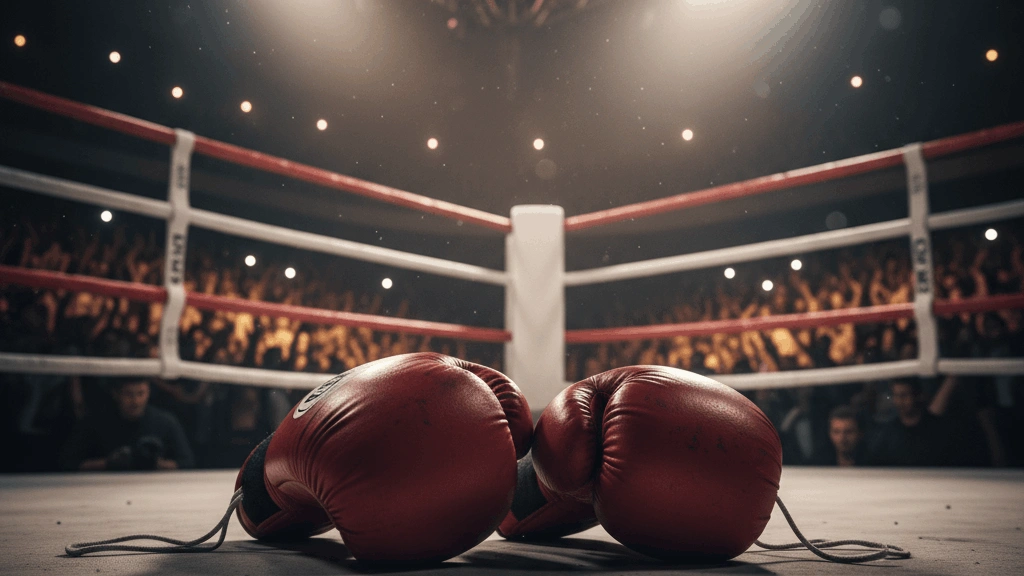
Introduction
Boxing is a combat sport in which two competitors use gloved fists to score legal punches while defending against an opponent's attacks. Matches take place inside a square ring and are divided into timed rounds.
Boxing combines physical conditioning with technique, timing, distance control, defense, footwork, and tactical decision-making. A boxer can win by outscoring an opponent, by knockout, through a referee stoppage, or through several other official decisions.
Modern boxing exists in different forms. Professional boxing is regulated by athletic commissions and sanctioning organizations, while Olympic-style boxing follows international competition rules. Both use the 10-point must scoring concept, but the number of judges, bout formats, equipment requirements, weight categories, and some procedures can differ. World Boxing currently uses five judges in its competitions, while the Association of Boxing Commissions' unified professional framework uses three.
Because intentional punching is part of the sport, boxing also carries significant injury risk, especially to the head. Safe participation requires qualified coaching, appropriate equipment, medical oversight, and strict adherence to competition rules. Research on combat sports recommends particularly careful concussion management because head contact is an intended part of boxing.
Learning Objectives
After studying this guide, you should be able to:
· Explain the objective, rounds, scoring, and major outcomes of a boxing bout.
· Identify the jab, cross, hook, and uppercut.
· Describe stance, guard, footwork, distance, and basic defensive techniques.
· Explain knockdowns, knockouts, technical stoppages, and common fouls.
· Distinguish professional boxing from Olympic-style boxing.
· Understand weight classes, judging, safety, and major developments in boxing history.
The Basic Objective
The central objective of boxing is to outperform an opponent using legal punches and defensive skill.
A boxer may win by:
· Decision on the judges' scorecards.
· Knockout.
· Referee or technical stoppage.
· Disqualification.
· Opponent withdrawal or inability to continue.
Unlike sports based on a single final score, boxing is usually judged round by round.
Each round becomes a separate scoring contest.
The Boxing Ring
Despite its name, a boxing ring is square.
Typical features include:
· Four sides of ropes.
· Neutral corners.
· Two competitors' corners.
· A canvas-covered floor.
· Ringside positions for judges, officials, physicians, and timekeepers.
Exact ring dimensions can vary according to governing body and event regulations.
Between rounds, each boxer returns to an assigned corner. Coaches and other authorized seconds can provide advice and assistance during the rest period.
Rounds
A bout is divided into rounds separated by rest periods.
Under the Association of Boxing Commissions' unified professional rules, a standard round lasts three minutes, followed by a one-minute rest.
The number and duration of rounds can vary according to:
· Professional or Olympic-style competition.
· Experience level.
· Age category.
· Sex or competition division.
· Championship status.
· Local regulations.
Professional championship contests may run considerably longer than Olympic-style tournament bouts.
Boxing Stance
A good boxing stance allows a fighter to attack, defend, and move without losing balance.
Two basic orientations are common.
Orthodox Stance
An orthodox boxer usually places the left foot and left hand forward.
The stronger right hand is commonly positioned to the rear.
Southpaw Stance
A southpaw boxer usually places the right foot and right hand forward.
The left hand becomes the rear hand.
Neither stance is automatically superior. The choice usually depends on handedness, training, comfort, and tactical preference.
The Guard
The guard describes how a boxer positions the hands, arms, shoulders, and body to protect vulnerable scoring areas.
A basic guard typically keeps the hands near the head while the elbows protect the torso.
Experienced fighters may use different defensive guards depending on style, range, and opponent.
The guard is only one part of defense. Good boxing also requires footwork, distance control, reactions, and head movement.
The Four Basic Punches
Most boxing combinations are built from four basic punch types.
Jab
The jab is normally thrown with the lead hand.
It can be used to:
· Measure distance.
· Interrupt an opponent.
· Score quickly.
· Prepare another punch.
· Control the rhythm of a bout.
Because it travels a relatively short distance, the jab is often one of boxing's fastest and most frequently used punches.
Cross
The cross, sometimes called the rear straight, is thrown with the rear hand along a relatively direct path.
An orthodox boxer usually throws the cross with the right hand.
A southpaw commonly throws it with the left.
Hook
A hook travels on a curved path from the side.
Hooks can be aimed legally at permitted areas of the head or torso.
Uppercut
An uppercut travels upward toward a legal target.
It is particularly associated with closer fighting ranges.
Memory Tip
Jab = lead straight
Cross = rear straight
Hook = curved
Uppercut = upward
Combinations
A combination is a sequence of punches thrown together.
Rather than relying on one attack, boxers combine punches so that one action creates an opening for another.
For example, a jab can occupy an opponent's attention before another legal punch follows.
Combination punching also allows a boxer to vary rhythm, target areas, and direction.
Footwork
Boxing depends heavily on the feet.
Good footwork helps a boxer:
· Maintain balance.
· Enter and leave punching range.
· Create angles.
· Avoid being trapped.
· Control the center of the ring.
Moving forward does not automatically mean a fighter is winning. Effective positioning matters more than simply advancing.
This principle also appears in official judging. Professional judges are instructed to distinguish effective aggression from merely moving forward while being repeatedly outscored.
Distance and Range
Boxers operate at different distances.
Long Range
Straight punches such as the jab are especially useful at longer distances.
Mid-Range
Many combinations can be exchanged at middle distance.
Close Range
Hooks and uppercuts become more important when fighters are near one another.
A boxer who controls distance can attack while making it difficult for the opponent to answer effectively.
Basic Defense
Boxing defense involves avoiding, blocking, or reducing the effectiveness of legal punches.
Blocking
The gloves or arms absorb or stop a punch.
Parrying
A boxer redirects an incoming punch with a small hand movement.
Slipping
The head moves slightly away from the path of a punch.
Ducking and Weaving
The boxer changes head and body level to avoid attacks.
Footwork
Moving out of range or changing angle can prevent a punch from landing at all.
Defense can influence judging. The ABC professional judging framework lists defense alongside clean effective punching, effective aggressiveness, and ring generalship.
Clinching
A clinch occurs when boxers become tied up at close range.
Brief clinches are common, but excessive holding can violate the rules.
The referee may command the boxers to separate and resume boxing.
A boxer cannot simply hold an opponent indefinitely to prevent legal competition.
Legal Scoring Areas
Exact wording differs between rule systems, but legal scoring areas generally include appropriate portions of the front and sides of the head and torso above the belt.
World Boxing's rules specifically identify the front and sides of the head and torso as scoring areas while excluding areas such as the back of the head, neck, spine, and below the belt.
A legal punch must also be delivered with the permitted part of the glove and without committing a foul.
The 10-Point Must System
Boxing commonly uses the 10-point must system.
The winner of a round normally receives:
10 points
The losing boxer receives:
9 or fewer points
A common close round is therefore:
10–9
A clearly dominant round or a round involving a knockdown may be scored:
10–8
More extreme dominance or multiple knockdowns can create wider scores.
Professional rules allow rare 10–10 rounds, while current World Boxing competition rules require each round to have a winner.
How Professional Boxing Is Judged
Under the ABC professional framework, judges consider four major factors:
1. Clean and effective punching
2. Effective aggressiveness
3. Ring generalship or ring control
4. Defense
Clean punches are central. Simply throwing more punches or chasing an opponent does not automatically win a round.
Professional bouts under the unified framework use three judges.
How Olympic-Style Boxing Is Judged
World Boxing also uses the 10-point must system, but its judging criteria are organized somewhat differently.
Current criteria prioritize:
1. Number of scoring blows to the target area.
2. Technical and tactical superiority.
3. Competitiveness.
World Boxing assigns five judges, who score independently.
This shows why a learner should not assume that every boxing competition uses identical judging procedures.
Knockdowns
A knockdown occurs when a boxer is put down or into another qualifying defenseless position as a result of a legal blow, according to the applicable rules.
A knockdown does not automatically end the fight.
The referee begins a count.
World Boxing uses a mandatory eight count before allowing a bout to resume after a qualifying knockdown.
The referee must decide whether the affected boxer is capable of continuing safely.
Knockout
A knockout, or KO, occurs when a boxer cannot legally continue before the referee completes the required count.
A knockout immediately ends the bout.
The opponent is declared the winner.
Memory Tip
Knockdown = boxer goes down but may continue
Knockout = bout ends
Technical Knockout and Referee Stoppage
A bout can end without a boxer being counted out.
In professional boxing, a technical knockout, or TKO, may occur when the referee determines that a boxer cannot safely or intelligently continue.
Reasons may include:
· Inability to defend effectively.
· Repeated unanswered punishment.
· An injury resulting from legal action.
· A corner stopping the contest.
Olympic-style rule systems may use terms such as Referee Stops Contest (RSC) rather than the professional TKO terminology.
The underlying safety principle is similar: the referee is empowered to stop a bout rather than allowing unnecessary punishment. World Boxing explicitly states that referees are responsible for boxer safety and protecting an overmatched boxer from undue punishment.
Decisions
If a bout reaches its scheduled conclusion, judges' scorecards may determine the winner.
Unanimous Decision
All relevant judges choose the same boxer.
Split Decision
The judges disagree, but a majority chooses one boxer.
Majority Decision
In rule systems using this outcome, two judges select one boxer while another scores the bout even.
Draw
Neither boxer receives a winning majority under the applicable scoring structure.
Possible draw classifications in professional boxing can include unanimous, majority, or split draws.
World Boxing tournament rules differ because bouts must normally produce a winner for advancement.
Fouls
Boxers must follow strict rules governing legal attacks.
Common fouls can include:
· Punching below the belt.
· Striking the back of the head.
· Headbutting.
· Biting.
· Kicking.
· Wrestling or throwing an opponent.
· Hitting while holding.
· Hitting an opponent who is down.
· Using an elbow or forearm illegally.
The referee can issue warnings, deduct points, or disqualify a boxer depending on the violation and governing rules.
Disqualification
A boxer can lose by disqualification, often abbreviated DQ, for serious or repeated fouls.
Disqualification differs from a knockout because the result comes from a rules violation rather than the opponent being unable to continue after legal punches.
Weight Classes
Boxers compete in weight classes so that opponents are closer in body mass.
Common professional division names include:
· Flyweight
· Bantamweight
· Featherweight
· Lightweight
· Welterweight
· Middleweight
· Light heavyweight
· Heavyweight
Additional divisions divide the gaps between these categories.
Exact limits and names vary among professional organizations and international competitions, so learners should always check the rules for the particular event.
For the Los Angeles 2028 Olympics, boxing is scheduled to feature seven men's and seven women's weight categories, with equal athlete quotas for men and women.
Professional vs. Olympic-Style Boxing
The two forms share the core sport but differ in important ways.
Feature | Professional Boxing | World Boxing / Olympic Style |
Main scoring system | 10-point must | 10-point must |
Typical judges | 3 | 5 |
Bout length | Varies; often more rounds | Short tournament bouts |
Primary structure | Individual promoted bouts | Tournament competition |
Decisions | Can include draws | Tournament bout needs winner |
Rules authority | Athletic commissions and event rules | International federation/event rules |
Equipment rules, headgear requirements, glove specifications, medical checks, and bout lengths can vary further according to age, sex, division, and competition.
USA Boxing publishes a national rulebook that is updated regularly; its current 2026 rulebook took effect January 1, 2026.
Boxing Styles
Styles are not rigid categories, but several descriptions are common.
Out-Boxer
An out-boxer emphasizes distance, movement, jabs, and clean scoring from range.
Pressure Fighter
A pressure fighter attempts to reduce space and keep an opponent working under sustained pressure.
Counterpuncher
A counterpuncher tries to make an opponent miss and answer immediately.
Boxer-Puncher
A boxer-puncher combines technical movement and combination boxing with significant punching power.
Most skilled competitors blend several approaches rather than fitting perfectly into one category.
Ring Generalship
Ring generalship describes the ability to control how and where the contest develops.
Examples include:
· Controlling distance.
· Dictating pace.
· Creating favorable angles.
· Forcing an opponent into uncomfortable positions.
· Escaping the ropes or corners.
· Making an opponent react rather than initiate.
This is why boxing strategy is sometimes compared to a fast-moving chess match: positioning can create opportunities before a punch is thrown.
Feints
A feint is a deceptive movement designed to provoke a reaction.
A boxer may suggest an attack without fully committing to it.
If the opponent responds, an opening may appear elsewhere.
Feints illustrate an important feature of boxing: successful technique depends not only on physical speed but also on reading and influencing an opponent's decisions.
The Role of the Referee
The referee controls the contest inside the ring.
Responsibilities include:
· Enforcing rules.
· Calling knockdowns.
· Separating clinches.
· Issuing warnings.
· Ordering point deductions where appropriate.
· Stopping unsafe contests.
Under the ABC unified professional rules, the referee is the sole in-ring arbiter authorized to stop the contest.
The Role of the Corner
A boxer's corner team may include:
· Trainer
· Assistant trainer
· Cut specialist
· Other licensed seconds
Between rounds they can provide tactical advice, water, and permitted treatment.
A corner can also intervene when it believes its boxer should no longer continue.
Boxing Equipment
Common boxing equipment includes:
· Boxing gloves
· Hand wraps
· Mouthguard
· Protective cup or protector where required
· Boxing shoes
· Competition clothing
Headgear rules vary considerably between competition categories, so it should not be assumed that all amateur or Olympic-style boxers wear headguards.
Competition gloves and other equipment must satisfy the standards of the governing organization.
Safety and Medical Risks
Boxing can cause injuries including bruises, cuts, fractures, hand injuries, eye injuries, and concussion.
A systematic review of modern boxing studies found that head and neck injuries are particularly important in competition, while professional boxing showed higher injury rates than amateur boxing in the studies analyzed.
Repeated head impacts are a particular concern. Medical experts in combat sports recommend stricter concussion management than in many non-combat sports because purposeful head contact occurs during competition.
Competitive boxing therefore uses measures such as:
· Pre-bout medical examinations.
· Ringside physicians.
· Referee stoppages.
· Medical suspensions.
· Weight controls.
· Equipment requirements.
The ABC's professional regulatory guidelines require pre-fight physical examinations for boxers under its championship framework.
A Short History of Boxing
Forms of fist fighting existed in ancient civilizations.
Boxing appeared in the ancient Olympic Games in the 7th century BCE. Ancient contests differed substantially from modern boxing.
The modern sport developed much later.
A major turning point came with the Marquess of Queensberry Rules, published in 1867. These rules helped establish features associated with modern boxing, including gloves, timed rounds, rest intervals, and a count for a fallen boxer. Olympic historical material identifies the Queensberry code as a major foundation of modern boxing.
Boxing in the Modern Olympics
Men's boxing entered the modern Olympic Games in 1904.
Women's boxing made its Olympic debut at London 2012.
Boxing is confirmed for the Los Angeles 2028 Olympics. World Boxing is responsible for the qualification pathway and Olympic boxing competition, with seven men's and seven women's categories planned.
Common Mistakes
Mistake 1: Boxing Is Simply About Landing the Most Punches
Too simple.
Punch quality, legality, effectiveness, defense, control, and tactical superiority can all matter depending on the scoring system.
Mistake 2: A Knockdown Automatically Means the Fight Is Over
False.
The boxer may recover during the referee's count and be permitted to continue.
Mistake 3: Every Knockdown Automatically Produces the Same Score
False.
A knockdown strongly influences a round, but judges must still evaluate the entire round under the governing rules. The ABC judge manual specifically warns against ignoring what happens during the rest of the round.
Mistake 4: Moving Forward Means Winning
False.
Aggression must be effective. Walking into clean counterpunches is not rewarded simply because a boxer moves forward.
Mistake 5: Professional and Olympic Boxing Use Identical Rules
False.
They share the same fundamental sport but differ in judging structure, bout format, equipment, and competition procedures.
Mistake 6: Boxing Gloves Eliminate Head-Injury Risk
False.
Gloves protect the hands and alter the nature of punching, but boxing still carries concussion and other neurological risks.
Memory Tips
For punches:
Jab → Cross → Hook → Uppercut
For defense:
Block → Parry → Slip → Move
For scoring:
Close round = usually 10–9
Knockdown/dominance = often 10–8
For outcomes:
KO = counted out
TKO/RSC = contest stopped
UD = all judges agree
SD = judges split
DQ = rules violation
Remember:
Professional boxing: commonly 3 judges
World Boxing: 5 judges
Summary
Boxing is a combat sport based on legal punching, defense, footwork, positioning, and tactical control. Competitors fight in timed rounds, with judges normally using a 10-point must scoring system.
The four foundational punches are the jab, cross, hook, and uppercut. Effective boxing also depends on stance, balance, distance, movement, blocking, parrying, slipping, and ring awareness.
A bout can end by decision, knockout, referee stoppage, disqualification, or other official outcomes. A knockdown does not automatically end the contest; the referee evaluates whether the boxer can safely continue.
Professional and Olympic-style boxing share the same basic sport but use different competition structures. Professional boxing commonly uses three judges, while current World Boxing competitions use five.
Weight classes help match athletes of similar size, while referees, physicians, coaches, equipment standards, and medical rules are designed to reduce risk.
Boxing also has a long history, from ancient fist fighting to the nineteenth-century Queensberry rules and modern professional and Olympic competition.
FAQ
1. What are the four basic punches in boxing?
The jab, cross, hook, and uppercut.
2. What is the 10-point must system?
The round winner normally receives 10 points, while the losing boxer receives 9 or fewer.
3. What is a knockout?
A knockout occurs when a boxer cannot legally continue before the referee completes the required count.
4. What is the difference between a knockdown and a knockout?
A boxer may recover and continue after a knockdown. A knockout ends the bout.
5. What is a TKO?
A technical knockout generally occurs when a professional bout is stopped because a boxer cannot safely or effectively continue even without being counted out.
6. What does southpaw mean?
A southpaw normally fights with the right hand and right foot forward and the left hand in the rear position.
7. What is ring generalship?
Ring generalship is the ability to control the location, pace, distance, and tactical flow of a bout.
8. Are punches below the belt legal?
No. Striking below the permitted beltline is a foul.
9. How many judges score a professional boxing match?
Under the ABC unified professional framework, three judges score the bout. Individual jurisdictions remain responsible for their events.
10. Is Olympic-style boxing the same as professional boxing?
No. The fundamentals are similar, but bout formats, judging procedures, equipment rules, weight categories, and competition structures can differ.
Key Takeaways
· Boxing combines legal punching with defense, movement, distance control, conditioning, and tactical decision-making.
· The jab, cross, hook, and uppercut form the basic punching vocabulary of the sport.
· Boxing commonly uses the 10-point must system, but professional and Olympic-style competitions differ in judging and bout structure.
· A bout can end by decision, knockout, referee stoppage, disqualification, or other official rulings.
· Because boxing includes intentional head contact, medical supervision, qualified coaching, and careful concussion management are essential safety considerations.
References
1. World Boxing. Competition Rules and General Competition Documents. World Boxing — Competition Documents
2. World Boxing. Competition Rules: Judging, Scoring and Knockdowns. World Boxing — Competition Rules PDF
3. USA Boxing. 2026 National Rule Book. USA Boxing — Current Rule Book
4. Association of Boxing Commissions and Combative Sports. Unified Rules of Boxing. ABC — Unified Boxing Rules
5. Association of Boxing Commissions and Combative Sports. Boxing Judge Manual. ABC — Boxing Judge Manual
6. Association of Boxing Commissions. Regulatory Guidelines. ABC — Professional Boxing Regulatory Guidelines
7. World Boxing. IOC Approves Olympic Qualification System for Boxing at LA28. World Boxing — LA28 Boxing Qualification System
8. International Olympic Committee. Olympic Boxing Historical Materials. Olympic World Library — Boxing History
9. Neidecker, J. et al. Concussion Management in Combat Sports: Consensus Statement from the Association of Ringside Physicians. British Journal of Sports Medicine. PubMed — Combat Sports Concussion Consensus
10. A Systematic Review and Meta-Analysis Investigating Head Trauma in Boxing. Clinical Journal of Sport Medicine, 2023. PubMed — Head Trauma in Boxing Review
11. Incidence Rates and Pathology Types of Boxing-Specific Injuries: A Systematic Review and Meta-analysis. PubMed — Boxing Injury Meta-analysis