


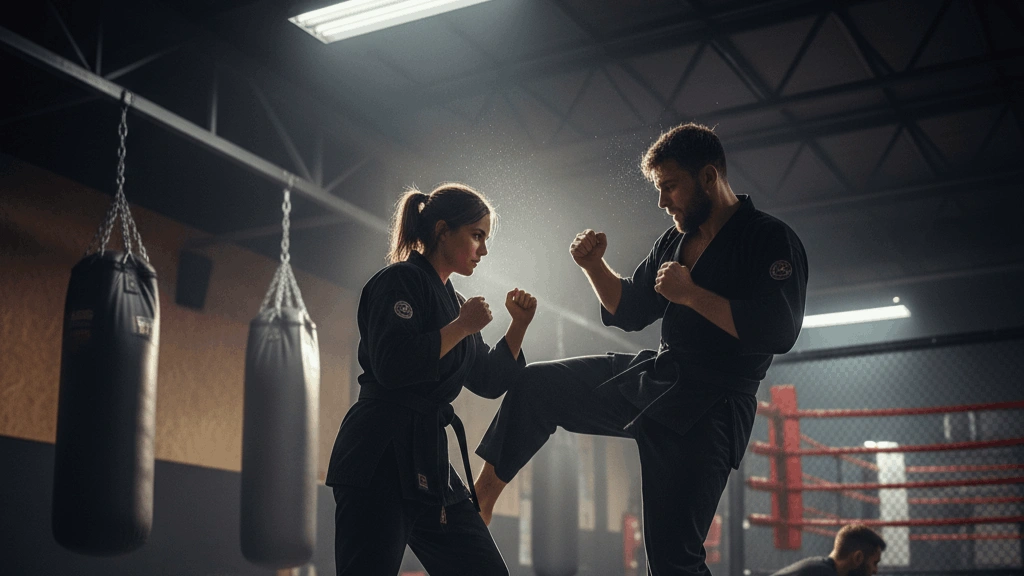
Introduction
Combat sports are organized athletic contests in which competitors use regulated fighting techniques against one another. Examples include boxing, wrestling, judo, taekwondo, Muay Thai, Brazilian jiu-jitsu, and mixed martial arts.
Martial arts is a broader term. A martial art may include competition, self-defense, physical training, traditional forms, philosophy, cultural practices, or weapons training. Judo and taekwondo, for example, function both as martial arts and as international competitive sports.
The two terms therefore overlap but are not identical:
Martial art = broader system or tradition
Combat sport = rule-governed athletic competition
Different combat systems emphasize different skills. Boxing focuses on punches, wrestling on takedowns and control, judo on throws and grappling, taekwondo on dynamic kicking, Muay Thai on striking with several parts of the body, and mixed martial arts combines striking and grappling under one rule set.
Learning Objectives
After studying this guide, you should be able to:
· Distinguish combat sports from the broader category of martial arts.
· Explain striking, grappling, throwing, submissions, and mixed fighting.
· Compare major arts including boxing, wrestling, judo, karate, taekwondo, Muay Thai, Brazilian jiu-jitsu, and MMA.
· Understand common concepts such as stance, guard, clinch, takedown, pin, submission, kata, and sparring.
· Explain how scoring and victory conditions differ between sports.
· Recognize the importance of weight classes, referees, protective rules, and safe training.
Main Types of Combat Systems
Combat sports can be grouped by the techniques they emphasize.
Striking Arts
Striking means using controlled blows against legal targets.
Striking systems include:
· Boxing
· Karate
· Taekwondo
· Muay Thai
· Kickboxing
The permitted techniques differ significantly.
Boxing permits punches but not kicks. Taekwondo places major emphasis on kicks. Muay Thai permits punches, kicks, knees, elbows, and forms of clinch fighting under its competition rules. IFMA describes legal Muay Thai scoring skills as punches, kicks, knees, and elbows delivered to permitted targets.
Grappling Arts
Grappling involves controlling an opponent through gripping, clinching, takedowns, throws, pins, joint locks, or other forms of physical control.
Examples include:
· Wrestling
· Judo
· Brazilian jiu-jitsu
The objectives differ greatly.
A wrestler may try to pin an opponent's shoulders. A judoka may pursue a decisive throw or ground technique. A Brazilian jiu-jitsu competitor may seek positional control or a submission.
Mixed Systems
Mixed martial arts, or MMA, combines striking and grappling.
Competitors may fight while standing, in a clinch, or on the ground.
Under the Unified Rules of MMA used by many professional regulatory commissions, professional rounds are normally five minutes long, and judging prioritizes effective striking and grappling.
Boxing
Boxing is a striking sport based almost entirely on punches.
Fundamental punches include:
· Jab
· Cross
· Hook
· Uppercut
Boxers also rely heavily on:
· Footwork
· Guard position
· Head movement
· Blocking
· Parrying
· Distance control
A boxer may win through a judges' decision, knockout, referee stoppage, disqualification, or another recognized result.
Boxing demonstrates an important principle that applies throughout combat sports: defense is not simply avoiding attacks. Good defense can also create opportunities to counterattack.
Wrestling
Wrestling is one of humanity's oldest forms of organized combat.
Modern international wrestling includes two major Olympic styles:
Freestyle Wrestling
Freestyle wrestling permits attacks involving an opponent's legs.
Wrestlers can use:
· Takedowns
· Trips
· Throws
· Turns
· Pins
Greco-Roman Wrestling
Greco-Roman wrestling does not allow competitors to attack below the opponent's belt or actively use the legs to execute actions in the same manner as freestyle.
United World Wrestling describes the basic difference clearly: freestyle permits leg attacks and active leg use, while Greco-Roman restricts holds to the upper body.
The most decisive victory in wrestling is traditionally the fall, or pin, in which an opponent's shoulders are controlled against the mat according to the rules.
Judo
Judo was created by Japanese educator Jigoro Kano, who founded the Kodokan in Tokyo in 1882. Kano adapted earlier jujutsu traditions into a system emphasizing physical education, efficient technique, and personal development.
Judo emphasizes:
· Throws
· Trips and sweeps
· Pins
· Chokes
· Arm locks
Certain techniques known from older martial traditions are excluded from modern sport competition.
The most decisive judo score is ippon, which immediately wins the contest.
Judo rules evaluate throws according to factors such as control, technique, and how the opponent lands. International rules are periodically updated, so exact scoring details should always be checked against current IJF regulations.
Karate
Karate developed primarily in Okinawa before spreading throughout Japan and internationally.
Its name is commonly translated as "empty hand."
Karate traditions include striking techniques such as:
· Punches
· Kicks
· Blocks
· Open-hand techniques
Two important training and competition concepts are:
Kata
Kata is a prescribed sequence of techniques performed in a particular order.
It demonstrates qualities such as:
· Technique
· Balance
· Timing
· Power
· Coordination
Kumite
Kumite means sparring or fighting practice.
Sport karate competitions commonly use controlled point-scoring techniques rather than functioning as unrestricted fights.
Karate contains many styles and organizations, so rules, stances, forms, and grading systems can differ.
Taekwondo
Taekwondo is a Korean martial art and combat sport particularly associated with fast, dynamic kicking techniques.
Typical skills include:
· Front kicks
· Round kicks
· Side kicks
· Turning kicks
· Punches
· Defensive movement
World Taekwondo was founded in 1973, and taekwondo became an official Olympic medal sport at the Sydney 2000 Games.
Modern World Taekwondo competition strongly rewards accurate kicks to permitted scoring areas. Electronic protective equipment is commonly used at elite competition to assist scoring.
Taekwondo demonstrates how traditional martial arts can evolve into highly specialized modern sports with standardized rules, protective equipment, refereeing, and international competition.
Muay Thai
Muay Thai is a martial art and combat sport from Thailand.
It is sometimes called the "art of eight limbs" because its striking system uses:
· Two fists
· Two elbows
· Two knees
· Two shins or feet
The clinch is also an important part of the sport.
Unlike boxing, Muay Thai permits a much wider range of striking techniques.
Current IFMA rules evaluate legal Muay Thai techniques that land effectively on permitted targets, while blocked, ineffective, or illegal techniques do not receive the same scoring credit.
IFMA released an updated international rules framework in 2026 that includes full-contact, technical, cultural, safeguarding, medical, and competition provisions.
Brazilian Jiu-Jitsu
Brazilian jiu-jitsu, commonly abbreviated BJJ, is a grappling system that emphasizes ground control and submissions.
Its historical development was strongly influenced by Japanese judo and jujutsu introduced to Brazil during the early twentieth century.
Important BJJ concepts include:
Guard
The guard is a ground position in which one competitor uses the legs to control or manage an opponent.
Guard Pass
A guard pass occurs when the top competitor gets beyond the opponent's defensive leg position and establishes stronger control.
Mount
The mount is a dominant position in which one competitor controls the opponent from above the torso.
Back Control
Controlling an opponent from behind can create strong positional and submission opportunities.
Submission
A submission ends a contest when a competitor concedes because of an authorized joint lock, choke, or similar technique.
Competitors usually signal submission by tapping physically or verbally.
Competition point systems vary between organizations.
Mixed Martial Arts
MMA combines techniques drawn from many combat traditions.
A successful competitor may need skills from:
· Boxing
· Muay Thai
· Wrestling
· Judo
· Brazilian jiu-jitsu
An MMA bout can move between several phases.
Striking Range
Competitors exchange punches, kicks, and other permitted strikes.
Clinch
Fighters control one another at close range while attempting strikes, takedowns, or positional improvements.
Ground Fighting
Competitors use positional grappling, strikes permitted by the rules, and submission attempts.
Under the Unified Rules, judging first emphasizes effective striking and grappling. Effective aggressiveness and fighting-area control become secondary considerations when the primary category is very close.
Takedowns and Throws
A takedown brings an opponent from standing to the ground while establishing control.
A throw often uses leverage, balance disruption, rotation, or lifting to send an opponent toward the mat.
Different sports value takedowns differently.
In wrestling, takedowns directly contribute to technical scoring.
In judo, a sufficiently effective throw can immediately win the contest.
In MMA, takedowns matter most when they produce meaningful control, offense, or damage under the judging criteria.
Pins and Positional Control
A pin means controlling an opponent against the competition surface according to a sport's rules.
Pins are central to wrestling and also appear in judo ground fighting.
Brazilian jiu-jitsu uses positional control differently: positions may earn points, but the contest can continue while a competitor searches for advancement or submission.
The same physical situation can therefore have completely different competitive meaning under different rule sets.
Stance and Guard
A stance is a stable fighting position from which an athlete can move, attack, and defend.
A guard describes how the hands, arms, body, or legs are positioned for protection and control.
The ideal stance differs by sport.
A boxer needs to defend mainly against punches.
A wrestler must be ready for takedowns.
An MMA fighter must consider both.
This is why techniques should not automatically be transferred from one combat sport into another without considering the rules.
Sparring
Sparring is controlled practice against a partner.
Its purpose may include:
· Practicing timing
· Testing distance
· Developing reactions
· Applying techniques
· Learning strategy
Sparring intensity varies enormously.
Technical sparring can emphasize movement and precision rather than force.
Responsible training matches the intensity to the athlete's experience, purpose, equipment, and supervision.
Forms and Kata
Not all martial-arts training involves direct competition.
Many traditional systems use predetermined sequences known by names such as:
· Kata
· Forms
· Patterns
Forms allow practitioners to practice:
· Technique
· Posture
· Balance
· Rhythm
· Breathing
· Coordination
They may also preserve traditional movements that are uncommon or prohibited in modern sport competition.
Belt and Rank Systems
Many martial arts use colored belts or other ranks to represent progress.
Jigoro Kano's Kodokan judo was highly influential in developing the modern kyū-dan ranking system, including graded students and higher dan ranks.
Other martial arts later adopted their own belt systems.
A black belt does not have one universal meaning.
Requirements differ dramatically between:
· Arts
· Schools
· Federations
· Countries
A black belt in one discipline therefore cannot be directly compared with a black belt in another.
Weapons-Based Martial Arts
Some martial arts center on weapons rather than unarmed fighting.
Examples include:
Kendo — Japanese sword-based martial sport using bamboo swords and protective armor.
Fencing — international combat sport using foil, épée, or sabre.
Traditional martial systems may also preserve training involving staffs, swords, sticks, or other historical weapons.
These systems expand the meaning of martial arts beyond punching, kicking, and grappling.
Weight Classes
Most combat sports divide competitors into weight classes.
Weight categories reduce extreme size differences between opponents.
Exact classes differ among sports and organizations.
A "lightweight" boxer, wrestler, judoka, MMA fighter, and taekwondo athlete may therefore compete at completely different weight limits.
Weight classes should always be interpreted within a specific sport.
Victory Conditions Compared
Sport | Important Ways to Win |
Boxing | Decision, knockout, stoppage |
Wrestling | Pin/fall, technical superiority, points |
Judo | Ippon, accumulated scoring/penalties under current rules |
Taekwondo | Points, stoppage, penalties or other official result |
Muay Thai | Decision, knockout, stoppage |
Brazilian jiu-jitsu | Submission, points or referee decision depending on rules |
MMA | Decision, knockout, technical knockout, submission |
The table shows why the phrase "winning a fight" is too vague when studying combat sports. Every sport defines success differently.
Defense Across Combat Sports
Defense is specific to the threats permitted by the rules.
A striker may use:
· Blocks
· Parrying
· Head movement
· Footwork
A grappler may use:
· Base
· Grip fighting
· Sprawling
· Position recovery
· Escapes
Mixed martial artists must combine several defensive systems.
No single defensive method works equally well in every sport.
Strategy and Adaptation
Combat sports are often described as physical chess because competitors constantly solve tactical problems.
Athletes consider:
· Distance
· Timing
· Pace
· Balance
· Position
· Energy
· Opponent tendencies
· Score or round situation
A technique can be mechanically correct but tactically poor if used at the wrong moment.
At advanced levels, the ability to create reactions and adapt can matter as much as individual techniques.
Safety and Regulation
Combat sports carry risks including cuts, fractures, joint injuries, concussion, and other trauma.
Modern competitions therefore use measures such as:
· Weight divisions
· Referees
· Medical checks
· Protective equipment
· Illegal-technique lists
· Stoppage rules
· Age restrictions
The exact protections depend on the discipline.
For example, IFMA's 2026 rules include expanded medical and safeguarding provisions, while the Unified Rules of MMA give the referee sole authority to stop a professional contest.
Training should take place under competent supervision, with techniques practiced according to the safety standards of the specific discipline.
A Short Historical Timeline
Combat traditions are far older than modern sporting organizations.
Ancient era: Wrestling and forms of boxing existed in multiple civilizations.
1882: Jigoro Kano founded the Kodokan and developed judo from earlier Japanese jujutsu traditions.
20th century: Karate spread internationally from Okinawa and Japan.
20th century: Modern taekwondo developed in Korea and later became a global sport.
1973: The international federation now known as World Taekwondo was founded.
Late 20th century: Brazilian jiu-jitsu gained greater international visibility.
1990s onward: Modern MMA grew rapidly by combining specialists from striking and grappling traditions under shared competitive rules.
Combat sports continue to change as governing bodies modify rules, judging systems, equipment, and safety standards.
Common Mistakes
Mistake 1: Martial Arts and Combat Sports Mean Exactly the Same Thing
False.
Martial arts can include noncompetitive traditions, forms, philosophy, weapons, and self-development. Combat sports specifically involve regulated competition.
Mistake 2: Karate and Taekwondo Are the Same
False.
They developed from different cultural and technical traditions and use different competitive rules.
Mistake 3: Judo Is Only About Throws
False.
Competitive judo also contains ground techniques such as pins, chokes, and permitted arm locks.
Mistake 4: Wrestling and Brazilian Jiu-Jitsu Have the Same Goal
False.
Wrestling emphasizes control, technical scoring, and pins, while BJJ places greater emphasis on positional grappling and submissions.
Mistake 5: MMA Has No Rules
False.
Modern regulated MMA has detailed rules covering rounds, fouls, weight classes, judging, medical supervision, and permissible techniques.
Mistake 6: A Black Belt Means the Same Skill Level Everywhere
False.
Rank requirements differ among martial arts and organizations.
Memory Tips
Remember the main categories:
Striking = hit legal targets
Grappling = control the opponent
Submission = force concession
Mixed = striking + grappling
For major sports:
Boxing = punches
Wrestling = takedowns + pins
Judo = throws + ground control
Taekwondo = kicking emphasis
Muay Thai = fists + elbows + knees + kicks
BJJ = ground position + submissions
MMA = combined system
Summary
Combat sports and martial arts include a wide range of systems developed for competition, physical education, cultural preservation, self-defense, or combinations of these purposes.
Striking sports such as boxing, taekwondo, and Muay Thai emphasize legal blows. Grappling sports such as wrestling, judo, and Brazilian jiu-jitsu focus more heavily on takedowns, throws, control, pins, or submissions.
Mixed martial arts combines both categories and requires athletes to operate at striking distance, in the clinch, and on the ground.
The rules matter enormously. Techniques that score highly in one sport may be useless, illegal, or strategically inappropriate in another. Even similar concepts such as throws, pins, or defensive stances can have different meanings under different competition systems.
Martial arts also extend beyond competition. Traditional forms, ranks, cultural rituals, and weapons systems remain important parts of many disciplines.
Understanding combat sports therefore means studying not only techniques but also rules, history, culture, strategy, judging, and safety.
FAQ
1. What is the difference between a martial art and a combat sport?
A martial art is a broader training tradition, while a combat sport specifically involves organized competition under rules.
2. What is the difference between striking and grappling?
Striking uses blows against legal targets. Grappling involves controlling, throwing, pinning, or submitting an opponent.
3. What is an ippon in judo?
Ippon is a decisive judo score that immediately ends the contest.
4. What is the difference between freestyle and Greco-Roman wrestling?
Freestyle permits leg attacks and active leg use. Greco-Roman restricts attacks below the waist and active leg use against the opponent.
5. Why is Muay Thai called the art of eight limbs?
Because its characteristic striking system uses two fists, two elbows, two knees, and two shins or feet.
6. What is a submission?
A submission occurs when a competitor concedes to an authorized grappling technique such as a joint lock or choke.
7. What is kata?
Kata is a predetermined sequence of martial-arts techniques performed in a prescribed order.
8. What does MMA combine?
MMA combines striking, wrestling, clinching, takedowns, ground control, and submissions.
9. Why do combat sports use weight classes?
Weight classes reduce extreme size differences and promote fairer competition.
10. Are the rules of martial arts permanent?
No. Sport governing bodies regularly revise competition, scoring, equipment, and safety rules.
Key Takeaways
· Martial arts are broader traditions, while combat sports are organized competitive forms governed by rules.
· Boxing, taekwondo, and Muay Thai emphasize striking, while wrestling, judo, and Brazilian jiu-jitsu emphasize different forms of grappling.
· MMA combines striking and grappling but remains a highly regulated sport with defined rounds, fouls, judging, and stoppages.
· Competition rules determine which techniques are legal, how athletes score, and what constitutes victory.
· History, culture, safety, discipline, and strategy are essential to understanding martial arts—not just individual fighting techniques.
References
1. International Judo Federation. History: From Martial Art to Olympic Sport. IJF — History of Judo
2. International Judo Federation. History and Culture. IJF — Judo History and Jigoro Kano
3. International Judo Federation. Judo Presents the New Rules. IJF — International Judo Rule Development
4. United World Wrestling. International Wrestling Rules. UWW — Wrestling Rules 2026
5. United World Wrestling. Disciplines. UWW — Freestyle and Greco-Roman Wrestling
6. World Taekwondo. Sustainability Strategy — History and Development of Taekwondo. World Taekwondo — Taekwondo History and Olympic Development
7. International Federation of Muaythai Associations. Muaythai Rules. IFMA — Official Muay Thai Rules
8. International Federation of Muaythai Associations. Rules & Regulations Version 3.0. IFMA — 2026 Competition Rules
9. Association of Boxing Commissions and Combative Sports. Unified Rules of Mixed Martial Arts. ABC — Unified Rules of MMA