


Introduction
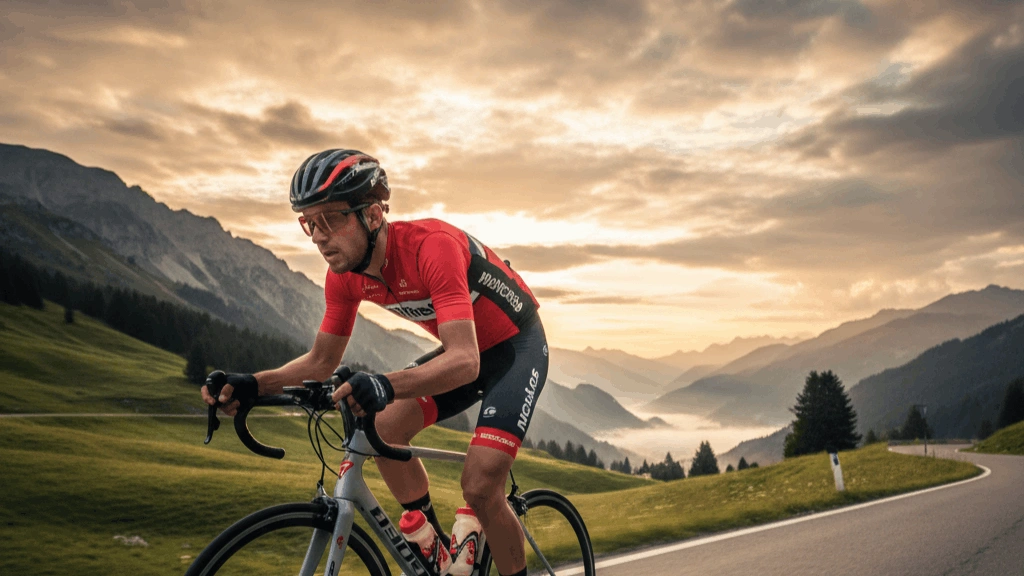
Cycling is the activity and sport of riding bicycles. It ranges from everyday transportation and recreation to highly specialized competitions on roads, velodromes, mountain trails, BMX tracks, gravel courses, and purpose-built freestyle parks.
Competitive cycling is not a single event. The Union Cycliste Internationale (UCI), cycling's worldwide governing body, currently oversees 11 disciplines, including road, track, mountain bike, BMX Racing, BMX Freestyle, cyclo-cross, trials, indoor cycling, cycling esports, gravel, and snow bike. Five—road, track, mountain bike, BMX Racing, and BMX Freestyle—are currently represented in the Olympic programme.
Cycling tests different combinations of endurance, sprint power, balance, technical skill, tactics, aerodynamics, and teamwork. A Tour-style road racer, track sprinter, mountain biker, and BMX rider may all be elite cyclists while requiring very different abilities.
Learning Objectives
After studying this guide, you should be able to:
· Identify the major forms of competitive cycling.
· Explain road racing, time trials, stage races, and peloton tactics.
· Describe major track, mountain bike, BMX, and cyclo-cross formats.
· Explain drafting, gearing, cadence, climbing, sprinting, and breakaways.
· Identify important bicycle components and their functions.
· Understand common cycling terminology, tactics, safety principles, and historical milestones.
The Bicycle
A bicycle is a human-powered vehicle normally built around two wheels arranged in line.
Important parts include:
· Frame
· Fork
· Handlebars
· Saddle
· Pedals
· Cranks
· Chain
· Chainrings
· Rear sprockets or cassette
· Wheels
· Tires
· Brakes
Many modern bicycles also use derailleurs, which move the chain between different gears.
Different cycling disciplines require different bicycle designs.
Gears
Bicycle gears allow riders to change the relationship between pedal movement and wheel movement.
A higher gear moves the bicycle farther for each pedal revolution but requires greater force.
A lower gear makes pedaling easier but produces less distance per revolution.
Lower gears are especially useful when climbing steep hills.
Higher gears can help riders maintain speed on flat roads or descents.
Cadence
Cadence means the number of pedal revolutions a cyclist makes per minute.
It is commonly measured in:
rpm — revolutions per minute
Two riders traveling at the same speed can use different combinations of gear and cadence.
Efficient cyclists learn to adjust both according to terrain, fatigue, wind, and tactical conditions.
Road Cycling
Road cycling takes place primarily on paved roads.
The UCI recognizes several road formats, including mass-start road races and individual time trials. Road cycling has been part of the Olympic programme since the first modern Games in 1896.
Road Race
In a road race, many riders start together.
The first rider to cross the finish line wins.
Courses can contain:
· Flat roads
· Climbs
· Descents
· Technical corners
· Cobblestones
· Urban sections
Road races may be held as one-day events or as stages within longer competitions.
The Peloton
The large main group of riders in a road race is called the peloton.
Riding within a peloton can reduce aerodynamic resistance.
Cyclists positioned behind others encounter less air resistance because the riders in front disturb the airflow.
This technique is known as drafting.
Drafting can save substantial energy, which makes position inside a group strategically important. UCI material on track cycling likewise describes significant aerodynamic savings for riders following closely behind others.
Breakaways
A breakaway forms when one rider or a small group escapes ahead of the peloton.
The breakaway may attempt to remain ahead until the finish.
Meanwhile, teams in the peloton must decide whether to:
· Chase immediately.
· Allow the gap to grow.
· Force another team to chase.
· Save energy for later.
This creates one of road cycling's central tactical battles.
A breakaway that gains several minutes is not automatically safe. A coordinated peloton can travel very quickly when multiple riders share the work.
Drafting
Air resistance becomes increasingly important as cycling speed rises.
A rider at the front encounters the greatest aerodynamic resistance.
A cyclist directly behind can benefit from the front rider's wake.
This explains several common tactics:
Paceline — riders take turns at the front.
Lead-out — teammates shelter a sprinter before the finish.
Slipstreaming — another term for using the aerodynamic shelter behind a rider.
Drafting is normal in mass-start racing but restricted or irrelevant in certain individual time trials.
Sprinting
A sprint is a short burst of maximum or near-maximum speed.
Road races with flat finishes often end in a bunch sprint.
Teams may form a lead-out train, with several teammates riding at high speed ahead of their sprinter.
Each helper completes part of the effort before moving aside.
The final sprinter then accelerates toward the finish.
Timing matters enormously. Sprint too early and the rider may fade; sprint too late and there may be no time to pass.
Climbing
Climbing favors riders who can produce high power relative to body mass.
Important climbing concepts include:
Gradient — steepness of the road.
Elevation gain — total vertical climbing.
Hairpin — tight turn often found on mountain roads.
Summit finish — race or stage ending at the top of a climb.
Strong climbers often attack on steep sections where drafting provides less advantage than it does at high speeds on flat terrain.
Descending
Descending requires more than courage.
Skilled descenders control:
· Braking
· Cornering lines
· Body position
· Weight distribution
· Speed
Entering a corner too quickly can force excessive braking or cause a crash.
Riders commonly brake before a turn, control their line through it, and accelerate afterward.
Time Trials
An individual time trial pits each rider primarily against the clock.
Riders start separately at intervals rather than as one large group.
The fastest total time wins.
The UCI describes major championship individual time trials as events where competitors leave individually at regular intervals and race for the fastest elapsed time.
Because aerodynamic drag is so important, time-trial bicycles and riding positions are designed to reduce air resistance.
Road time-trial rules also regulate following vehicles. Since 2023, UCI rules require following vehicles in individual road time trials to remain at least 25 metres behind the rider, partly to prevent aerodynamic assistance.
Stage Races
A stage race takes place over several separate racing days.
Stages may include:
· Flat road stages
· Mountain stages
· Individual time trials
· Other specialized stages
The overall race is normally decided by general classification, abbreviated GC.
GC adds a rider's times across the relevant stages.
The rider with the lowest total elapsed time leads.
This creates unusual tactical situations: a rider does not need to win every stage to win the entire race.
Team Roles in Road Cycling
Road cycling is both an individual and team sport.
A team may contain riders specializing as:
Sprinter — fast finisher on flatter terrain.
Climber — strongest on steep mountains.
Time trialist — excels at sustained solo speed.
Domestique — works tactically for teammates.
GC leader — protected rider aiming for the overall classification.
A domestique may fetch supplies, chase breakaways, provide drafting shelter, control pace, or sacrifice personal chances for a team leader.
Track Cycling
Track cycling takes place on a banked oval track called a velodrome.
Modern major championship and Olympic velodromes commonly use 250-metre tracks. UCI regulations permit tracks within a broader dimensional range, but 250 metres is the standard at the highest major events.
Track bicycles normally use:
· One fixed gear
· No freewheel
· No conventional brakes
A fixed gear means the pedals continue turning whenever the rear wheel turns.
Track cycling contains both sprint and endurance events.
Major Track Events
The current Olympic track programme includes six event types:
· Sprint
· Team sprint
· Keirin
· Team pursuit
· Omnium
· Madison
Sprint
Despite the name, the match sprint is highly tactical.
Riders may travel slowly early in the race while trying to force the opponent into the less favorable leading position.
The final section becomes an explosive acceleration toward the finish.
Team Pursuit
Teams race against the clock from opposite sides of the track.
Riders rotate through the leading position to share aerodynamic work.
Keirin
Riders initially follow a pacing vehicle before sprinting against one another after the pacer leaves the track.
Madison
Teams of two riders compete in an endurance points race and exchange active racing duties during the event.
Omnium
The omnium combines several endurance events, with points accumulated across the competition.
Mountain Biking
Mountain biking is cycling on off-road terrain.
Courses may contain:
· Dirt
· Rocks
· Roots
· Drops
· Steep climbs
· Technical descents
The UCI recognizes several mountain-bike formats.
Cross-Country
Cross-country Olympic, or XCO, combines climbing, descending, endurance, and technical bike handling.
It has been an Olympic cycling discipline since Atlanta 1996.
Downhill
In downhill racing, riders race individually down steep technical courses.
The fastest elapsed time wins.
Downhill bicycles use long-travel suspension, powerful brakes, and equipment designed for rough terrain.
Cross-Country Marathon
Marathon events extend cross-country racing over much greater distances. UCI descriptions give typical marathon routes of approximately 60–160 km.
BMX Racing
BMX means Bicycle Motocross.
BMX Racing developed in California in the late 1960s, inspired by motorcycle motocross.
Up to eight riders race side by side from a start gate on a short course containing:
· Jumps
· Rollers
· Rhythm sections
· Banked turns
Elite races are extremely short and explosive.
BMX Racing entered the Olympic programme at Beijing 2008.
BMX Freestyle
BMX Freestyle is very different from BMX Racing.
Instead of racing toward a finish line, riders perform tricks.
In BMX Freestyle Park, competitors use ramps and obstacles while judges evaluate qualities such as:
· Difficulty
· Originality
· Style
· Execution
BMX Freestyle Park made its Olympic debut at Tokyo 2020, held in 2021, and became the first judged cycling discipline in the Olympic Games.
Cyclo-Cross
Cyclo-cross combines road-style racing with off-road obstacles.
Races typically take place on short circuits containing:
· Grass
· Mud
· Hills
· Sand
· Barriers
Riders sometimes have to dismount and carry their bicycles.
UCI cyclo-cross races typically last about one hour on circuits of roughly 2.5–3.5 km. The first Cyclo-cross World Championships took place in 1950.
Gravel Cycling
Gravel cycling combines features of road and off-road riding.
Races may use:
· Unpaved roads
· Gravel
· Dirt
· Paved connecting sections
Gravel bikes generally resemble road bicycles but commonly have wider tires and geometry designed for rougher surfaces.
The growth of gravel racing illustrates how cycling continues to develop new competitive forms.
Bicycle Brakes
Different bicycles use different braking systems.
Modern bicycles commonly use:
Rim brakes — brake pads act against the wheel rim.
Disc brakes — pads squeeze a metal rotor attached near the wheel hub.
Disc brakes have become especially common in mountain biking and modern road cycling because they can provide strong, consistent braking.
Track racing bicycles are an important exception: they normally lack conventional brakes.
Tire Types
Tires strongly influence speed, grip, comfort, and puncture resistance.
Road racing bicycles use relatively narrow, smooth tires.
Mountain bikes use wider tires with aggressive tread.
Cyclo-cross and gravel bicycles fall between these extremes.
Tire pressure is also important.
Lower pressures can improve grip and comfort on rough surfaces, while excessively low pressure can increase the risk of tire or rim problems.
Aerodynamics
At racing speeds, a large share of a cyclist's effort can go toward overcoming aerodynamic drag.
Cyclists improve aerodynamics through:
· Body position
· Clothing
· Helmets
· Bicycle shape
· Wheel design
· Drafting
Aerodynamic considerations are especially important in track racing and time trials.
The UCI regularly updates technical equipment regulations as bicycle design develops. For example, new road equipment limits concerning rim and handlebar dimensions took effect in 2026.
Cycling Strategy
Winning does not always mean riding as hard as possible from the start.
Successful riders manage:
· Energy
· Position
· Food and hydration
· Wind
· Terrain
· Teammates
· Rivals
· Timing
A cyclist may deliberately allow another rider to lead because following requires less energy.
A team may chase one breakaway but ignore another depending on which riders threaten its goals.
Cycling is therefore a tactical sport as well as an endurance test.
Basic Safety
Safe cycling depends on equipment, awareness, and appropriate riding technique.
Important principles include:
· Wear appropriate protective equipment.
· Keep brakes and tires in good condition.
· Use lights and visibility equipment when conditions require them.
· Follow local traffic rules when riding on public roads.
· Maintain enough space to react to other riders.
· Learn technical skills progressively.
Competition requirements differ by discipline. BMX Racing, for example, uses full-face helmets and other protective clothing because riders race over jumps and banked turns at high speed.
A Short History of Competitive Cycling
Bicycle racing developed rapidly during the nineteenth century.
The UCI identifies an officially recorded race held near Paris on 31 May 1868, followed by the Paris–Rouen road race in 1869.
Track racing also developed during the late nineteenth century. The first international track world titles were contested in 1893 under the earlier International Cycling Association.
The Union Cycliste Internationale was founded in Paris on 14 April 1900.
Cycling has been present at every modern Summer Olympic Games since 1896. Mountain biking joined in 1996, BMX Racing in 2008, and BMX Freestyle at Tokyo 2020.
Common Mistakes
Mistake 1: Cycling Is Only Road Racing
False.
Competitive cycling includes road, track, mountain bike, BMX, cyclo-cross, gravel, trials, and several other disciplines.
Mistake 2: The Rider at the Front Always Has the Advantage
False.
Leading exposes a rider to more aerodynamic resistance. Following riders can conserve energy through drafting.
Mistake 3: Winning the Most Stages Means Winning a Stage Race
False.
The overall general classification is normally determined by cumulative time rather than number of stage victories.
Mistake 4: Track Bikes Are Ordinary Road Bikes Used Indoors
False.
Track bicycles normally have a fixed gear and no conventional brakes and are designed specifically for velodrome competition.
Mistake 5: BMX Racing and BMX Freestyle Are the Same Event
False.
BMX Racing is a head-to-head race for speed. BMX Freestyle is judged according to trick performance and execution.
Mistake 6: All Mountain Bike Racing Is Downhill
False.
Mountain biking includes cross-country, downhill, marathon, eliminator, and other formats.
Memory Tips
For road racing:
Peloton = main group
Breakaway = riders ahead
Drafting = save energy behind another rider
GC = total time across stages
For rider types:
Sprinter = speed
Climber = mountains
Time trialist = solo pace
Domestique = team helper
For Olympic cycling:
Road → Track → Mountain Bike → BMX Racing → BMX Freestyle
Remember:
Road race = everyone starts together
Time trial = race against the clock
BMX Racing = fastest rider
BMX Freestyle = judged tricks
Summary
Cycling includes a wide family of sports rather than one single form of racing.
Road cycling features mass-start races, stage races, time trials, pelotons, breakaways, climbs, and sprint finishes. Drafting plays a central role because riders can conserve energy behind others.
Track cycling takes place on banked velodromes using fixed-gear bicycles. Events range from tactical sprints to team pursuits, Madison races, and the omnium.
Mountain biking moves competition onto technical off-road terrain, while BMX Racing emphasizes explosive head-to-head speed over jumps and banked turns. BMX Freestyle is judged rather than timed, and cyclo-cross combines racing with mud, obstacles, and sections where riders may carry their bicycles.
Across all disciplines, bicycle setup, aerodynamics, gearing, fitness, bike handling, tactics, and timing influence performance.
Cycling has developed from nineteenth-century road and track racing into a worldwide sport governed internationally by the UCI, with disciplines ranging from traditional road races to modern freestyle and esports competition.
FAQ
1. What is a peloton?
The peloton is the main group of riders in a road race.
2. What is drafting?
Drafting means riding behind another cyclist to reduce aerodynamic resistance and conserve energy.
3. What is a breakaway?
A breakaway is a rider or small group that has escaped ahead of the main field.
4. What is a cycling time trial?
It is a race in which riders or teams compete primarily against the clock rather than beginning together in one mass start.
5. What does GC mean?
GC means general classification, the overall ranking in a stage race based mainly on cumulative elapsed time.
6. What is a velodrome?
A velodrome is a specially designed banked track used for track cycling.
7. Do track bicycles have brakes?
Standard racing track bicycles normally do not have conventional brakes and use a fixed gear.
8. What is the difference between BMX Racing and BMX Freestyle?
BMX Racing is a speed competition on a track, while BMX Freestyle is judged according to tricks, difficulty, style, originality, and execution.
9. When did mountain biking become an Olympic sport?
Cross-country mountain biking joined the Olympic programme at Atlanta 1996.
10. Who governs international cycling?
The Union Cycliste Internationale, or UCI, is the worldwide governing body for competitive cycling.
Key Takeaways
· Cycling contains many disciplines, including road, track, mountain bike, BMX, cyclo-cross, gravel, trials, and other specialized forms.
· Drafting allows cyclists to reduce aerodynamic resistance, making teamwork and positioning essential in mass-start racing.
· Road cycling includes mass-start races, stage races, and time trials, while track cycling takes place on banked velodromes using specialized fixed-gear bicycles.
· Mountain biking emphasizes off-road endurance and technical handling, while BMX Racing emphasizes explosive speed and BMX Freestyle rewards trick performance.
· Cycling performance depends on fitness, tactics, aerodynamics, gearing, bike handling, equipment, and efficient use of energy.
References
1. UCI — The Federation and Cycling Disciplines
3. UCI — What Is Track Cycling?
6. UCI — BMX Racing and BMX Freestyle Explained
8. UCI — BMX Freestyle Olympic History