


Introduction
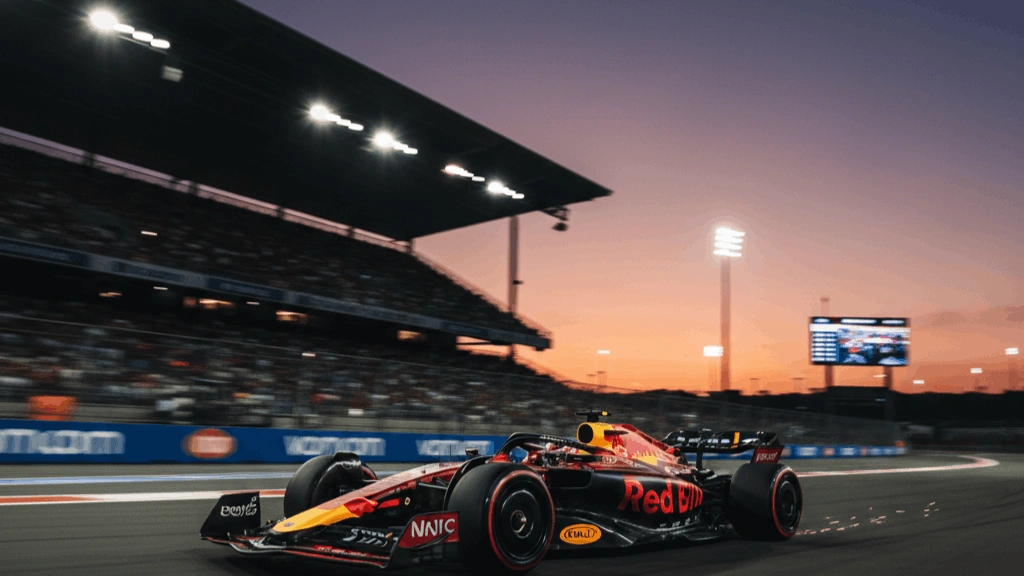
Formula 1, usually shortened to F1, is the highest category of international single-seater circuit racing governed by the Fédération Internationale de l'Automobile (FIA). The word Formula refers to the technical and sporting rules that every participating car and team must follow.
Drivers compete in individual races called Grands Prix, held on permanent race circuits and temporary street circuits around the world. Championship points earned throughout the season determine both the Drivers' Championship and the Teams'/Constructors' Championship.
Formula 1 combines driving skill with aerodynamics, hybrid power, tire management, engineering, pit-stop execution, strategy, weather forecasting, and teamwork. The current 2026 season has 11 teams and 22 race drivers, following Cadillac's addition to the grid.
Learning Objectives
After studying this guide, you should be able to:
· Explain the structure of an F1 Grand Prix weekend.
· Understand qualifying, starting grids, championship points, and Sprint races.
· Identify the major parts of an F1 car and explain downforce, drag, and hybrid power.
· Distinguish soft, medium, hard, intermediate, and wet tires.
· Explain pit-stop strategy, undercuts, Safety Cars, and common racing flags.
· Understand important F1 terms such as pole position, stint, dirty air, parc fermé, and Overtake Mode.
What Is a Grand Prix?
A Grand Prix is the main race of an F1 weekend.
Most Grands Prix cover the smallest whole number of laps necessary to exceed 305 kilometers. Monaco is an exception, with a race distance exceeding approximately 260 km because of its slower street circuit.
The number of laps therefore differs between circuits.
A short circuit requires more laps, while a longer circuit requires fewer.
Teams and Drivers
Each Formula 1 team normally enters two cars, each driven by a different race driver.
In 2026, the grid contains 11 teams and 22 cars. Cadillac became the newest team, while Sauber's operation became Audi's works F1 team.
A team includes far more people than the two drivers.
Important roles include:
· Team principal
· Race engineers
· Performance engineers
· Aerodynamicists
· Mechanics
· Strategists
· Power-unit engineers
· Pit crew
Formula 1 is therefore both an individual and team competition.
Drivers' and Teams' Championships
Drivers earn championship points from their finishing positions.
Grand Prix scoring is:
Position | Points |
1st | 25 |
2nd | 18 |
3rd | 15 |
4th | 12 |
5th | 10 |
6th | 8 |
7th | 6 |
8th | 4 |
9th | 2 |
10th | 1 |
The driver with the most points at the end of the season wins the Drivers' Championship. The points scored by both cars count toward the team's championship total.
The former bonus championship point for fastest lap was removed beginning in 2025.
A Standard F1 Weekend
A conventional Grand Prix weekend normally contains:
Friday
· Free Practice 1
· Free Practice 2
Saturday
· Free Practice 3
· Qualifying
Sunday
· Grand Prix
Practice allows teams to study tire behavior, car setup, fuel loads, track conditions, and long-run pace.
Qualifying determines the starting order.
Qualifying
Qualifying is divided into three knockout sessions.
With 22 cars on the 2026 grid:
Q1 — 18 minutes
All 22 cars participate. The six slowest are eliminated.
Q2 — 15 minutes
Six more are eliminated.
Q3 — 13 minutes
The remaining ten compete for the leading grid positions.
The fastest Q3 driver normally earns pole position, meaning first place on the starting grid.
Memory Tip
Q1 → 22
Q2 → 16
Q3 → 10
Sprint Weekends
Selected events use the F1 Sprint format.
A Sprint is a short race of roughly 100 km, around one-third of normal Grand Prix distance.
The top eight Sprint finishers score:
8–7–6–5–4–3–2–1 points
Sprint Qualifying uses three shorter sessions: SQ1, SQ2, and SQ3.
The Sprint does not replace Sunday's Grand Prix.
The Starting Procedure
Before a Grand Prix begins, drivers complete a formation lap.
They may weave or accelerate and brake to help prepare their tires and brakes.
Cars then return to their grid positions.
Five red lights illuminate sequentially.
When all lights go out, the race begins.
The 2026 Formula 1 Car
The 2026 season introduced one of the sport's largest technical rule changes.
The new generation combines:
· Smaller, lighter cars
· New aerodynamics
· Active front and rear wings
· Revised hybrid power units
· Greater electrical power
· Advanced sustainable fuel
The regulations were designed as a major reset of both chassis and engine technology.
Downforce and Drag
An F1 car uses airflow to generate downforce.
Downforce pushes the car toward the track, allowing higher cornering speeds.
However, aerodynamic surfaces also create drag, which resists forward motion.
Engineers therefore face a trade-off:
More downforce → better cornering
Less drag → better straight-line speed
Different circuits require different aerodynamic compromises.
Active Aerodynamics
Traditional DRS is no longer the main overtaking system in 2026.
Instead, both the front and rear wings contain movable elements.
In Corner Mode, the wings provide greater aerodynamic load for cornering.
In Straight Mode, the wings reduce drag on appropriate straight sections.
Unlike the old DRS system, active aerodynamics are not simply an overtaking privilege for the following car. All cars use the aerodynamic modes according to the new system.
Overtake Mode
Overtake Mode replaces part of the tactical role previously associated with DRS.
When a pursuing driver meets the required proximity conditions at a designated detection point, additional electrical energy deployment becomes available to help maintain higher speed while attacking.
Do not confuse this with active aerodynamics:
Active Aero = changes wing configuration
Overtake Mode = additional electrical deployment opportunity
The Power Unit
Modern F1 cars use power units, not simply engines.
The 2026 power unit retains a 1.6-liter turbocharged V6 internal-combustion engine combined with hybrid electrical systems.
Electrical power plays a much larger role than in the previous generation. The MGU-K can provide up to 350 kW, while the older MGU-H system has been removed. F1 describes the new system as roughly balancing combustion and electrical power contributions.
The cars also use advanced sustainable fuel under the 2026 regulations.
Energy Recovery
Hybrid systems can recover energy that would otherwise be lost, especially during braking.
That electrical energy is stored and later deployed to assist acceleration.
Energy management is therefore now a major strategic and driving skill.
A driver may need to decide when to:
· Harvest energy
· Save battery charge
· Deploy extra power
· Attack
· Defend
Tires
Formula 1's official tire supplier provides several compounds designed for different conditions.
The 2026 dry-weather range consists of:
C1 → hardest
through
C5 → softest
Three slick compounds are normally selected for each Grand Prix and identified as:
Tire | Color | General Characteristic |
Hard | White | Durable, usually slower |
Medium | Yellow | Balance of speed and durability |
Soft | Red | Faster grip, usually shorter life |
Intermediate | Green | Damp or light-wet conditions |
Full Wet | Blue | Heavy standing water |
The 2026 tires retain 18-inch wheel rims but are narrower than the previous generation.
Tire Degradation
Tire degradation means performance decreases as a tire wears or overheats.
Drivers therefore cannot simply drive every lap as fast as possible.
They may need to protect the tires by controlling:
· Cornering loads
· Wheelspin
· Braking
· Temperature
· Sliding
A driver with fresher tires can sometimes be dramatically faster than a rival on older rubber.
Tire Strategy
On a dry Grand Prix, drivers normally must use at least two different slick compounds.
This creates strategy choices such as:
Soft → Medium
or
Medium → Hard
Teams must estimate the fastest combination of speed and tire life.
Rain changes the calculation because intermediate and wet tires become available.
Pit Stops
During a pit stop, the car enters the pit lane and the crew changes all four tires.
Modern F1 tire changes can be completed in only a few seconds.
Refueling during races is not permitted, so most routine stops focus primarily on tires, although crews can also replace a damaged front wing or make limited adjustments.
Undercut and Overcut
An undercut occurs when a driver pits before a rival, uses fresh tires to produce faster laps, and gains position when the rival later stops.
An overcut does the opposite.
The driver remains on track longer and tries to gain time before making their own stop.
Whether either strategy works depends on:
· Tire warm-up
· Tire degradation
· Traffic
· Pit-lane time loss
· Track position
Safety Car
A Safety Car may be deployed when conditions are dangerous but racing can continue at reduced speed.
Drivers form a controlled queue behind the Safety Car.
This compresses the gaps between competitors.
Because everyone travels more slowly, a pit stop under the Safety Car can cost less race time than a stop under normal racing conditions.
Safety Cars can therefore transform strategy.
Virtual Safety Car
A Virtual Safety Car, or VSC, slows every driver according to a regulated delta rather than physically grouping the field behind a Safety Car.
The FIA can use it when danger requires reduced speeds but a full Safety Car is unnecessary.
Important Flags
Drivers must recognize racing flags immediately.
Green: track clear.
Yellow: danger ahead; reduce speed and obey overtaking restrictions.
Double yellow: serious hazard; be prepared to stop.
Red: session or race suspended.
Blue: warns a driver about faster traffic, particularly a car preparing to lap them during a race.
Black: driver is disqualified and must return to the pits.
Black and white: warning for unsporting behavior.
Chequered: session or race finished.
F1 uses both physical flags and electronic light panels.
Pole Position
Pole position means starting first.
It normally goes to the driver who records the fastest qualifying performance.
Pole is valuable because the driver begins with no competitor directly ahead, but it does not guarantee victory.
Starts, tire strategy, weather, reliability, pit stops, and race pace can all change the result.
Fastest Lap
The fastest lap is the quickest single race lap recorded by a driver.
It remains an official statistic, but since 2025 it no longer provides a championship bonus point.
Slipstream and Dirty Air
A car creates a disturbed aerodynamic wake behind it.
On a straight, the following car may benefit from reduced drag. This is often called a slipstream or tow.
In corners, disturbed airflow can reduce the following car's aerodynamic performance.
This effect is commonly called dirty air.
F1 aerodynamic regulations repeatedly try to balance strong downforce with the ability of cars to follow and race closely.
Oversteer and Understeer
Understeer occurs when the front tires lack enough grip and the car turns less than the driver wants.
Oversteer occurs when the rear loses grip more strongly and the car rotates more than intended.
Memory Tip
Understeer = front slides
Oversteer = rear slides
Car setup can change the balance between them.
Parc Fermé
Parc fermé regulations restrict how much teams can alter cars during specified stages of a race weekend.
The principle prevents teams from completely rebuilding or reconfiguring their cars between qualifying and competition.
Violating parc fermé requirements can result in sporting consequences, including starting from the pit lane depending on the circumstances.
F1 Strategy
Race strategy combines many variables:
· Starting position
· Tire compounds
· Tire degradation
· Weather
· Safety Car probability
· Traffic
· Pit-stop timing
· Competitor behavior
· Energy deployment
The quickest car does not automatically win.
A slightly slower car can sometimes win through superior strategy, track position, or tire management.
Circuit Types
F1 races on several types of track.
Permanent Circuit
Purpose-built for motor racing.
Examples include traditional race facilities with large run-off areas and permanent infrastructure.
Street Circuit
Uses public roads that are temporarily converted into a race track.
Monaco is the classic example.
Street circuits often feature narrow roads, close barriers, and little room for error.
Hybrid Circuit
Uses combinations of permanent and temporary sections.
Different tracks reward different characteristics, which is why one car may perform strongly at one circuit and struggle at another.
A Short History of Formula 1
The FIA Formula One World Championship began in 1950.
The first championship Grand Prix took place at Silverstone on May 13, 1950, where Giuseppe Farina won for Alfa Romeo. Farina later became the first F1 World Champion.
Initially, only a Drivers' Championship existed.
A championship for constructors was introduced in 1958.
Since then, Formula 1 has undergone enormous changes in aerodynamics, engines, tires, materials, electronics, safety, race strategy, and regulations.
Common Mistakes
Mistake 1: Formula 1 Is Only About the Driver
False.
Drivers are crucial, but car design, engineering, strategy, pit stops, and reliability strongly influence results.
Mistake 2: Pole Position Means the Driver Won the Previous Race
False.
Pole means first place on the starting grid, normally earned through qualifying.
Mistake 3: Soft Tires Are Always the Best Tires
False.
Soft tires usually provide more immediate grip but tend to degrade faster.
Mistake 4: DRS Still Works as Before in 2026
False.
Traditional DRS has been replaced by the new active-aerodynamics and Overtake Mode framework.
Mistake 5: The Fastest Lap Still Gives a Championship Point
False.
The bonus point was removed from 2025 onward.
Mistake 6: A Safety Car Stops the Race
False.
Cars normally continue at reduced speed behind it. A red flag is what suspends track running.
Memory Tips
For tire colors:
White = Hard
Yellow = Medium
Red = Soft
Green = Intermediate
Blue = Wet
For F1 weekends:
Practice → Qualifying → Race
For championship points:
25 → 18 → 15 → 12 → 10
For car behavior:
Understeer = front
Oversteer = rear
For 2026:
Active Aero = wings
Overtake Mode = electrical attack
Summary
Formula 1 is a global single-seater racing championship combining elite driving with advanced engineering and strategy.
A normal Grand Prix covers just over 305 km, with Monaco using a shorter distance. Drivers qualify for their grid positions and score championship points according to race finishes.
The 2026 regulations dramatically changed the cars. Active front and rear aerodynamics replaced the traditional DRS concept, while Overtake Mode uses additional electrical deployment to assist close racing. Hybrid power has also become more important, alongside sustainable fuel.
Tires are central to race strategy. Soft tires provide greater short-term grip, while harder compounds generally last longer. Pit-stop timing, undercuts, weather, Safety Cars, and traffic can determine whether a strategy succeeds.
Two championships run simultaneously: one for drivers and one for teams. Although the driver is the most visible competitor, hundreds of engineering, operational, strategic, and technical decisions contribute to every result.
FAQ
1. What does Formula 1 mean?
"Formula" refers to the rules defining the cars and competition, while "1" identifies the premier formula of international single-seater racing.
2. How many cars race in Formula 1 in 2026?
There are 22 cars entered by 11 teams.
3. How many points does an F1 race winner receive?
A Grand Prix winner receives 25 championship points.
4. What is pole position?
Pole position is first place on the starting grid, normally awarded to the fastest qualifier.
5. What is a pit stop?
It is when a driver enters the pit lane so the team can service the car, most commonly by replacing the tires.
6. What is an undercut?
An undercut is pitting before a rival and using fresher tires to try to gain enough time to move ahead after that rival pits.
7. Does Formula 1 still use DRS in 2026?
Not in its traditional form. Active aerodynamics and Overtake Mode are now used under the 2026 regulations.
8. What is a Sprint?
A Sprint is a shorter race held at selected Grand Prix weekends, with championship points awarded to the top eight finishers.
9. What is the difference between a Safety Car and a red flag?
A Safety Car slows and controls the race while cars remain on track. A red flag suspends the session or race.
10. When did the F1 World Championship begin?
The World Championship began in 1950, with its first race held at Silverstone on May 13.
Key Takeaways
· Formula 1 combines elite driving with engineering, aerodynamics, hybrid power, tire management, pit stops, and strategy.
· Grand Prix points are awarded to the top ten, starting with 25 points for the winner.
· The 2026 regulations introduced active aerodynamics, Overtake Mode, substantially greater electrical power, and new-generation cars.
· Tires, pit-stop timing, weather, traffic, Safety Cars, and energy management can be as important strategically as outright speed.
· F1 began as a World Championship in 1950 and now awards championships to both drivers and teams.
References
1. Formula 1. 2026 Formula 1 Regulations. Formula 1 — 2026 Regulations Hub
2. Formula 1. The Beginner's Guide to the 2026 Regulations. Formula 1 — Beginner's Guide to the 2026 Rules
3. Formula 1. 2026 Regulations Explained: New Aerodynamics. Formula 1 — 2026 Active Aerodynamics Explained
4. Formula 1. All You Need to Know About F1's New Power Units. Formula 1 — 2026 Power Units Explained
5. FIA. A New Era of Competition: Formula 1 Regulations for 2026 and Beyond. FIA — 2026 Formula 1 Regulations Overview
6. FIA. 2026 Formula 1 Sporting Regulations. FIA — 2026 Sporting Regulations
7. Formula 1. The Beginner's Guide to the F1 Weekend. Formula 1 — Grand Prix Weekend Guide
8. Formula 1. The Beginner's Guide to F1 Tyres. Formula 1 — F1 Tire Guide
9. Formula 1. The Beginner's Guide to F1 Flags. Formula 1 — F1 Flags Guide
10. Formula 1. Why Is It Called Formula 1? Formula 1 — Origins of the World Championship