


Introduction
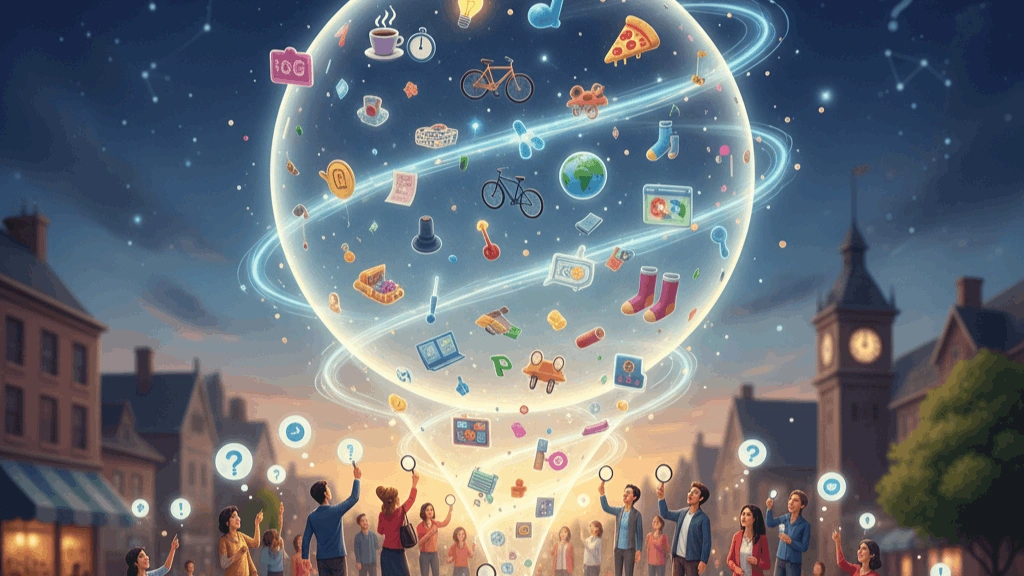
Everyday trivia covers the practical facts, observations, measurements, customs, inventions, and scientific principles that people encounter in ordinary life.
Unlike a specialist subject such as geology or economics, everyday trivia can involve many fields at once. A single quiz might ask about kitchen measurements, calendars, household appliances, traffic signs, food safety, weather, communication technology, or the human body.
The best way to learn everyday trivia is not simply to memorize isolated facts. Understanding why something is true makes it much easier to remember.
This guide focuses on useful knowledge that regularly appears in general-knowledge quizzes and daily life.
Learning Objectives
After studying this guide, you should be able to:
· Understand common units of measurement and everyday conversions.
· Explain practical facts about kitchens, food storage, and household science.
· Recall useful health and hygiene facts.
· Understand calendars, clocks, time zones, and common date conventions.
· Explain familiar weather and physical phenomena.
· Recognize important everyday inventions and communication technologies.
Everyday Measurements
Measurement appears everywhere: cooking, shopping, construction, medicine, travel, and sport.
The internationally recognized modern metric system is the International System of Units, abbreviated SI. NIST notes that SI provides the measurement foundation used throughout science, technology, industry, and many everyday products.
Important everyday metric relationships include:
Measurement | Relationship |
1 kilometer | 1,000 meters |
1 meter | 100 centimeters |
1 centimeter | 10 millimeters |
1 kilogram | 1,000 grams |
1 liter | 1,000 milliliters |
Metric prefixes make these relationships easier to remember.
Kilo- means 1,000.
Centi- means one hundredth.
Milli- means one thousandth.
The Seven SI Base Units
The SI contains seven base units from which many other measurement units are derived.
They include units for:
· Length — meter
· Mass — kilogram
· Time — second
· Electric current — ampere
· Temperature — kelvin
· Amount of substance — mole
· Luminous intensity — candela
Most everyday measurements such as speed, volume, pressure, and electrical power can ultimately be connected to these fundamental measurements.
Celsius and Fahrenheit
Temperature is commonly measured using Celsius or Fahrenheit.
Useful reference points are:
Water freezes at approximately 0°C or 32°F
Water boils at approximately 100°C or 212°F at standard atmospheric pressure
The phrase at standard atmospheric pressure matters.
At high elevations, atmospheric pressure is lower, so water boils at a lower temperature.
This is one reason cooking times can change at high altitude.
Mass vs. Weight
People often use the words mass and weight as though they mean the same thing.
They do not.
Mass measures the amount of matter in an object.
Weight is the force caused by gravity acting on that mass.
Your mass would remain approximately the same on the Moon, but your weight would be much lower because lunar gravity is weaker.
Kitchen Measurements
Cooking is full of everyday measurement.
Common kitchen quantities include:
· Teaspoons
· Tablespoons
· Cups
· Milliliters
· Grams
Recipes can become difficult when countries use different measurement systems.
A kitchen scale is often more precise than measuring ingredients by volume, especially for baking.
This is one reason professional baking recipes frequently specify ingredients in grams.
Refrigerators and Food Safety
Cold temperatures slow the growth of many microorganisms that can spoil food or cause illness.
The U.S. Department of Agriculture recommends keeping a refrigerator at 40°F (4.4°C) or below and a freezer at approximately 0°F (-17.8°C) or below.
Refrigeration does not make food permanently safe.
It slows microbial growth rather than stopping every biological or chemical process.
Why Freezing Preserves Food
Freezing greatly slows many microorganisms and chemical reactions because liquid water becomes less available and molecular activity decreases.
However, freezing does not necessarily kill all microbes.
Once food thaws, surviving microorganisms may begin multiplying again.
This is why safe thawing and storage procedures still matter.
Why Ice Floats
Most solids sink in their own liquids because the solid is denser.
Water behaves unusually.
When water freezes, its molecules form an open crystal structure that makes solid ice less dense than liquid water.
That is why ice floats.
This property is environmentally important because floating ice can insulate liquid water underneath, allowing aquatic life to survive cold seasons.
Microwaves
Microwave ovens use electromagnetic waves to transfer energy into food.
They especially affect polar molecules such as water, causing molecular motion that produces heating.
A microwave oven does not simply cook food "from the inside out."
Microwaves penetrate only a limited distance, and heat continues moving through the food by conduction.
This explains why food can contain hot and cold spots.
Soap and Handwashing
Soap does more than make hands smell clean.
Soap molecules help loosen oils, dirt, chemicals, and microorganisms so that running water can carry them away.
The U.S. Centers for Disease Control and Prevention recommends scrubbing hands with soap for at least 20 seconds.
Important areas include:
· Between fingers
· Backs of hands
· Fingertips
· Under fingernails
Why Humans Sweat
Sweating helps regulate body temperature.
When sweat evaporates from the skin, it carries away heat.
This is called evaporative cooling.
Humid conditions can feel especially uncomfortable because high humidity reduces how quickly sweat evaporates.
The body may continue producing sweat even though cooling becomes less efficient.
Why We See Lightning Before Hearing Thunder
Lightning and thunder happen almost simultaneously.
We see the flash first because light travels enormously faster than sound.
Light reaches an observer almost instantly over ordinary storm distances, while sound takes several seconds to travel a few kilometers.
This is why counting the time between a flash and thunder can provide a rough indication of how far away a storm is.
Clouds Are Made of Water
Clouds may look weightless, but they consist of tiny liquid-water droplets, ice crystals, or both.
Those particles remain suspended because they are extremely small and interact with moving air.
When droplets or ice crystals grow large enough, they can fall as precipitation.
Depending on atmospheric conditions, precipitation may arrive as:
· Rain
· Snow
· Sleet
· Hail
Weather vs. Climate
These terms should not be confused.
Weather describes short-term atmospheric conditions.
Examples include today's rain, wind, temperature, or thunderstorms.
Climate describes long-term patterns and averages over much longer periods.
Memory Tip
Weather = what happens now
Climate = what usually happens
Days, Weeks, and Years
One ordinary day contains:
24 hours
One hour contains:
60 minutes
One minute contains:
60 seconds
Therefore:
1 day = 86,400 seconds
A normal calendar year contains 365 days.
A leap year usually contains 366 days.
Leap Years
The modern Gregorian calendar uses an important rule.
A year is normally a leap year if it is divisible by 4.
However, a century year such as 1900 is not a leap year unless it is also divisible by 400.
Therefore:
1900 — not a leap year
2000 — leap year
2100 — not a leap year
This correction keeps the calendar aligned more closely with Earth's revolution around the Sun.
Why Months Have Different Lengths
Months in the modern Gregorian calendar contain:
· 28 or 29 days
· 30 days
· 31 days
February is the shortest.
A common memory aid begins:
Thirty days hath September...
The irregular month lengths reflect the long historical development of calendars rather than a simple astronomical rule.
Time Zones
Earth rotates approximately once every 24 hours.
Because different longitudes face the Sun at different times, the world is divided into time zones.
Modern civil time uses coordinated standards linked to UTC, or Coordinated Universal Time.
Political borders mean that time zones do not always follow perfectly straight longitude lines.
Some locations also use offsets that include half-hours or quarter-hours rather than whole hours.
Why Mirrors Seem to Reverse Left and Right
A mirror does not actually choose left and right and swap them.
It reverses the direction perpendicular to its surface: front and back.
We often interpret this as left-right reversal because we imagine ourselves turning around to face the same direction as the reflected person.
This is why writing looks reversed in a mirror.
Sound Needs a Medium
Sound is a mechanical wave.
It travels through matter such as:
· Air
· Water
· Solids
Sound cannot travel through a perfect vacuum because there are no particles to carry the vibration.
This is why explosions in outer space would not produce audible sound travelling directly through empty space, despite what many films portray.
Light Travels Faster Than Sound
Light travels at roughly 300,000 kilometers per second in a vacuum.
Sound travels through air far more slowly, at only a few hundred meters per second under ordinary conditions.
This enormous difference explains everyday phenomena such as:
· Seeing lightning before thunder.
· Seeing a distant hammer strike before hearing it.
· Watching fireworks explode before hearing the boom.
Electricity in the Home
Three useful electrical terms are:
Voltage — electrical potential difference.
Current — movement of electric charge.
Power — rate at which electrical energy is transferred.
Electrical power is measured in watts.
A 60-watt device uses energy at a different rate from a 1,500-watt appliance.
Higher wattage does not automatically mean greater efficiency; it means a higher rate of energy use.
Why Batteries Have Positive and Negative Terminals
A battery uses chemical reactions to create an electrical potential difference between its terminals.
When a circuit is completed, electrons can move through the external circuit.
Batteries therefore convert stored chemical energy into electrical energy.
Rechargeable batteries reverse part of this chemical process when external electrical energy is supplied.
Telephones
The telephone transformed communication by allowing speech to be transmitted electrically over distance.
Alexander Graham Bell received a major telephone patent in 1876, and the Smithsonian records his famous March 10, 1876 demonstration shortly afterward.
Telephone technology later developed through:
Wired telephone → switchboards → automatic dialing → mobile phones → smartphones
Modern smartphones combine functions that once required separate devices, including cameras, calculators, maps, music players, and computers.
Internet vs. World Wide Web
The Internet and the World Wide Web are not identical.
The Internet is the global network infrastructure connecting computers and networks.
The Web is one service that runs over the Internet and uses websites, browsers, hyperlinks, and web protocols.
Other Internet services include:
· File transfers
· Messaging
· Online gaming
Memory Tip
Internet = network
Web = websites and linked information using that network
Barcodes and QR Codes
A traditional barcode stores information in a pattern of parallel lines.
A QR code stores information in a two-dimensional pattern of dark and light squares.
QR stands for Quick Response.
Two-dimensional codes can generally store more information than traditional one-dimensional retail barcodes.
They are commonly used for:
· Web links
· Tickets
· Payments
· Product information
Money and Prices
A price tells buyers how much money is required for a good or service.
However, the numerical size of a price does not by itself tell you whether something is expensive.
You must consider:
· Currency
· Income
· Quantity
· Inflation
· Location
This is why comparing "$100" and "100 rupees" without identifying the currencies is meaningless.
Percentage Basics
Percent means:
per hundred
Therefore:
50% = 50/100 = 1/2
25% = 25/100 = 1/4
10% = 10/100 = 1/10
A 20% discount on an item costing 100 units removes 20 units, producing a price of 80.
Percentage questions are common because they appear in discounts, taxes, interest, statistics, and tips.
Speed, Distance, and Time
A basic relationship is:
Speed = Distance ÷ Time
Therefore:
Distance = Speed × Time
and:
Time = Distance ÷ Speed
If a vehicle travels at 60 km/h for two hours:
Distance = 60 × 2 = 120 km
Average speed does not mean the vehicle traveled at exactly that speed during every moment.
Common Mistakes
Mistake 1: Weight and Mass Are Exactly the Same
False.
Mass measures matter, while weight depends on gravity.
Mistake 2: Ice Floats Because It Contains Air
False.
Ordinary ice floats mainly because solid water is less dense than liquid water.
Mistake 3: Microwaves Cook Food Entirely From the Inside Out
False.
Microwave energy penetrates only partway into food, while heat also spreads through conduction.
Mistake 4: A Year Divisible by Four Is Always a Leap Year
False.
Century years must also be divisible by 400.
Mistake 5: Weather and Climate Mean the Same Thing
False.
Weather is short-term; climate describes long-term patterns.
Mistake 6: The Internet and the Web Are Identical
False.
The Web is one major service operating through the Internet.
Memory Tips
For metric measurement:
Kilo = 1,000
Centi = 1/100
Milli = 1/1,000
For time:
60 seconds → 1 minute
60 minutes → 1 hour
24 hours → 1 day
For food safety:
Cold refrigerator ≈ 4°C or below
For hygiene:
Handwashing = at least 20 seconds
For calendars:
Divisible by 4 → usually leap
Century → must also divide by 400
Summary
Everyday trivia combines practical knowledge from science, mathematics, technology, food, health, weather, communication, and daily routines.
Measurement is one of its most important foundations. Metric units use predictable powers of ten, while time, temperature, and household measurements follow their own familiar systems.
Ordinary activities also involve science. Ice floats because frozen water is less dense than liquid water, sweating cools the body through evaporation, and lightning is seen before thunder because light travels much faster than sound.
Food and hygiene knowledge has practical importance. Refrigerators should remain cold enough to slow microbial growth, while proper handwashing uses soap, running water, and sufficient scrubbing time.
Calendars contain historical rules such as leap-year exceptions, while time zones reflect Earth's rotation combined with political decisions.
Technology introduces another major category of everyday knowledge. Telephones transmit speech over distance, electrical appliances use power measured in watts, and the Internet should not be confused with the World Wide Web.
Learning these principles makes everyday trivia easier because many quiz answers can be reasoned out rather than simply memorized.
FAQ
1. How many centimeters are in a meter?
There are 100 centimeters in one meter.
2. How many milliliters are in a liter?
There are 1,000 milliliters in one liter.
3. Why does ice float?
Ice is less dense than liquid water because freezing creates a more open molecular structure.
4. How long should you scrub your hands with soap?
The CDC recommends at least 20 seconds.
5. What temperature should a refrigerator be?
The USDA recommends approximately 40°F, or 4.4°C, or below.
6. Why do we see lightning before hearing thunder?
Because light travels vastly faster than sound.
7. Is every year divisible by four a leap year?
No. Century years must also be divisible by 400.
8. What does QR stand for?
Quick Response.
9. What is the difference between the Internet and the Web?
The Internet is the underlying global network, while the World Wide Web is a system of linked websites that operates through it.
10. What does percent mean?
Percent literally means "per hundred."
Key Takeaways
· Everyday trivia becomes easier when facts are connected to basic principles rather than memorized separately.
· Metric measurement uses powers of ten, while time and calendars include several historical conventions.
· Common household phenomena such as refrigeration, floating ice, microwaves, and electricity can be explained scientifically.
· Practical knowledge includes food safety and hygiene as well as general-knowledge facts.
· Everyday technology, communication, weather, percentages, and measurements are frequent sources of quiz questions.
References
1. National Institute of Standards and Technology. Everyday with Metric
2. National Institute of Standards and Technology. SI Units
3. National Institute of Standards and Technology. The International System of Units
4. U.S. Department of Agriculture Food Safety and Inspection Service. Refrigerator and Freezer Temperatures
5. Centers for Disease Control and Prevention. About Handwashing
6. Centers for Disease Control and Prevention. Hand Hygiene Frequently Asked Questions
7. Smithsonian Institution. Telephones Through Time