


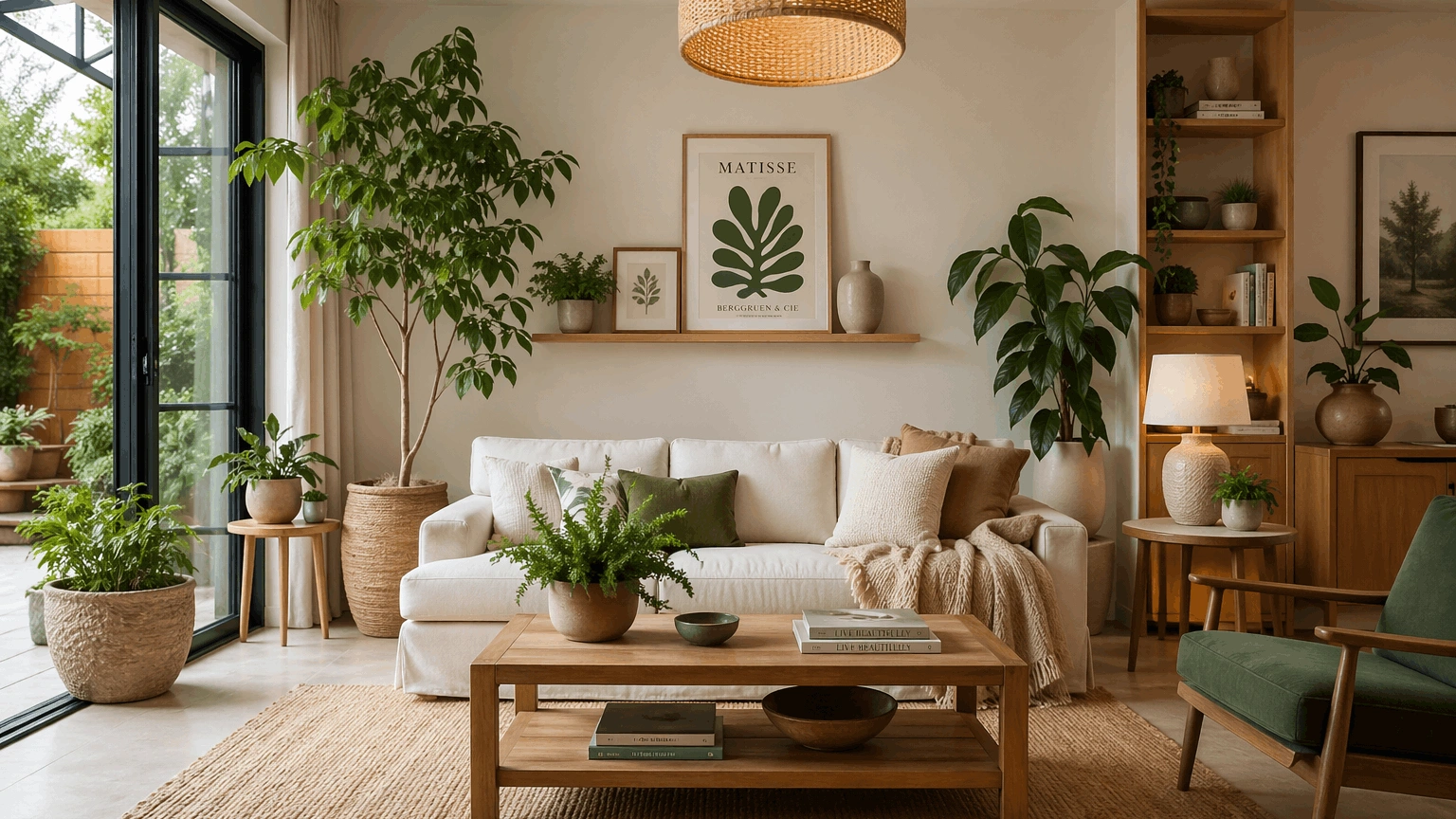
Introduction
Home, garden, and interior design combine practical planning with aesthetics. A well-designed home should support everyday activities, provide comfortable movement, use light effectively, and suit the needs of the people who live there. A successful garden follows similar principles by matching plants and materials to the available space, sunlight, soil, water, and climate.
Interior design is not simply decoration. It involves decisions about space, function, proportion, lighting, color, materials, furniture, and circulation. Gardening is also more than choosing attractive flowers. Gardeners must understand plant requirements, soil conditions, drainage, seasons, and maintenance.
Learning these subjects helps homeowners, students, gardeners, decorators, and quiz learners understand why certain spaces work well and how indoor and outdoor environments can be improved.
Learning Objectives
After studying this guide, you should be able to:
· Explain major principles of interior and garden design.
· Distinguish elements such as balance, proportion, scale, rhythm, and emphasis.
· Understand the roles of color, lighting, texture, furniture, and circulation.
· Explain basic gardening concepts involving sunlight, soil, water, drainage, and plant selection.
· Identify common home and garden maintenance considerations.
· Recognize frequent design and gardening mistakes.
The Home as a Functional Space
A home must perform several functions at the same time.
People may use it for:
· Sleeping
· Cooking
· Eating
· Working
· Studying
· Socializing
· Relaxing
· Storage
· Personal care
Good design considers these activities before deciding how a room should look.
A visually impressive room can still be poorly designed if doors cannot open properly, furniture blocks walkways, lighting is inadequate, or storage does not meet the occupants' needs.
A useful basic principle is:
Function first, decoration second.
Ideally, the two work together.
Interior Design vs Interior Decoration
The terms are related but not identical.
Interior design deals broadly with planning and organizing interior environments.
It may consider:
· Space planning
· Lighting
· Furniture arrangement
· Materials
· Human movement
· Accessibility
· Color
· Acoustics
· Storage
Interior decoration focuses more narrowly on the appearance and furnishing of a finished space.
Decoration may involve:
· Curtains
· Rugs
· Artwork
· Cushions
· Accessories
· Decorative colors
Interior decoration is therefore one part of the broader design process.
Core Principles of Interior Design
Several concepts help designers create organized and visually coherent spaces.
Principle | Basic Meaning |
Balance | Distribution of visual weight |
Proportion | Relationship between sizes |
Scale | Size compared with people or surroundings |
Rhythm | Visual repetition or movement |
Emphasis | Creation of a focal point |
Harmony | Elements working well together |
Contrast | Use of noticeable differences |
Unity | Overall sense of connection |
Balance
Balance is the distribution of visual weight in a space.
Symmetrical Balance
Symmetrical balance places similar elements on opposite sides of a central point.
For example, two identical lamps placed on either side of a bed create symmetry.
This often gives a room a formal, orderly appearance.
Asymmetrical Balance
Asymmetrical balance uses different objects that have similar visual weight.
A large chair on one side of a room might be visually balanced by a smaller table and lamp on the other.
This arrangement can feel more informal and dynamic.
Scale and Proportion
Scale describes the size of something in relation to its surroundings.
A huge sofa can overwhelm a very small room. A tiny light fixture may appear lost above a large dining table.
Proportion describes the size relationship between different parts.
For example, a coffee table should visually relate to the sofa and surrounding seating rather than appearing unusually large or small.
Scale and proportion help furniture feel as though it belongs in a space.
Focal Points
A focal point is the area that attracts attention first.
Possible focal points include:
· Fireplace
· Large window
· Artwork
· Feature wall
· Bed
· Dining table
· Architectural detail
A room can become visually confusing when too many objects compete equally for attention.
Furniture can often be arranged to reinforce the main focal point.
Rhythm and Repetition
Rhythm creates visual movement through repeated or related elements.
Designers might repeat:
· Colors
· Shapes
· Materials
· Patterns
· Textures
For example, the same wood tone might appear in a table, picture frames, and shelving.
Repetition creates connection, but excessive repetition can make a room feel monotonous.
Space Planning and Circulation
Space planning determines how furniture and activities fit within a room.
One of its most important concepts is circulation—the way people move through a space.
Major pathways should generally remain clear.
Common problems include:
· Furniture blocking doors
· Chairs interfering with walkways
· Tables placed where people frequently pass
· Oversized furniture reducing usable space
Before buying furniture, measuring the room, doors, windows, and major pathways can prevent costly mistakes.
Color in Interior Design
Color strongly influences the appearance of a room.
Hue
A hue is the basic color itself, such as blue, red, or green.
Tint
A tint is created by making a color lighter.
Shade
A shade is created by making a color darker.
Warm Colors
Warm colors include families of:
· Red
· Orange
· Yellow
They can create visual energy and warmth.
Cool Colors
Cool colors include families of:
· Blue
· Green
· Violet
They can create a calmer visual impression.
These associations are design conventions rather than universal psychological rules. Cultural context, lighting, surrounding colors, and personal preference all influence how a color is perceived.
The Color Wheel
The color wheel helps explain relationships among colors.
Primary Colors
In the traditional painter's color model:
· Red
· Yellow
· Blue
are considered primary colors.
Secondary Colors
Mixing traditional primary pigments produces:
· Orange
· Green
· Violet
Complementary Colors
Complementary colors appear opposite one another on a traditional color wheel.
Examples include:
· Red and green
· Blue and orange
· Yellow and violet
They create strong visual contrast.
Analogous Colors
Analogous colors sit near one another on the color wheel.
For example:
Blue + blue-green + green
Such combinations often appear visually harmonious.
Lighting Design
Lighting affects function, comfort, color perception, and atmosphere.
A strong lighting plan usually uses more than one type of light.
Ambient Lighting
Ambient lighting provides general illumination.
Examples include ceiling fixtures and broad room lighting.
Task Lighting
Task lighting supports a specific activity.
Examples include:
· Desk lamps
· Reading lights
· Kitchen counter lighting
Accent Lighting
Accent lighting draws attention to particular features.
It might highlight:
· Artwork
· Shelves
· Plants
· Architectural details
A useful memory pattern is:
Ambient = general
Task = work
Accent = emphasis
Natural Light
Windows and skylights can provide daylighting, meaning the intentional use of natural light inside a building.
Natural light can reduce the need for artificial lighting, although poor window placement can also create glare or unwanted heat. The U.S. Department of Energy notes that effective daylighting requires attention to window position and the amount of sunlight entering the space.
Curtains, blinds, exterior shading, and furniture placement can help control daylight.
Texture and Pattern
Texture describes how a surface feels or appears to feel.
Examples include:
· Smooth glass
· Rough stone
· Soft fabric
· Polished wood
· Woven fibers
Mixing textures can prevent a room from appearing flat.
Pattern is a repeated decorative design.
Patterns may appear on:
· Wallpaper
· Rugs
· Curtains
· Upholstery
· Tiles
Several patterns can work together, but varying their scale often helps avoid visual competition.
Furniture Layout
Furniture should support the room's main activities.
Living Room
A living room often benefits from seating arranged to support conversation rather than placing every piece against a wall.
Bedroom
The bed usually becomes the dominant piece of furniture. Clear access around it and practical bedside storage improve functionality.
Dining Room
Dining chairs need enough surrounding space to be used comfortably.
Small Spaces
Small rooms often benefit from:
· Multifunctional furniture
· Vertical storage
· Fewer oversized pieces
· Clear circulation routes
· Careful use of visual clutter
Storage and Organization
Storage is a major part of functional design.
Common storage types include:
· Closed cabinets
· Open shelves
· Drawers
· Wardrobes
· Baskets
· Built-in units
Closed storage can reduce visual clutter, while open shelving makes frequently used or decorative objects easy to access.
The best storage system places items near where they are actually used.
Indoor Air Quality
Design decisions can affect indoor environmental quality as well as appearance.
Indoor pollutants may come from combustion, moisture, furnishings, building materials, cleaning products, and other sources. Inadequate ventilation can allow pollutants to accumulate indoors, according to the U.S. Environmental Protection Agency.
Important considerations include:
· Ventilation
· Moisture control
· Appropriate exhaust systems
· Product selection
· Proper maintenance
Indoor environmental health should take priority over purely decorative choices.
Energy-Conscious Home Design
Homes use energy for lighting, heating, cooling, appliances, and other functions.
Design choices that can influence energy use include:
· Insulation
· Air sealing
· Window performance
· Shading
· Efficient lighting
· Daylighting
ENERGY STAR identifies air sealing and insulation as important measures for improving household comfort and energy performance.
Climate matters, so the best solution is not identical for every home.
Garden Design Basics
A successful garden begins with understanding the site.
Before choosing plants, examine:
· Sunlight
· Soil
· Drainage
· Climate
· Available space
· Water
· Wind exposure
· Maintenance requirements
The Royal Horticultural Society recommends assessing the site and understanding soil conditions before developing a garden plan.
Sunlight
Plants require different amounts of light.
Common categories include:
Full sun: Plants needing substantial direct sunlight.
Partial shade: Plants suited to a mixture of sun and shade.
Shade: Plants adapted to lower-light conditions.
A plant that thrives in full sun may struggle in deep shade, even with excellent soil and watering.
Understanding Soil
Soil provides physical support, water, air, and nutrients to plant roots.
Common soil components include:
· Mineral particles
· Organic matter
· Water
· Air
Sandy Soil
Sandy soils contain relatively large particles.
They generally drain quickly but may also lose water and nutrients rapidly.
Clay Soil
Clay contains very fine particles.
It can hold substantial water and nutrients but may drain slowly or become compacted.
Loam
Loam contains a useful balance of different particle sizes and is often valued for gardening because it can combine drainage with moisture and nutrient retention.
Actual garden soils vary greatly, so gardeners should work with local conditions rather than assuming every plant needs the same soil.
Compost and Mulch
Compost is decomposed organic material used to improve soil.
It can contribute organic matter and improve soil structure.
Mulch is material spread over the soil surface.
Mulch may help:
· Reduce evaporation
· Suppress weeds
· Moderate soil temperature
· Add organic matter as some materials decompose
The Royal Horticultural Society includes soil care, composting, and mulching among basic plant-care practices.
Drainage
Plant roots need both water and oxygen.
When soil remains excessively saturated, roots of many plants may suffer.
Containers therefore commonly require drainage holes so excess water can escape.
Good drainage does not mean allowing plants to become permanently dry. The correct moisture level depends on the plant species, climate, soil, container, and season.
Watering Plants
A common beginner mistake is watering according to a rigid schedule without checking conditions.
Water requirements depend on:
· Plant species
· Temperature
· Rainfall
· Sun exposure
· Soil
· Pot size
· Growth stage
Plants in containers often dry more quickly than plants growing in the ground.
Both prolonged drought and excessive watering can damage plants.
Choosing the Right Plant
A central gardening principle is:
Right plant, right place.
Before planting, consider:
· Mature plant size
· Light requirements
· Water requirements
· Soil preferences
· Local temperature extremes
· Maintenance needs
In the United States, the USDA Plant Hardiness Zone Map helps gardeners estimate which perennial plants are likely to tolerate local winter minimum temperatures. It is based on average annual extreme minimum winter temperatures and should be treated as one factor among several when choosing plants.
Other countries use different climate and horticultural systems.
Container Gardening
Containers make gardening possible on:
· Balconies
· Patios
· Windowsills
· Rooftops
· Small yards
A suitable container generally needs:
· Enough space for roots
· Appropriate growing medium
· Drainage
· Suitable light
· Regular monitoring for water
Because containers contain limited soil volume, they can dry out faster than garden beds.
Houseplants
Indoor plants should be selected according to the conditions inside the home.
Important factors include:
· Window direction
· Light intensity
· Temperature
· Humidity
· Container size
· Watering needs
The Royal Horticultural Society recommends choosing houseplants according to available sun or shade and monitoring them for problems such as pests, excessive dryness, or overwatering.
A common mistake is assuming every houseplant thrives in a dark room simply because it is labeled an "indoor plant."
Garden Structure
Garden design also uses principles familiar from interior design.
Paths
Paths organize movement.
Borders and Beds
Planting beds create defined areas for vegetation.
Focal Points
Trees, sculptures, water features, gateways, or distinctive plants can create visual emphasis.
Repetition
Repeating plants, colors, or materials can give the garden visual unity.
Layering
Plants of different heights can create depth.
A typical arrangement might combine:
Trees → shrubs → perennials → ground cover
Indoor and Outdoor Design Connections
Home and garden design share many principles.
Interior Design | Garden Design |
Furniture arrangement | Plant arrangement |
Walkways through rooms | Garden paths |
Focal artwork | Feature tree or sculpture |
Color palette | Plant and flower colors |
Texture in fabrics | Texture in foliage and materials |
Lighting | Sunlight and garden lighting |
Scale of furniture | Mature scale of plants |
Storage and function | Garden structures and utility areas |
Both disciplines combine function with visual organization.
Common Mistakes
Buying Before Measuring
Furniture that looks suitable in a showroom may be too large for the intended room.
Measure first.
Ignoring Circulation
A room needs practical walking routes, not simply attractive furniture placement.
Using Only One Light Source
A single ceiling fixture rarely provides ideal lighting for every activity.
Following Trends Without Considering Function
A fashionable design may not suit the occupants, climate, building, or maintenance requirements.
Choosing Plants Only by Appearance
A beautiful plant will still struggle if its sunlight, climate, soil, or water requirements are not met.
Overwatering
More water is not automatically better. Excess moisture can be harmful to many plants.
Ignoring Mature Plant Size
A small young tree or shrub can eventually become much larger.
Garden planning should account for mature size.
Memory Tips
Remember the basic interior design sequence:
Function → Space → Furniture → Light → Color → Decoration
For gardening:
Sun → Soil → Water → Plant
For design principles:
Balance → Scale → Rhythm → Emphasis → Harmony
For lighting:
Ambient → Task → Accent
For plant success:
Right plant, right place.
Summary
Home, garden, and interior design combine practical needs with visual design.
Good interiors begin with function, circulation, scale, lighting, and furniture placement. Color, texture, pattern, accessories, and decoration then help establish character and visual unity.
Gardens require the same kind of planning. Successful plant selection depends on sunlight, soil, drainage, climate, water, available space, and mature plant size. Compost, mulch, proper watering, and regular maintenance help support healthy growth.
Indoor and outdoor spaces are therefore connected by the same basic idea: understand the conditions first, then design around them.
FAQ
What is interior design?
Interior design is the planning and organization of indoor environments using elements such as space, furniture, lighting, color, materials, and circulation.
What is the difference between scale and proportion?
Scale concerns size relative to people or surroundings. Proportion concerns the size relationship between different elements.
What are the three basic types of interior lighting?
They are ambient lighting, task lighting, and accent lighting.
What is a focal point?
A focal point is the element or area intended to attract visual attention first.
Why is natural light useful in a home?
Natural daylight can illuminate interiors and reduce reliance on artificial lighting, although it must be managed to control glare and unwanted heat.
What should you check before choosing garden plants?
Check sunlight, soil, drainage, available space, climate, water requirements, and the plant's mature size.
What is compost?
Compost is decomposed organic material that can be incorporated into soil to improve its condition and organic-matter content.
What does mulch do?
Mulch covers the soil surface and can help reduce water loss, suppress weeds, and moderate soil conditions.
Why are drainage holes important in plant containers?
They allow excess water to escape, helping prevent the growing medium from remaining excessively saturated.
What is a plant hardiness zone?
A hardiness zone is a climate classification used to help estimate whether perennial plants can tolerate local minimum winter temperatures. The USDA system is one example used in the United States.
Key Takeaways
· Interior design combines function, circulation, balance, scale, lighting, color, materials, and decoration.
· Ambient, task, and accent lighting perform different roles in a room.
· Good garden design begins by assessing sunlight, soil, water, drainage, climate, and available space.
· Plants should be selected for their growing conditions and mature size rather than appearance alone.
· Successful homes and gardens balance aesthetics with comfort, practicality, maintenance, safety, and environmental conditions.
References
· U.S. Environmental Protection Agency — Protect Indoor Air Quality in Your Home
Official guidance covering indoor pollutants, ventilation, moisture, renovation, and strategies for maintaining indoor air quality.
EPA — Protect Indoor Air Quality in Your Home
· U.S. Department of Energy — Energy 101: Daylighting
Official introduction to using windows and skylights for natural lighting and managing heat and glare.
U.S. Department of Energy — Daylighting
· ENERGY STAR — Seal and Insulate with ENERGY STAR
Guidance on insulation, air sealing, household comfort, windows, and home energy performance.
ENERGY STAR — Seal and Insulate
· Royal Horticultural Society — Beginner's Guide to Gardening
Practical guidance on assessing a garden, understanding soil, planning outdoor spaces, selecting plants, and beginning garden maintenance.
RHS — Beginner's Guide to Gardening
· Royal Horticultural Society — Plant Care
Expert gardening guidance covering pruning, propagation, soil management, mulching, and composting.
RHS — Plant Care
· Royal Horticultural Society — Houseplant Growing Guide
Guidance on choosing and maintaining houseplants according to light, growing medium, water, humidity, and plant health.
RHS — How to Grow Houseplants
· U.S. Department of Agriculture — Plant Hardiness Zone Map
Official tool for estimating the ability of perennial plants to survive local winter minimum temperatures in the United States.
USDA — Plant Hardiness Zone Map
· U.S. Environmental Protection Agency — Safer Choice
Official information on products and ingredients evaluated under EPA's Safer Choice program, including restrictions relating to volatile organic compounds.
EPA — Safer Choice