


Introduction
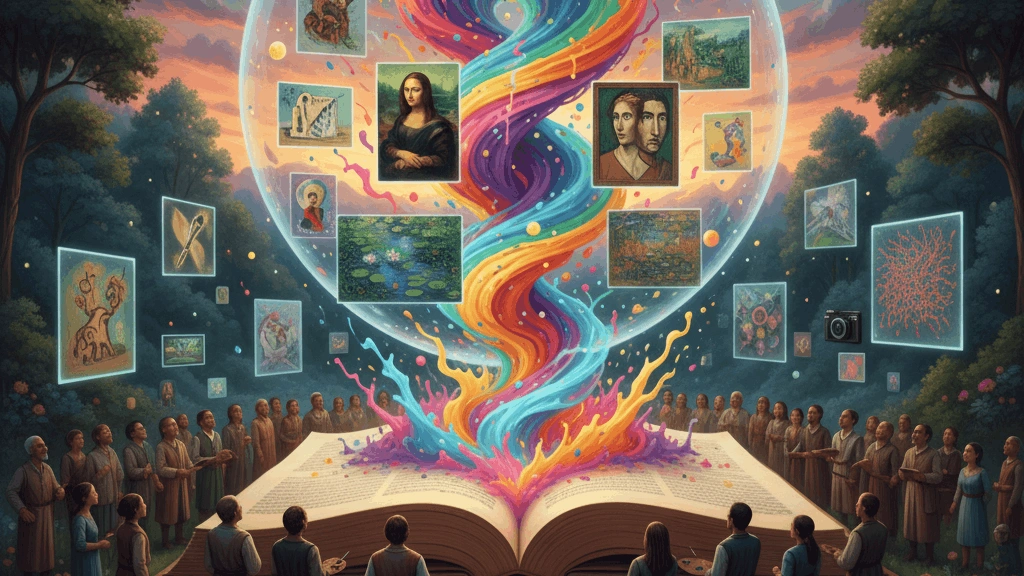
Visual arts are art forms created mainly to be experienced through sight. They include painting, drawing, sculpture, printmaking, photography, ceramics, installation, digital art, and many other forms.
Painting is the practice of applying pigment mixed with a binding material to a surface such as canvas, wood, paper, plaster, or board. Artists use color, line, shape, texture, light, space, and composition to represent people and places, tell stories, express emotions, or explore abstract ideas. MoMA defines painting broadly as art made by applying paint to a support such as canvas, wood, or paper.
Understanding visual art requires more than memorizing famous painters. Important quiz topics include art elements, composition, perspective, painting media, genres, artistic movements, techniques, and museum terminology.
Learning Objectives
After studying this guide, you should be able to:
· Identify the major elements and principles of visual art.
· Distinguish oil, acrylic, watercolor, fresco, and tempera painting.
· Explain perspective, composition, value, texture, and color.
· Recognize major painting genres and artistic movements.
· Understand common studio techniques such as glazing, impasto, blending, and wet-on-wet painting.
· Identify key characteristics of Renaissance, Baroque, Impressionist, Cubist, Surrealist, and abstract art.
What Are the Visual Arts?
The visual arts include many different media.
Examples include:
· Painting
· Drawing
· Sculpture
· Printmaking
· Photography
· Ceramics
· Collage
· Installation
· Digital art
Some works combine several materials or techniques and are described as mixed media.
A work does not need to show recognizable people or objects to be visual art. Modern and contemporary artists often work with abstraction, geometric forms, found objects, performance, digital technology, or unconventional materials.
Elements of Art
The elements of art are basic visual building blocks used to create artworks.
Commonly taught elements include:
1. Line
2. Shape
3. Form
4. Color
5. Value
6. Texture
7. Space
Line
A line is a continuous mark or visual path.
Lines can be:
· Thick
· Thin
· Straight
· Curved
· Horizontal
· Vertical
· Diagonal
Lines can outline shapes, suggest movement, or direct the viewer's attention.
Shape
A shape is a flat, two-dimensional area.
Shapes may be:
Geometric — circles, triangles, rectangles
Organic — irregular shapes resembling natural forms
Form
Form refers to three-dimensional volume.
A sculpture physically possesses form.
In painting, artists create the illusion of form through shading, perspective, and highlights.
Color
Color is produced by the way light interacts with surfaces and our eyes.
Artists often discuss color through:
· Hue
· Value
· Saturation
Hue means the color family, such as red or blue.
Value describes how light or dark a color appears.
Saturation describes intensity or purity.
Value
Value is the lightness or darkness of a color or tone.
Strong value differences create contrast.
Artists can use value to make a flat shape appear three-dimensional.
Texture
Texture describes how a surface feels or appears to feel.
Actual Texture
A real physical quality, such as thick paint.
Visual Texture
The illusion of roughness, softness, fur, stone, or another surface.
Space
Space concerns the areas around, between, or within forms.
In painting, artists can suggest deep space on a flat surface using:
· Perspective
· Overlapping
· Scale
· Placement
· Atmospheric effects
Principles of Art and Design
The principles of design describe how visual elements are organized.
Common principles include:
· Balance
· Contrast
· Emphasis
· Movement
· Pattern
· Rhythm
· Unity
· Variety
· Proportion
Balance
Balance concerns the distribution of visual weight.
Symmetrical Balance
Both sides are similar.
Asymmetrical Balance
Different elements create an overall sense of equilibrium.
Radial Balance
Elements radiate around a central point.
Contrast
Contrast occurs when different visual qualities are placed together.
Examples include:
· Light vs dark
· Large vs small
· Smooth vs rough
· Warm vs cool
Emphasis
Emphasis directs attention toward a particular part of the artwork.
The main area attracting attention is often called the focal point.
Movement
Visual movement guides the viewer's eye through the composition.
Artists may create movement through:
· Repeated lines
· Diagonals
· Gestures
· Directional shapes
Unity and Variety
Unity makes the composition feel connected.
Variety prevents it from becoming visually repetitive.
Good compositions often balance both.
Composition
Composition is the arrangement of visual elements within an artwork.
It includes decisions about:
· Placement
· Balance
· Scale
· Direction
· Empty space
· Focal points
A strong composition helps control how the viewer experiences the work.
Positive and Negative Space
Positive space is occupied by subjects or forms.
Negative space is the area surrounding or between them.
Negative space can be just as important as the objects themselves.
Perspective
Perspective creates the illusion of three-dimensional depth on a two-dimensional surface.
Linear Perspective
Linear perspective uses imaginary lines that appear to converge as objects recede into the distance.
Important terms include:
· Horizon line
· Vanishing point
· Orthogonal lines
One-Point Perspective
Lines converge toward one principal vanishing point.
This works well for views such as:
· Roads
· Hallways
· Rooms
Two-Point Perspective
Forms are constructed using two principal vanishing points.
It is often used when looking toward the corner of a building or object.
Atmospheric Perspective
Atmospheric perspective suggests distance by making distant objects appear:
· Lighter
· Less detailed
· Less strongly contrasted
· Often cooler in color
Color Theory
Artists use relationships among colors to create harmony, contrast, or mood.
Primary Colors
In traditional painting instruction, the primary colors are commonly taught as:
· Red
· Yellow
· Blue
These can be mixed to create many other hues.
Secondary Colors
Mixing traditional primary colors produces:
· Orange
· Green
· Violet
Complementary Colors
Complementary colors are positioned opposite one another on a traditional color wheel.
Examples include:
· Red and green
· Blue and orange
· Yellow and violet
Placed together, they create strong contrast.
Warm and Cool Colors
Warm colors commonly include:
· Red
· Orange
· Yellow
Cool colors commonly include:
· Blue
· Green
· Violet
Artists can use warm and cool contrasts to affect mood or spatial depth.
Painting Materials
Paint usually contains:
Pigment + binder
The pigment supplies color.
The binder holds pigment particles together and allows the paint to adhere to a surface.
Different binders produce different painting media.
Oil Painting
Oil paint suspends pigment in drying oil. MoMA describes oil paint as pigment suspended in oil that gradually dries when exposed to air.
Oil paint is valued for:
· Slow drying
· Smooth blending
· Rich color
· Transparent glazing
· Thick texture
Artists can work in both thin transparent layers and heavy applications.
Acrylic Painting
Acrylic paint uses pigment suspended in an acrylic polymer emulsion.
Acrylics are:
· Water-based
· Fast-drying
· Versatile
· Suitable for thin or thick application
MoMA notes that a major distinction between acrylic and oil paint is that acrylic is water-based, whereas oil paint uses an oil binder.
Watercolor
Watercolor uses water-soluble paint and is commonly applied to paper.
Its characteristic qualities include:
· Transparency
· Light washes
· Visible paper
· Rapid drying
Artists often preserve the white of the paper for highlights instead of using heavy white paint.
Gouache
Gouache is a water-based paint similar to watercolor but generally more opaque.
It allows artists to create:
· Flat areas of color
· Strong graphic shapes
· Matte surfaces
Tempera
Tempera combines pigment with a water-soluble binder.
Historically, egg tempera, using egg yolk as a binder, was important in panel painting.
Tempera dries quickly and can produce precise details.
Fresco
Fresco is wall painting using pigment applied to plaster.
In buon fresco, pigment is applied to wet plaster so that color becomes physically integrated with the wall as it dries.
Fresco was especially important in monumental wall painting.
Canvas, Panel, and Paper
The surface carrying a painting is called its support.
Common supports include:
· Canvas
· Wood panel
· Paper
· Wall plaster
· Cardboard
Canvas became especially common for portable European paintings because it was lighter than large wooden panels.
Common Painting Techniques
Blending
Blending creates gradual transitions between colors or values.
It is often used in:
· Skin tones
· Skies
· Shadows
The National Gallery of Art describes blending as gradually fading colors into one another or transitioning between light and dark.
Wet-on-Wet
Wet-on-wet painting applies fresh paint over paint that has not yet dried.
This makes colors easier to blend and can create soft edges.
Dry Brush
A dry-brush technique uses relatively little paint on a dry brush.
Dragging it across a surface can create broken, scratchy marks and visible texture.
Impasto
Impasto is the thick application of paint so that brush or palette-knife marks remain visible.
It creates actual physical texture.
Vincent van Gogh is famous for paintings containing strongly visible brushwork and thick paint.
Glazing
A glaze is a thin, transparent or translucent layer of paint placed over a dry layer.
Multiple glazes can create rich color and depth.
Sgraffito
Sgraffito involves scratching through a surface layer to expose another layer beneath it. The technique can produce lines, patterns, and contrasting marks.
Palette Knife
A palette knife is a flexible tool used for mixing or applying paint.
Artists can use it to create smooth areas or thick textured surfaces.
Painting Genres
A genre is a category based on subject matter.
Major painting genres include:
· Portrait
· Landscape
· Still life
· History painting
· Genre painting
· Religious painting
· Abstract painting
Portrait
A portrait represents a particular person or group.
Portraits may communicate:
· Appearance
· Personality
· Social position
· Occupation
· Identity
A self-portrait depicts the artist.
Landscape
A landscape makes natural scenery or an outdoor environment its primary subject. MoMA notes that landscape painting has existed since antiquity and became an important field for artistic experimentation in later periods.
Landscapes may show:
· Mountains
· Rivers
· Forests
· Fields
· Cities
An urban landscape is sometimes called a cityscape.
Still Life
A still life depicts arranged objects.
Typical subjects include:
· Fruit
· Flowers
· Food
· Books
· Glassware
· Household objects
Still-life paintings may demonstrate technical skill or communicate symbolic meanings.
History Painting
Traditionally, history painting depicted serious narrative subjects such as:
· History
· Mythology
· Religion
· Literature
In European academic traditions, it was often regarded as a prestigious genre because it required artists to construct complex scenes and figures.
Genre Painting
Genre painting depicts scenes of everyday life.
Examples include:
· Markets
· Homes
· Taverns
· Workplaces
· Street scenes
Do not confuse genre painting, a specific art-historical category, with the broader word genre, meaning any category.
Representational and Abstract Art
Representational Art
Representational art shows recognizable subjects from the visible world.
Abstract Art
Abstract art simplifies, transforms, or moves away from recognizable representation.
Nonrepresentational Art
Some art contains no recognizable subject at all.
MoMA defines abstraction broadly as art that may move away from direct depiction, with fully nonrepresentational works containing no discernible subject matter.
Renaissance Art
The Renaissance developed in Europe from roughly the 14th through 16th centuries, although dates vary by region.
Renaissance art is associated with:
· Renewed study of classical antiquity
· Naturalistic human figures
· Linear perspective
· Anatomical observation
· Balanced compositions
Major artists include:
· Leonardo da Vinci
· Michelangelo
· Raphael
· Titian
Renaissance art was not a single uniform style, and important regional traditions developed throughout Europe.
Baroque Art
Baroque art flourished mainly during the 17th century and into the early 18th century.
Common characteristics include:
· Dramatic lighting
· Strong movement
· Emotional intensity
· Diagonal compositions
· Theatrical effects
Artists commonly associated with Baroque painting include:
· Caravaggio
· Peter Paul Rubens
· Rembrandt
· Artemisia Gentileschi
· Diego Velázquez
Neoclassicism
Neoclassicism developed strongly during the later 18th and early 19th centuries.
It drew inspiration from ancient Greek and Roman art.
Common features include:
· Clear outlines
· Orderly composition
· Classical subjects
· Controlled emotion
Jacques-Louis David is one of its best-known painters.
Romanticism
Romanticism emphasized emotion, imagination, nature, individual experience, and dramatic subjects.
It developed partly in response to Enlightenment rationalism and academic traditions.
Romantic artists often explored:
· Storms
· Revolution
· Exotic settings
· Heroism
· Sublime landscapes
Realism
Realism developed prominently during the 19th century.
Realist artists often focused on contemporary life and ordinary people rather than idealized historical or mythological subjects.
Gustave Courbet is strongly associated with French Realism.
Impressionism
Impressionism emerged in France during the later 19th century.
Impressionist painters were interested in:
· Changing light
· Modern life
· Outdoor painting
· Visible brushstrokes
· Optical color effects
Artists associated with Impressionism include:
· Claude Monet
· Pierre-Auguste Renoir
· Edgar Degas
· Berthe Morisot
· Camille Pissarro
The movement's name came from criticism of Monet's Impression, Sunrise.
Post-Impressionism
Post-Impressionism is a broad term applied to artists who developed new approaches after or alongside Impressionism.
Important figures include:
· Vincent van Gogh
· Paul Cézanne
· Paul Gauguin
· Georges Seurat
They did not share one unified style.
Some emphasized:
· Structure
· Expressive color
· Symbolism
· Pointillist techniques
Expressionism
Expressionism emphasizes emotional or psychological intensity rather than naturalistic representation.
Artists may distort:
· Color
· Form
· Perspective
to communicate an emotional experience.
Cubism
Cubism developed during the early 20th century, especially through the work of Pablo Picasso and Georges Braque.
Cubist artists broke subjects into geometric forms and explored multiple viewpoints within a single image.
Instead of creating conventional illusionistic depth, Cubism often emphasized the flatness of the painting surface.
Dada
Dada developed during World War I as an international artistic and literary movement.
Dada artists challenged conventional ideas of logic, beauty, and art itself through:
· Chance
· Collage
· Photomontage
· Found objects
· Performance
MoMA describes Dada as a response to World War I and modern machine culture that deliberately challenged accepted artistic conventions.
Surrealism
Surrealism developed during the 1920s.
It explored:
· Dreams
· The unconscious
· Unexpected combinations
· Automatism
Surrealist art may depict objects realistically while arranging them in impossible or dreamlike situations.
Associated artists include:
· Salvador Dalí
· René Magritte
· Max Ernst
· Joan Miró
Abstract Expressionism
Abstract Expressionism became highly influential during the 1940s and 1950s.
The movement helped place New York at the center of the international modern-art world.
Its artists used very different approaches but often emphasized large canvases, abstraction, gesture, or emotional intensity.
Associated artists include:
· Jackson Pollock
· Mark Rothko
· Willem de Kooning
Pop Art
Pop Art developed strongly during the 1950s and 1960s.
It drew imagery from:
· Advertising
· Consumer products
· Comics
· Celebrities
· Mass media
Pop artists questioned boundaries between elite fine art and popular culture.
Art Nouveau
Art Nouveau was an international movement around the late 19th and early 20th centuries.
It often used:
· Curved lines
· Organic forms
· Decorative patterns
· Integrated art and design
MoMA describes Art Nouveau as an international movement emphasizing the unity of the arts and often using uneven, curving forms inspired by nature.
How to Analyze a Painting
A useful approach is to ask four groups of questions.
1. What Do You See?
Identify:
· People
· Objects
· Setting
· Colors
· Shapes
2. How Is It Organized?
Examine:
· Composition
· Perspective
· Balance
· Focal point
· Contrast
3. How Was It Made?
Consider:
· Medium
· Support
· Brushwork
· Texture
· Technique
4. What Might It Mean?
Consider:
· Symbols
· Historical context
· Artist's purpose
· Audience
· Cultural setting
Observation should come before interpretation.
Museum Vocabulary
Medium
The medium is the material or process used to create an artwork.
Example:
Oil on canvas
Oil paint = medium.
Canvas = support.
Provenance
Provenance is the documented history of ownership of an artwork.
It can help establish:
· Authenticity
· Legal ownership
· Historical context
Attribution
Attribution identifies the artist believed to have created a work.
An attribution may change when new evidence appears.
Conservation
Conservation involves examining, protecting, stabilizing, and sometimes carefully treating artworks.
Conservators may study:
· Pigments
· Canvas
· Wood
· Varnish
· Previous repairs
Restoration
Restoration refers more specifically to interventions intended to bring an artwork closer to a previous appearance.
Modern conservation practice often emphasizes minimal and carefully documented intervention.
Common Mistakes
Medium and Style Are Different
Oil paint → medium
Impressionism → style or movement
A Portrait Is Not Necessarily Realistic
Artists can create abstract or highly stylized portraits.
Abstract Art Is Not Automatically Random
Abstract works may use carefully planned color, form, rhythm, and composition.
Impressionism and Expressionism Are Different
Impressionism → light, perception, modern visual experience
Expressionism → emotional or psychological intensity
Cubism Is Not Simply Painting Cubes
It explores fragmented forms and multiple viewpoints.
Acrylic and Oil Paint Are Different
Acrylic is water-based and dries quickly.
Oil paint uses an oil binder and generally dries more slowly.
Texture Can Be Real or Illusory
Impasto creates actual physical texture.
Painted fur may create only the visual appearance of texture.
Memory Tips
For art elements:
Line → path
Shape → flat
Form → volume
Value → light/dark
Texture → surface
Space → depth
For painting media:
Oil → slow drying
Acrylic → fast drying
Watercolor → transparent
Gouache → opaque water-based
Fresco → plaster
For movements:
Renaissance → perspective
Baroque → drama
Impressionism → light
Expressionism → emotion
Cubism → multiple viewpoints
Surrealism → dreams
Pop Art → popular culture
Summary
Visual art communicates through elements such as line, shape, form, color, value, texture, and space. Artists organize these elements using principles including balance, contrast, emphasis, movement, and unity.
Painting media differ according to their materials and binders. Oil paint allows slow blending and glazing, acrylic dries quickly, watercolor is known for transparency, tempera provides precise detail, and fresco uses plaster as part of the painting process.
Composition and perspective help artists organize space. Linear perspective creates the illusion of depth through vanishing points, while atmospheric perspective makes distant forms appear less detailed and less strongly contrasted.
Painting genres include portraiture, landscape, still life, history painting, and scenes of everyday life. Art can also range from highly representational to completely abstract.
Major movements such as the Renaissance, Baroque, Romanticism, Realism, Impressionism, Cubism, Surrealism, Abstract Expressionism, and Pop Art developed different ways of representing the world and thinking about what art could be.
For quizzes, focus on art elements, media, genres, movements, techniques, perspective, and museum terminology.
FAQ
What are the main elements of art?
Line, shape, form, color, value, texture, and space are among the most commonly taught elements.
What is the difference between shape and form?
Shape is two-dimensional, while form describes three-dimensional volume.
What is perspective?
Perspective is a method of representing depth and three-dimensional space on a flat surface.
What is the difference between oil and acrylic paint?
Oil paint uses an oil binder and generally dries slowly, while acrylic paint is water-based and dries much faster.
What is impasto?
Impasto is the thick application of paint so that brush or palette-knife marks create visible physical texture.
What is a portrait?
A portrait is an artwork representing a particular person or group.
Which movement is associated with Monet?
Impressionism.
What is Cubism?
Cubism is an early 20th-century movement that fragmented subjects into geometric forms and explored multiple viewpoints.
What is Surrealism?
Surrealism is a movement associated with dreams, the unconscious, unexpected combinations, and imaginative imagery.
What does provenance mean?
Provenance is the documented ownership history of an artwork.
Key Takeaways
· Visual art uses elements such as line, shape, form, color, value, texture, and space to communicate ideas and experiences.
· Oil, acrylic, watercolor, tempera, gouache, and fresco use different materials and create different visual effects.
· Composition, perspective, balance, contrast, and emphasis help artists organize images.
· Major art movements include the Renaissance, Baroque, Impressionism, Cubism, Surrealism, Abstract Expressionism, and Pop Art.
· Understanding medium, subject, technique, composition, and historical context helps viewers analyze paintings more accurately.
References
· Museum of Modern Art — Art Terms
Extensive museum reference covering painting media, abstraction, artistic movements, genres, techniques, and modern-art terminology.
MoMA — Art Terms
· National Gallery of Art — Explore the Basics of Painting
Educational guide to blending, dry brush, palette-knife painting, wet-on-wet technique, sgraffito, and other practical painting methods.
National Gallery of Art — Basics of Painting
· National Gallery of Art — Process and Product: Painting
Educational resource exploring painting materials, techniques, artistic processes, and examples from the museum collection.
National Gallery of Art — Painting
· Metropolitan Museum of Art — Heilbrunn Timeline of Art History
Scholarly museum resource covering art history, major periods, techniques, cultures, artists, and works from around the world.
The Met — Heilbrunn Timeline of Art History
· Metropolitan Museum of Art — European Paintings
Museum collection and educational resources useful for studying painting techniques, composition, artistic movements, and European art history.
The Met — European Paintings
· Tate — Art Terms
Museum glossary explaining major techniques, artistic movements, media, and modern and contemporary art terminology.
Tate — Art Terms
· Smithsonian American Art Museum — Education Resources
Museum educational materials covering American visual culture, painting, sculpture, artistic interpretation, and art history.
Smithsonian American Art Museum — Education